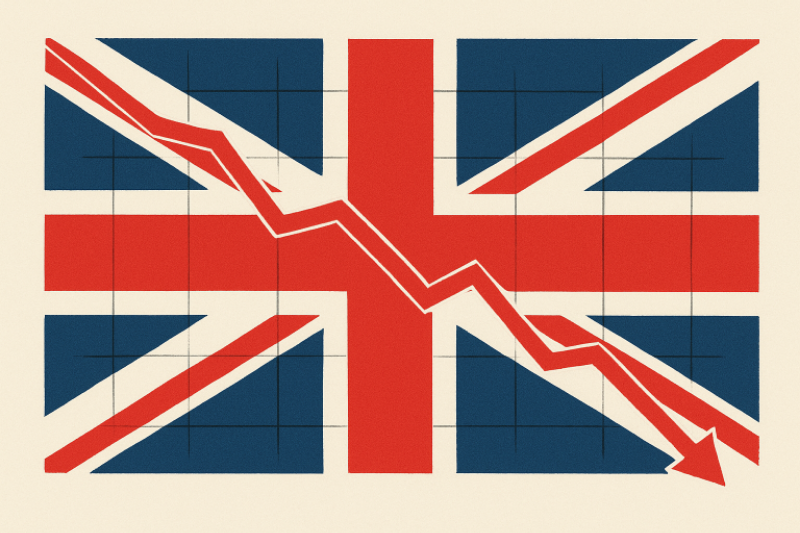
Living in a country that’s starting to feel a bit like little Melos facing the might of Athens in its prime, I can assure you that, for all of his other questionable moves, Trump has succeeded in forcing the NATO allies to address their freeloading on defence where every president before him had come up empty:
There are downsides to insulting and threatening friends and acting like a Mafia don slapping around his goons. You risk turning them against you, for one thing. But if those friends have been freeloading off you for years, well, there are some upsides, too. We’re seeing that as President Donald Trump’s rough treatment of our European allies has driven them to huffily make steps to actually defend themselves rather than continue to rely on the American defense umbrella.
There’s No Incentive Like a Kick in the Rear
For years, Trump has pointed out that the prosperous nations of Western Europe have long free-loaded off of American military might to maintain their security—especially against Russia’s threat from the East. He claims that, during his first term, he told NATO leaders if they didn’t meet the alliance target of 2 percent of GDP on military spending per member, they’d be on their own. According to him:
One of the presidents of a big country stood up, said, “Well, sir, if we don’t pay and we’re attacked by Russia, will you protect us?” I said, “You didn’t pay. You’re delinquent?” He said, “Yes, let’s say that happened.”
“No, I would not protect you. In fact, I would encourage them to do whatever the hell they want. You got to pay. You got to pay your bills.”
Those were rough words for supposed allies. They didn’t stand alone. Since then, Trump has also threatened to acquire Greenland over the protests of Europeans, Denmark (which governs the island territory), and Greenlanders themselves. That’s on top of his trade war antics which imperil the commerce that most effectively binds people together in peaceful relations. Such bullying has an impact.
“European governments and corporations are racing to reduce their exposure to U.S. technology, military hardware and energy resources as transatlantic relations sour,” Politico‘s Nicholas Vinocur and Zoya Sheftalovich wrote last week. “At a weekend retreat in Zagreb, Croatia, conservative European leaders including [German Chancellor Friedrich] Merz said it was time for the bloc to beef up its homegrown mutual-defense clause, which binds EU countries to an agreement to defend any EU country that comes under attack.”
“Military spending across the European Union is ramping up in what observers have noted is a significant and ‘extraordinary’ pivot from the comparatively placid postwar decades,” Northeastern University’s Tanner Stening observed last summer. “As part of the ReArm Europe plan, EU member states hope to mobilize up to 800 billion euros. In June, NATO leaders agreed to increase defense spending up to 5% of each country’s gross domestic product by 2035.”
Commenting on the Trump administration, eugyppius clearly understands something that a lot of Trump’s critics (and many fans) don’t seem to comprehend:
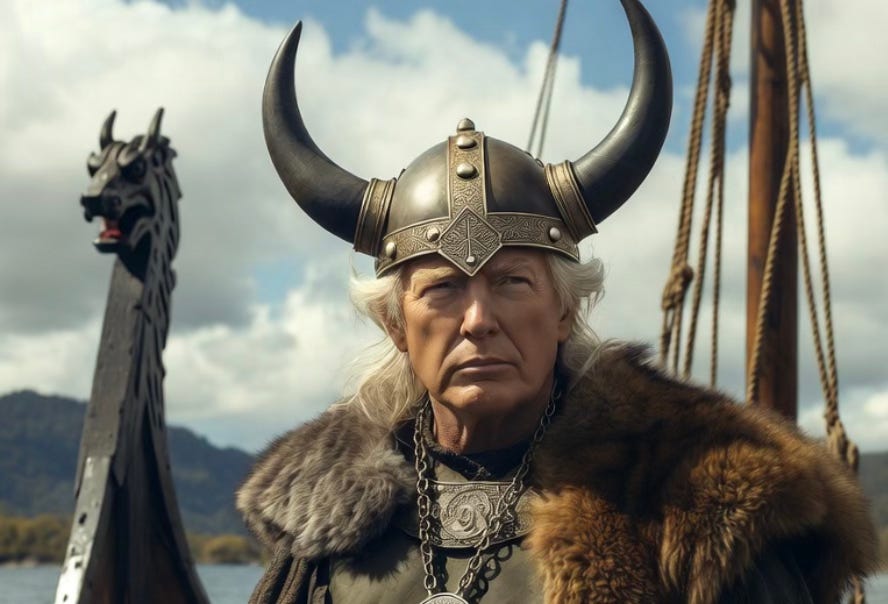
AI-generated image from AndrewSullivan.substack.com
An unstudied impression: Donald Trump is like a shark, in that he must always swim forward or risk suffocation. He, his administration and the media ecosystem that has grown up around Trump’s political persona depends upon action and controversy. In fallow news cycles, Trump steadily loses the initiative and two things happen: First, the media establishment and the leftist activist machine begin gathering their own critical momentum. Second, the vast MAGA-adjacent social media sphere must turn to other controversies to keep the clicks and the ad revenue flowing. Both of these work against the forty-seventh president and his purposes.
Since Trump’s initial barrage of executive orders has subsided, the media cycle has therefore lurched from one moment of hysteria and excitement to the next. Each new controversy totally eclipses the last. Hardly anybody remembers or talks about Nicolás Maduro any longer; the twin Minneapolis ICE shootings and associated protests, too, have faded. What were hailed as pivotal events which would finally discredit Trump’s programme this time look, in retrospect, like passing trivialities – not necessarily because they didn’t matter, but because sustained attention in this crazy messaging environment is impossible.
And on Trump’s pimp-handed dealings with the NATO allies:
Trump and NATO: Much of Trump’s MAGA base remains firmly isolationist and demands that the United States abandon the NATO alliance. Trump himself knows this and he has periodically questioned the utility of NATO. Formally, however, Trump’s administration stands behind the alliance, as anyone can see from reading the 2026 National Defense Strategy and the 2025 National Security Strategy. Yes, Trump wants European countries to increase defence spending. Yes, he still hopes to complete a strategic pivot away from Europe towards China. And yes, in the longer term, he probably nurtures ambitions of reducing the importance of NATO in favour of separate bilateral agreements with various European states. Such arrangements would also provide a lever for present and future administrations to disrupt the various policies and initiatives of the European Union, which Trump clearly despises and which at least as presently constructed amounts to a suicide pact for all of us on the Continent. These populist pressures and future ambitions, together with a general distrust and legitimate scorn for Eurocrat elites, seem to be why NATO periodically fades from Trump’s favour, although never for very long. All of this is to say that I really don’t think Trump’s January bluster was a mere Art-of-the-Deal negotiating tactic, but a reflection of real tensions and contradictions within Trumpism.
Trump and Europe: Here again, we see two competing tendencies. Generally, the Trump administration has followed a sly strategy of pursuing ties with the more or less aligned and presently ascendant populist-right movements of Europe. The Trump administration has also defended our rights to free speech, particularly on social media; relentlessly attacked our insane energy transition; and criticised our elites for their failure (or refusal) to stop mass migration. The purpose of these efforts is to isolate the Eurotards by fertilising the hostile populism that is growing ominously just beneath their double chins. If you are wondering why Trump bothers with this, I refer you to my previous paragraph: Sympathetic governments in key European states, joined to the United States, would be a means of sidelining the European Union and remaking Atlanticism in Trump’s image.
Exactly how to help the populist right into power is a much harder nut to crack. Expressing overt support for parties like Alternative für Deutschland can hurt more than it helps, and the Americans don’t have more direct means of influencing domestic politics over here. At the very least, this a long-term project requiring tactics and strategies we have yet to explore, and probably some institutions we have yet to create.
Update, 11 February: Welcome, Instapundit readers! Have a look around at some of my other posts you may find of interest. I send out a daily summary of posts here through my Substack – https://substack.com/@nicholasrusson that you can subscribe to if you’d like to be informed of new posts in the future.