
At Without Diminishment, Robert King argues for Anglofuturism as the most hopeful path forward from the morass all of the Anglosphere seems to be bogged down in:

(From the Ministry of Space, created by Warren Ellis, 2004.)
Born in the digital backwaters of podcasts and Substacks, Anglofuturism has climbed into public view like a rocket nearing the King Charles III Space Station, gathering both attention and indignation as it ascends.
The New Statesman mutters about it being rooted in “nostalgia“, while the far-left activist group Hope Not Hate insists it is something deeply sinister. Yet their agitation merely confirms a familiar sequence. First, they ignore you, then they laugh at you, then they fight you, and then you win.
At its essence, Anglofuturism is a project of civilisational renewal.
It begins with the conviction that Britain’s decline is not destiny but a decision, and the consequence of decades of political miscalculations that consider the national story to be over, Britain’s very own “end of history”.
Just turn on the news and you will see evidence for this everywhere. Strategic islands like the Chagos Islands surrendered to the vassals of hostile powers. A once-thriving energy sector crippled by the ritual self-flagellation of net zero policies, despite abundant North Sea oil resources.
The capital city of London, once envied for its composure, now deafened by the shrill chants of imported grievances, “From the river to the sea”. Britain was once a country whose streets were said to be paved with gold, according to the legend of Dick Whittington.
Today, they are paved with boarded banks, betting slips, and vape shops. The country’s future is already playing out in London, a place where the nation of Britain has faded into the idea of “the Yookay”. Britain is told that because it once colonised, it must now invite colonisation, that because it once conquered, it must now submit.
The result is a people bending ever lower in the hope of forgiveness from a self-appointed virtuous minority at home, and from the ever-growing numbers of strangers who now claim the country as their own.
Anglofuturism is the vanguard against this ideology. It insists that love of one’s civilisation is a duty, not a sin. It binds identity to optimism, and pride to ambition. It seeks to remind Britons that its best days may yet lie ahead, but only if it learns once more to have confidence in itself.
[…]
The policy of splendid isolation simply will not work for the twenty-first century.
Enter CANZUK, the proposed alliance of Canada, Australia, New Zealand, and the United Kingdom. Four constitutional monarchies, four democracies, and four maritime powers linked by law, language, and lineage. Together they would represent over 140 million people and a combined GDP exceeding $6 trillion. It would be a realm on which, once again, the sun would never set.
Our shared day of remembrance on November 11 is a reminder that we partake in traditions born of shared sacrifice.
Such a bloc would not be a re-creation of empire, but a confederation of equals who share the responsibilities of defence and trade, coordinating space and science, and projecting stability from north to south and east to west.
It could stand apart from American turbulence, Chinese authoritarianism, and European stagnation, and be a new civilisational pole rooted in innovation and freedom under common law. It could even be a new contender to lead the free world.
Britain is still a nation successful at exporting ideas like capitalism, liberalism, and, regrettably, Blairism. Anglofuturism could be its most powerful export to the Anglosphere yet.
For those of us at the edge of that world, in Cape Town, Perth, or Vancouver, the message of Anglofuturism is that our story is not over. Our civilisation may be weak, even fading, but it can be revived. Doing this will demand the same courage that built it, in the spirit of the pioneers and soldiers, the engineers and thinkers who shaped continents and defended freedom when it was under siege.
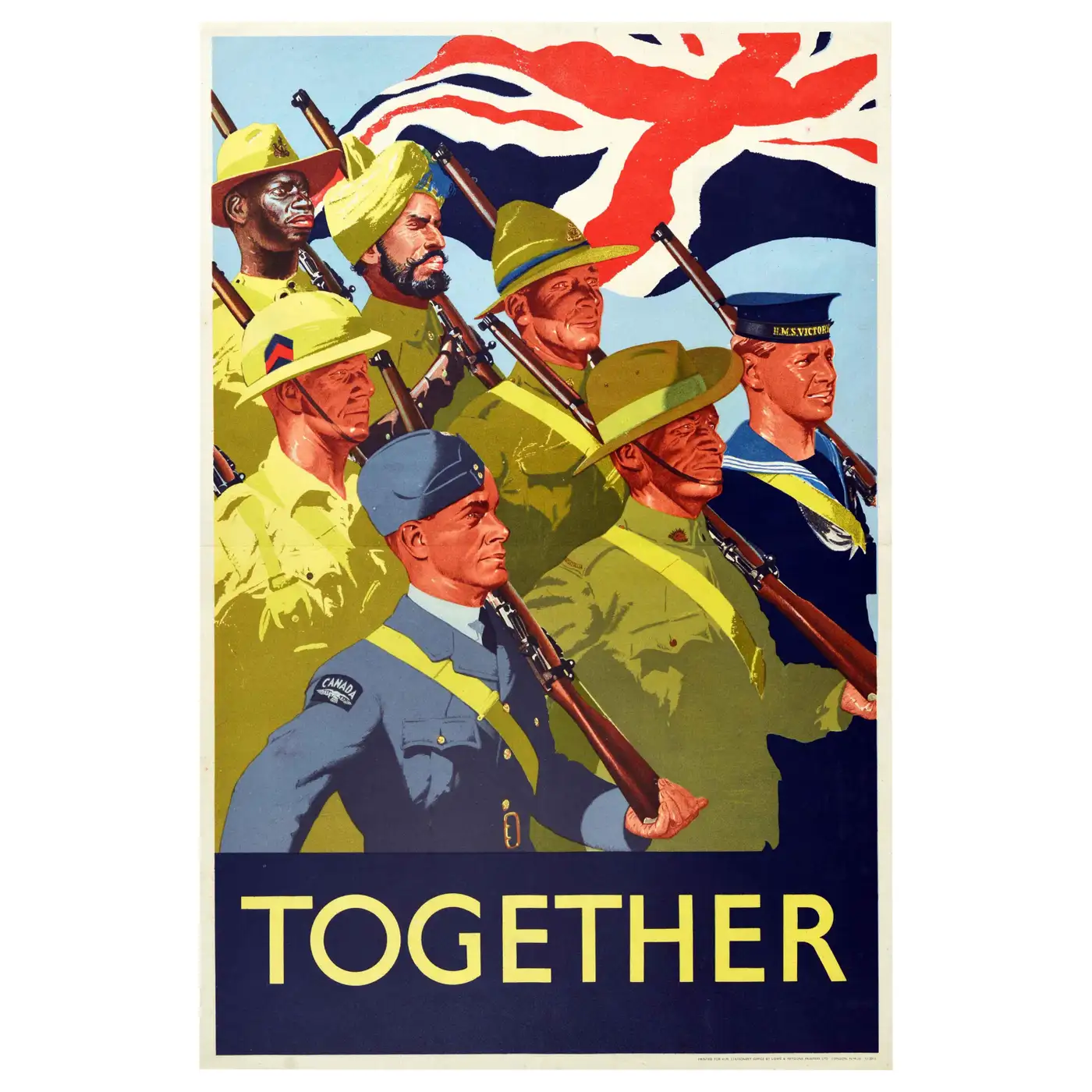
Like this, but better.


