
The Korean War by Indy Neidell
Published 21 Oct 2025The UN forces launch Operation Polecharge, hoping to complete Operation Commando, but they have worries away from the field, since UN pilots have violated the neutral zone and killed two young Korean boys, causing an outcry. If that weren’t enough, a new Soviet atomic bomb test has the entire world on edge.
Chapters
00:00 Intro
00:56 Recap
01:12 Operation Polecharge
02:37 Chinese Tactics
05:15 9th Corps Attacks
07:10 Unit Integration
10:04 B-29s Shot Down
11:06 The Mutual Security Act
12:47 Neutral Zone Violation
14:11 Summary
14:29 Conclusion
15:56 Call to Action
(more…)
October 22, 2025
The Korean War Week 70: Casualties Rise For The Chinese – October 21, 1951
Comments Off on The Korean War Week 70: Casualties Rise For The Chinese – October 21, 1951
The Anti-Coynist Manifesto
In a guest post at Without Diminishment, Michael Bonner takes a blowtorch to the boomer hippies and particularly to Canadian journalist Andrew Coyne. But first, the obnoxious boomers:
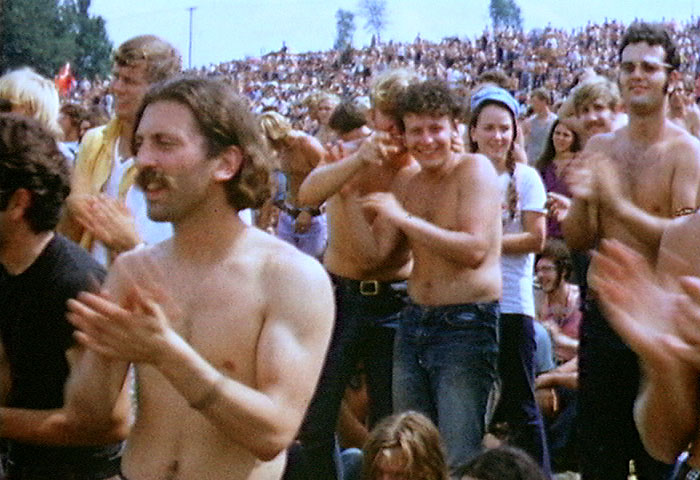
Part of the crowd on the first day of the Woodstock Festival, 15 August, 1969.
Photo by Derek Redmond and Paul Campbell via Wikimedia Commons.
In their own minds, they invented rebellion; they stopped a war; and they discovered sex. The latter phenomenon, they still believe, was quite unknown in former ages. So were drug-taking, vulgarity, and poor hygiene. These, as it was believed, were the means of “finding oneself”, and there was no more important task in life. Automobiles were likewise a singular obsession, and the Good Life meant not only driving but also eating, attending films, and copulating in cars.
They were an unusually forthright lot, who were apparently well educated, but who nevertheless espoused many absurd and contradictory notions. Their parents, who had gone to war to fight Nazis, were themselves branded as fascists by their own children. They professed to revolt against money and materialism; and yet, when they came of age, these were their primary interests. They were the generation that attended Woodstock in defiance of a flu pandemic, and were later the most assiduous followers of Covid-19 restrictions.
At the frightening name of Woodstock, it will be obvious who I mean. The Boomers were born to the men and women who had endured the privations of the Great Depression, the Second World War, and everything in between. It is the Boomers who prove the adage whereby good times make weak men and weak men make hard times. They disliked the ease and prosperity into which they were born, and sought to erode them. The 20th-century fear of Soviet subversion or nuclear annihilation was therefore misplaced. For where the Soviets failed, the Boomers triumphed, leaving our culture and our politics in ruins. They are still at it, as the gravitational field of their huge demographic mass continues to distort our politics. Worst of all, the Boomers’ peculiar vision of personal freedom, norm-busting, and individualism at any cost now passes for conservatism.
And on to Mr. Coyne himself (full disclosure: I’ve met Mr. Coyne a few times at early Toronto blogger gatherings and he seemed quite a sensible chap 20 years ago):
Does this Boomer conservatism have any luminaries or pundits? In Canada, it has one and he towers over his acolytes and opponents alike as a learned giant among intellectual pygmies. Or rather, that is how Andrew Coyne undoubtedly imagines himself. So great a spokesman of the Boomer conservative mentality is Coyne that the entire movement could be named after him: Andrew Coyne-ism.
Who has not heard of Andrew Coyne? He is now a columnist with The Globe and Mail and a member of the At Issue panel on CBC’s The National. He wrote for the National Post and once edited its editorial and comment section, but resigned in 2015 during the federal election. The cause was a dispute with executives over the rejection of a column composed for election day, in which Coyne failed to endorse the Conservatives. Coyne described the dispute as an unwelcome intervention that threatened his editorial independence, stating on Twitter that he could not allow the precedent to stand and needed to protect his reputation as a columnist.
That incident is a microcosm of the problem. One may fairly complain, as Coyne did, that the Harper Tories failed to please every member of their coalition equally, though such a thing is rarely possible. But the rest of Coyne’s complaints concerned a “bullying, sneering culture” of “the low brow and the lower brow”. The imperfection of policy merely annoyed him, but he hated the Conservatives’ tone. They were not sufficiently respectful, they traded in insults and did not agree that “learning and science are to be valued, not derided”, apparently. In contrast, “a politics of substantive differences, civilly expressed” was “the formula that just elected Justin Trudeau”.
Trudeau: a paragon of civility? Surely some other Trudeau is meant, not the opposition MP who called the Minister of the Environment a “piece of shit“. Not the man who, at a “ladies’ night” campaign event, was asked which country he most admired and said it was China’s “basic dictatorship“. Not the man who announced that the excitement of a political campaign amounted to “pizza, sex, and all sorts of fun things“. Not the man who mused about such subjects as “making Quebec a country” if Canada were to become too conservative and the need to put Quebeckers in charge of our “community and socio-democratic agenda” — whatever that means. Not the man who once halted an interview with a French-Canadian journalist in order to demonstrate the right way to fall down a flight of stairs. I pass over the more lurid stories of groping a reporter’s buttocks, wearing blackface, and singing the “Banana Boat” song.
Alas, it is the same Trudeau. Nevertheless, Andrew Coyne-ism can excuse all such behaviour along with the decade of sanctimonious bullying and decline that followed it. For none of it is as bad as the wishes and worldview of the mostly rural, western, and blue-collar Conservative base. Such people are too angry and too vulgar for their own good. Including them within the benefits of Confederation must be rigorously circumscribed, and allowing them to shape public policy cannot be allowed at all.
Comments Off on The Anti-Coynist Manifesto
H&K MG4: Germany’s New 5.56mm Squad Machine Gun
Forgotten Weapons
Published 7 Jun 2025Heckler & Koch released the MG4, a new 5.56mm squad machine gun in 2001. It was adopted by the German army in 2005, and then by the Spanish and Portuguese armies in 2007. Alongside its sister weapon the 7.62mm MG5, it is H&K’s current export machine gun.
The MG4 fires from an open bolt, with a 2-lug rotating bolt locking system and a long stroke gas piston operating system. It uses standard M27 NATO links for feeding, and does not have a semiauto selector setting. Mechanically, the MG4 uses a front trunnion into which both the barrel and bolt lock independently — meaning that the quick-change barrel can be removed with the bolt in either the forward or rearward position.
As one would expect for a 5.56mm machine gun weighing 18 pounds, it is very easy to control.
Thanks to Sellier & Bellot for giving me access to this modern machine gun to film for you!
(more…)
Comments Off on H&K MG4: Germany’s New 5.56mm Squad Machine Gun
QotD: The supposed land crisis Tiberius Gracchus wanted to solve
The issue Tiberius Gracchus seizes on is land reform and both Plutarch (Ti. Gracch. 8.1-3) and Appian (B. Civ. 7-8) present similar visions of the problem he thought he was addressing. When Rome had expanded in Italy, it had often taken land from defeated enemies, some of which was resettled or sold, but some of which was kept as “public land” (ager publicus), leased out by the state at very favorable rates. By the late second century, Tiberius Gracchus and others are observing two conjoined facts: on the one hand, the number of Romans eligible for conscription (the assidui) has begun to decline. On the other hand, the city of Rome itself is increasingly full of landless poor looking for labor and hoping for some option that will give them a chance at land.1
What they assume is taking place is that the wealthiest Romans – who have, in fact, grown fantastically wealthy from Rome’s overseas wars – have used that wealth to acquire most of the land, either buying up the small freeholds of smaller Roman farmers or getting the leases for that public land. Meanwhile, the Roman small farmer class does most of Rome’s fighting and so the assumption – by Appian – is that these guys are being ground underfoot by heavy military deployments, although as best we can tell, military deployments in the 150s, 140s and 130s are substantially lighter than those from 218-168 (but they’re also in less profitable, more difficult places like Spain, put a pin in that). Those wealthy Romans then work the land not with free laborers, but with slaves, because Roman conquests – remember, we’re at the tail end of Rome’s “iron century” of conquests from 264 to 148 – have brought enormous numbers of enslaved laborers to Italy. Those poor Romans, now displaced, have no land and flock to Rome and are no longer liable for the Roman census.
Except notice the data points being used to come up with this story: the visible population of landless men in Rome and the Roman census returns. But, as we’ve discussed, the Roman census is self-reported, and the report of a bit of wealth like a small farm is what makes an individual liable for taxes and conscription.
In short the story we have above is an interpretation of the available data but not the only one and both our sources and Tiberius Gracchus simply lack the tools necessary to gather the information they’d need to sound out if their interpretation is correct.
All of which now, at last, brings us to the scholarship of the last several decades which has, by and large, concluded that Tiberius Gracchus probably misunderstood the nature of Roman social and economic problems in the late second century and as a result applied the wrong solution.2 The initial problem is that the above model assumes a basically stagnant Italian population: you’re just shifting people around, not generating new people. But survey archaeology shows growing urban centers and new land coming under cultivation, suggesting a modestly rising population, a conclusion reinforced by demographic modeling which recognizes the likely marked decline in military mortality in the back half of the second century. Moreover, the vast expansion of villa estates we ought to be seeing in this period really only comes later, in the first century BC and the first two centuries AD; there’s some expansion (and these patterns are very regionalized) but not enough to explain what we’re being told is happening.3 Those observations, emerging in the 90s and early 2000s, provided the necessary evidence to vindicate the theory advanced by J.W. Rich in the 1980s that the problem was quite different than Tiberius Gracchus understood, in part to explain the one curious fact we could always see about Tiberius’ land reforms, which is that they happened, they went ahead as planned and also they didn’t fix the problem.
Instead what is happening is this: Roman military deployments had, for a long time, been massive. Rome had careened from the major Samnite Wars (343–341, 326–304, and 298–290) to the high-casualty Pyrrhic War (280-275) to the much higher casualty First (264-241) and Second (218-201) Punic Wars. But the big wars of the early second century had involved a lot more winning and thus somewhat less dying (deaths from disease always outweighed combat losses, but Roman armies are smaller from 201-168, so less disease death too), while after the Third Macedonian War (171-168), Rome doesn’t have any more peer-opponent wars left to fight and so the number of men under arms declines again after 168 and especially after 148. Roman society was thus structured to sustain itself in a situation where military mortality for males was high. And then it dropped.
But recall the average Roman farm is small, so what you have now are suddenly a whole bunch of second and third sons who between 350 and 201 would have gone off to fight and died (or their elder brother would have) but are now alive, but can’t possibly inherit the family farm because they have a living brother and the farm is much too small to split further (or to support an entire second nuclear family unit). Where do they go? Well, to Rome, of course, where they want what Rome has done in the past to deal with this sort of problem: the foundation of new Roman communities (colonies) where they can have land. But there isn’t any Italy left to conquer (Rome controls all of it) and we aren’t yet to founding Roman colonies overseas, so not only is the mortality much lower (and so you have more of these guys) the traditional release valve is stuck. So they’re piling up in the one place that there is meaningful amount of wage labor available (the city of Rome), where they are very visible to the Roman ruling elite.
Meanwhile, Elder Brother-Who-Lived is back on the farm and should, in theory, still be eligible for call-up. But whereas in previous decades he could hope to get sent to fight in places like Greece or Italy or against Carthage where the rewards in loot from defeating wealthy enemies were substantial, in the 130s, the main problem was Numantia: a Celtiberian community perched in a particularly troublesome hillfort in a relatively poor, difficult part of Spain. Campaigns to take the place often failed (see above) but even if they succeeded, there would be little real loot. Moreover, a lack of success made the wars deeply unpopular. Elder Brother doesn’t want to get drafted to go fight in Spain, it’s just not a good bargain for him (unlike earlier wars).
But he has a solution: the census is self-reported. While his younger brothers are in Rome looking for work, he can just not report the farm on the census (or not report his military aged son), understating his wealth to drop below the qualifying requirement for military service. Because the Roman census pays functionally no attention to such men – the capite censi (those counted by their heads) – Elder Brother’s household almost seems to vanish in the census returns and the number of men liable for conscription ticks down by one.
And so you have falling census returns, combined with crowds of poor Romans in the city of Rome, but without it necessarily having anything to do with ager publicus or lost farms. And this is, we think, probably what is happening: surely there is some elite villa-estate expansion and some replacement of freeholding farmers with enslaved workers on that land but in fact the problem the Romans are facing is classic land scarcity with a growing population, but they don’t know that’s the problem because draft-resistance appears in the census as population decline and the census is all they have.
But you can see immediately the problem for Tiberius Gracchus’ land reform: while there is certainly some ager publicus to redistribute (to the great annoyance of the elites holding it), there’s not enough, because the core of this problem isn’t changing land use patterns (more villas, less small farms) but rising population creating economic strain at the bottom (while, it is true, imperial expansion creates vast almost unimaginable amounts of wealth at the top).
But we’re actually not quite done with problems, there’s one more: not all of the ager publicus was being farmed by Romans. Quite a lot of it seems, instead, to have been in the hands of local Italians – the socii. This is another convenient simplification by Appian and Plutarch, a product of them both writing in the imperial period long after citizenship had been extended across Italy. But that hasn’t happened yet. So any law to redistribute ager publicus would mean taking land from the socii who were currently using it for a land-giveaway in which only Roman citizens will be eligible.
You may well imagine that doing something like that might really damage relations with the socii and also fundamentally change the “bargain” by which the Roman alliance system functioned, as before Tiberius Gracchus, the socii seem to have been eligible to settle in Roman colonial foundations on conquered land, but they will not be eligible to get land in Tiberius Gracchus’ land reform bill.
You can quickly flip ahead to the year 91 to see how that turns out in the long run.
Bret Devereaux, “Collections: On the Gracchi, Part I: Tiberius Gracchus”, A Collection of Unmitigated Pedantry, 2025-01-17.
- To pause for a second: for the sake of making this understandable, I am using the relatively simple category of ager publicus. However, as Gargola (op. cit.) notes, in actual Roman law, ager publicus was a messy super-category of lands governed by an exciting range of different rules and conditions (some leased, some sold, some held by the state, etc.) – ager censorius, ager quaestorius, ager occupatorius, ager diuisus et adsignatus, the ager Campanus and ager in trientabulis. Simplifying this and treating all of these lands as if they had been governed under the same rubric which Tiberius is merely now enforcing is one of Appian’s deceptive simplifications.
- For the scholarship, this reaction begins with J.W. Rich, “The Supposed Roman Manpower Shortage of the Later Second Century B.C.” Historia 32 (1983). The next major phase comes out of the high-count/low-count population debates around Roman demography because older demographic models, like those of PA Brunt (Italian Manpower (1971)) had assumed a static Roman population, but as noted we increasingly had evidence for a modestly increasing population. The implications of that get worked out in books like N. Rosenstein, Rome at War: Farms, Families and Death in the Middle Republic (2004) and L. De Ligt, Peasants, Citizens and Soldiers (2012). Finally, you also have a recognition that while the wars in Spain were unpopular, they didn’t have massive manpower demands, e.g. Taylor, “Goodbye to All That: The Roman Citizen Militia After the Great Wars” in A Community in Transition, eds. M. Balbo and F. Santangelo (2023).
- In Italy, I should be clear: the pervasiveness and speed with which rich Romans seem to accumulate Sicilian estates suggests a lot of the land acquisition may be happening outside of the ager Romanus.
Comments Off on QotD: The supposed land crisis Tiberius Gracchus wanted to solve


