
Quotulatiousness

October 5, 2025

Chris Schwarz and the cheapskate workbench builder

Filed under: Humour, Tools, Woodworking — Tags: — Nicholas @ 05:00

Every week, Chris Schwarz republishes something from his back-catalogue of books and articles, generally on woodworking topics. This week, he posted the first half of an older blog post about the six personalities of workbench builders. I especially enjoyed the third segment:
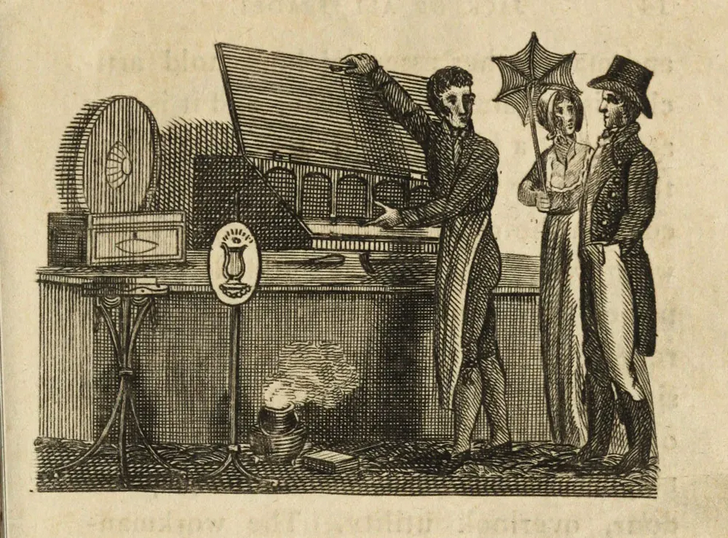
Workbench Personality No. 3: The Cheapskate

My encounters with The Cheapskate could fill a book on workbenches. This is but one short story.

I receive a fax. On the paper is the message: Could you call me at XXX-XXX-XXXX please? I have an important question about workbenches.

Intrigued, I call. My first question: Hey, uh, why the fax?

The Cheapskate: We’re not allowed to make long-distance calls here at my place of employment. But they didn’t say anything about making long-distance faxes.

A cold stone grows in my stomach.

The Cheapskate gets down to business: I want to build a Roubo workbench, but I’m tight on fundage. We’ve got these pallets where I work, and I’m wondering if those will work? I don’t know what the species is – something weird – and the stock is thin and filled with nails and spiral screw things.

I am certified in counseling The Pallet People. So I know what to do.

Question: What sort of sizes can you get from the pallets?

The Cheapskate: About 1/2″ thick, 4″ wide and 48″ long.

Me: So, for an 8′-long bench, you will need almost 100 of those pieces just for the benchtop. You will need to de-nail them, flatten them and glue them together in stages that are staggered – probably about 18 to 20 stages – if I remember right from my Pallet People Intervention Manual.

The Cheapskate: Brilliant! Thanks so much! I’ll do it!

A few weeks pass; another fax arrives.

The Cheapskate: I’m working on the benchtop, and I have a technical question for you. How little glue do I need to use to stick these pieces together? I mean, I’m trying to recover all the squeeze-out, but I’ve laminated seven layers so far and used up a 16 oz. bottle of glue. That’s crazy. Can I get away with just gluing a little bit at the top and bottom of each board – leaving the middle dry?

Me: I explain that glue is the cheapest part of any project. (“Not this one!” he interjects. “So far I’ve spent money only on glue!”) Deep breath. OK, I say, if you use this strategy, once you flatten the benchtop a few times, the top will delaminate.

There is silence on the phone line. (I’ve won!)

Then he answers: What if I put a paste of rice and water in the middle instead of glue? I’ve heard that rice glue was used in Japanese cultures. We have a lot of rice.

I unplug the office fax machine.

The Cheapskate sends me an email: I need to make a face vise and a tail vise, but all I have on hand is all-thread rod from a neighbor’s fencing job – 32 tpi. Can you help?

I am seriously considering counseling for myself when a follow-up email arrives. It continues the discussion of the 32 tpi vises.

The Cheapskate: I’m thinking a quick-release mechanism is the way to go – 32 tpi is really slow. But it’s super precise! So here’s the thing. I have a friend with a SawStop. He set the thing off when ripping my benchtop for me (some of the glue wasn’t dry). The SawStop cartridge has these strong blue springs in it. He was going to THROW THEM AWAY! That got me thinking: I could use those as a quick-release trigger for my vise – holding a bit of metal against the all-thread. Have you ever seen plans for something like this?

Weeks pass, and I hope The Cheapskate has taken up Animal Husbandry, cheaping out on animal condoms or something. But then I get a phone call.

The Cheapskate: I see you’re teaching a workbench class at the Marc Adams School of Woodworking.

Me: Yup.

The Cheapskate: I was wondering: Could you get a student to take videos of your lectures and send them to me? Not the building part. Just the part where you explain how to make the thing. I don’t really have the fundage to take a class.

Me: I’m afraid that’s not really fair to the students or the owner of the school. Sorry.

The Cheapskate: Hey, I totally understand. How about I just come to the class and watch through the window? Is that OK? I won’t build anything. I’ll just be there, like a fly on the wall to listen? That OK?


North Africa Episode 2: Rommel Arrives in Africa

Filed under: Africa, Australia, Britain, Germany, Greece, History, Italy, Military, WW2 — Tags: , , , , , — Nicholas @ 04:00

World War Two
Published 4 Oct 2025

North Africa, February 1941. Operation Compass has shattered the Italian 10th Army, capturing over 100,000 men and pushing deep into Libya. But just as Britain celebrates its first major land victory of World War II, a new threat arrives: Erwin Rommel. Sent by Hitler to salvage the collapsing Italian front, the “Desert Fox” lands in Tripoli with orders to hold Libya — and immediately begins pushing east.

At the same time, British commanders face tough choices: should they secure North Africa, or divert their best troops to Greece as Churchill demands? With overstretched Commonwealth divisions left behind in the desert and fresh German forces arriving, a new campaign begins — one that will decide the future of the Mediterranean war.
(more…)

The New York Times finally decides that there’s a case for “splitting the Autism spectrum”

Filed under: Health, Media, Politics — Tags: , — Nicholas @ 03:00

Freddie deBoer on the stereotyped way that the “Gray Lady” — the New York Times — once again lets the independent media do all the serious work to investigate an issue before “the Grey Lady squats down on that issue and says ‘this is mine now'”:

You may groan! You may say, “Again?” You may roll your eyes. But I’m going to talk about this one more time, and then I think I’m done. But I’ve always been right about all of this, and it needs to be said.

The Times has once again parachuted into a conversation that has been going on for decades, planted its flag, and declared itself the discoverer of new territory. Yesterday they published a piece on autism, neurodiversity, RFK Jr., and whether the autism spectrum should be split up — split back up, that is, to reflect on the massive differences between those with profound autism and those for whom “neurodiversity” is mostly a social badge, a tidbit to be displayed on a Bumble profile. (The answer is yes, of course the spectrum should be split up again, for reasons I’ve written about at great length.) That issue, unusually raw, will bubble on, as it sits at a genuinely uncomfortable intersection of liberal identity norms, online culture, and the genuinely debilitating reality of severe autism. In terms of progressive discourse rules, the plight of the severely autistic and their loved ones is truly a problem from hell: those rules insist that you can’t ever question someone’s diagnosis, no matter how dubious; they demand that you acquiesce to claims made from a position of disability, no matter if they cut directly against the claims made by others from their own position of disability; they have long ago lost sight of any distinction between identity and disorder; and they’re governed by a selective and incoherent vision of standpoint theory that insists that only the autistic can speak out about autism – which perversely empowers the least-afflicted and silences the interests of the most-afflicted, as the most-afflicted literally cannot speak for themselves. You know my rap on all this.

In meta terms, though? This tendency of the NYT to helicopter in to long-simmering debates and bless them with the paper’s attention, and in so doing anoint those debates as worthy of attention by grownups, is only the latest example in an old, ugly dynamic. The little people in independent media ask difficult questions and engage in rancorous debates and stick their necks out in the service of ideas, which is what the media is supposed to do. Then, once the heavy lifting is done, the Grey Lady squats down on that issue and says “this is mine now”. The paper’s consolidation of both prestige and financial security — its status as both far and away the most prestigious publication in world media and maybe literally the only financially healthy newspaper left in the United States — has all manner of pernicious, perverse consequences in an industry that can only function when people within it are engaged in debates with real stakes and real hurt feelings. Again, nothing you haven’t already heard from me. But when there is only one endpoint for the ambitious to aspire to, there’s an inherent and unavoidable silence about that endpoint’s myriad failings. The Times, for its part, has walled off criticism within its own pages with its “we don’t do media criticism” rule, a profoundly self-interested and cynical policy that helps them evade ever having to justify their own widely-criticized practices. And for all manner of complex reasons, the broader world of stodgy old media, dying though it may be, still holds all the cards when it comes to defining debates that involve institutional stakeholders, as the debate about autism’s future certainly does.

I don’t begrudge any writer for wanting to weigh in on these issues — God knows they matter and need more attention — but what’s striking about the Times‘s coverage is how effortlessly it erases the long history of people already fighting these battles, and the richness of the debate that preceded them. Whole archives of independent writing, analysis, and advocacy disappear when the Paper of Record decides that a question now exists. Until then, the issue is marginal, unserious, relegated to the sidelines; afterward, it’s real, it’s official, it’s legitimate … and therefore too important to be left up to those of us in the cheap seats. This is the paradox, you see; no issue that independent media concerns itself with can be considered truly serious, and no issue that they (eventually) deign to be truly serious is something that they trust the independent media to engage with responsibly. Quite a little trap, there. And when the grownups in the room walk in, we’re meant to feel blessed by their presence, happy to have our pet issues taken seriously. Everyone else who’s been in the trenches for years is supposed to be grateful for their newfound recognition.

How to Make a Stool with a Woven Seat | Paul Sellers

Filed under: Tools, Woodworking — Tags: , , — Nicholas @ 02:00

Paul Sellers
Published 9 May 2025

I designed a basic introductory-level project to steer and guide any new woodworker into making a great first-time project. I also wanted a basic introduction to weaving Danish cord (but you can use nylon or natural rope) into a seat.

The two came together in a single stool that, though simple and fun to make, will last a lifetime. There are features to working the wood that you will be unlikely to see or learn about elsewhere because I designed the project with you, the beginner or novice woodworker and seat weaver, in mind.

Trade secrets and tips of the trade throughout, you might just amaze yourself, your family, and friends with a professional-looking outcome.

Bookmarks:
Rails Layout: 02:08
Shaping the Legs: 16:48
Glue Up: 35:34
Finishing: 51:53
Seat Weaving: 54:14
(more…)

QotD: Why go to the Moon or Mars?

Filed under: Books, Bureaucracy, Economics, Government, Quotations, Space — Tags: , , , , — Nicholas @ 01:00

This, by the way, is the thing people don’t get about space. Every time humanity takes some tiny step along the path to becoming a multiplanetary species (by which I mean “every time SpaceX does something cool”), someone comes along and complains that it seems kind of pointless. The Moon is very far away, Mars is even farther, and we have this whole big planet right here that’s already full of “uninhabitable” regions like the Sahara or the Antarctic or, uh, the entire American West. Starting there seems easier, since they already have things important elements such as “air” and “water” and “a biosphere”. Play your cards right and you won’t even need a passport, let alone a spaceship. A friend of mine even coined the slogan: “Terraform Terra first”.

But this misses the point. Yes, space colonization appeals because it’s part of the wizardly dream of innovation, of building new and exciting things, and thus has an aesthetic draw that goes beyond practical arguments. Yes, long-term we probably shouldn’t put all our civilizational eggs at the bottom of one gravity well. And yes, many humans have a Promethean (Faustian? Icarusian?) drive to expand, to explore, to see what’s beyond the horizon. All of which is a pull to space.

Now pause for a moment and think about what would actually happen if you decided to set up your terran terraforming in, say, the Owyhee Desert of southwestern Idaho. There’s a river in parts of it. It rains occasionally, and snows in the winter. Whatever techniques you were planning to generate power and conserve water on Mars would certainly work in Idaho — more efficiently, for solar, since we’re closer to the source, and with more margin of error if you can add water to the system. Plus the desert is full of exciting minerals you can mine to sell or even to extract water from! And the second you tried, the Bureau of Land Management (which owns most of the Owyhee, and indeed most of the American West) and the Environmental Protection Agency (which has opinions about mining) and the ranchers (who would also like to use that water, thank you) will come down on you like a ton of bricks.

That’s the push to space.

The dream of space colonization is partly about all the ways it would be cool to live on Mars or the Moon. But it’s also, implicitly or explicitly, a claim that it’s easier to solve enormous technical challenges (air! water! food! solar radiation!) than it is to solve societal challenges on Earth. Terraforming is hard; eunomiforming is harder.1

Jane Psmith, “REVIEW: The Powers of the Earth, by Travis J.I. Corcoran”, Mr. and Mrs. Psmith’s Bookshelf, 2024-04-29.


  1. Though to his credit Corcoran has a diverse portfolio: in addition to the space colonization dreams, he’s tackling the “terraform Terra” angle with an active homestead (he’s written some guides) and the “improve society somewhat” approach through more direct political engagement than I’ve ever done.

Powered by WordPress


