
Quotulatiousness

July 20, 2025

Generational differences about … ugh … talking on the telephone

Filed under: Business, Cancon, Media, Technology — Tags: , , — Nicholas @ 05:00

As a late boomer — and unlike most of my cohort — I’ve always hated talking on the telephone to someone. I’m sure part of it is my innate shyness and social awkwardness: if I can’t see how the other person reacts to my verbal blundering, how can I correct myself in time to salvage something from the call? As a result, I’m rather more sympathetic to younger Millennials and Gen Z’ers who have a common generational aversion to telephone calls:

“Candle-stick phone with courtesy pay box” by CodeName47km is licensed under CC BY-SA 4.0 .

I’ve been working to wean myself off the phone. I try to use it only when it feels necessary: we require an answer now, things are too complex to lay out in an email, or I want to be sure what I’m saying is received as I intend it. Sometimes these calls are spontaneous. Increasingly, I schedule them, or ask permission first.

I’ve done this because it’s how business communications work today, and I don’t like to remind people that I’m getting on. I also do it in deference to my colleagues, all of whom are much younger than me. They prefer email, texts, or the group chat.

The landline decision was forced by our acquisition of Fitzhenry & Whiteside, which has had the same telephone number for decades. F&W has many more authors than does Sutherland House, and a good number of them are over sixty. We’re trying to make the transition to new ownership seamless. We didn’t want people calling up to hear “this number is no longer in service”. So the newly installed phone sits on a stand beside the desk I share with Shalomi. I call it Shalomi’s phone and make her answer it when she’s around. Mostly it goes to voicemail and tells people how to contact us by email.

Accustomed as I’ve become to phone-free work, I was taken aback this week when I asked one of our interns to call a printer — we needed a quick quote — and she responded, “I don’t do telephones”. She looked at me bewildered. I responded in kind.

My mind was racing to figure out if I’d mishandled the matter. I’d just read that story in the New York Times about the “Gen Z stare”, the blank look given by a young person (usually in a service job) where a verbal response would be common. It is often interpreted as a freeze on the part of the starer, an inability or reluctance to engage, perhaps rooted in anxiety, perhaps a remnant of the pandemic’s social dislocations, although some insist the starer is telling their interlocutor “you’re in my space and you ought to back off”.

I heard from a number of people about that article this week, and while the Times had not mentioned phone usage and etiquette, my conversations did. Apparently there are a lot of young people who don’t know how to answer their phones. They see a call pop up on their screen and they stare at it, waiting for it to go away. Or they press answer and listen without saying anything. Some, I’m told, answer even scheduled calls from people they know with silence.

I’ve heard parents say they didn’t expect they’d have to teach their children to answer a phone. A university lecturer explained that journalism professors now demonstrate use of a telephone before instructing students on how to conduct an interview over it. Apparently, the same goes for rookie salespeople.

Poking around online, I found a BBC article reporting that a quarter of people aged eighteen to thirty-four never answer their phones, more than half of them interpret any unexpected call as bad news. CBS reports 90 per cent of Gen-Z are anxious about phone calls.

In fairness, a lot of adults are similarly leery of their phones. They don’t want to engage with spam dialers or scammers — they answer and listen for the brief pause that betrays a call centre. Some let every unrecognized call go to voicemail. The savvier ones have figured out that your iPhone, properly configured, will send calls from people not in your contacts directly to voicemail.

Back to our intern. Eventually, I recovered myself. This wasn’t an instance of Gen-Z awkwardness or anxiety around real-time conversations. She is bright, confident, and as socially adept as anyone in the office. I asked if she had a phone. She did. I asked if she used it for calls. She said only to speak to her mom, who pays for her phone. Perfectly reasonable. And it was her personal phone, not a company phone, so she was under no obligation to use it at work. So we suggested she make the call on the company phone, which she cheerfully did.

We spoke later about generational differences with regard to communications technology. She likes the control one has over email communication as compared to the unpredictable nature of phone calls. I told her about life when no one had phones, yet we could all somehow manage to show up at the same place and the same hour. I can hardly believe I lived in such times. Hearing this must have hit her like I was once hit by the reporter Ray Stannard Baker’s account of how he used to walk up to the White House, knock on the front door, and ask to speak with the president.

Day Eight – Can Charles de Gaulle Save France? – Ten Days in Sedan

Filed under: Britain, France, Germany, History, Military, WW2 — Tags: , , , , , — Nicholas @ 04:00

World War Two
Published 19 Jul 2025

Ten Days in Sedan continues as our WW2 Blitzkrieg documentary follows the first serious counterblow against the German spearhead. Colonel Charles de Gaulle leads the 4th Armoured Division in an attack against the German flank. De Gaulle’s units are understrength and his assault is improvised but he catches Heinz Guderian by complete surprise. Is this just a fleeting gesture of defiance, or a new kind of French resistance?
(more…)

“[T]he job of a manager [is] to get all C Northcote on bureaucracy”

Filed under: Bureaucracy, Government, USA — Tags: , , , — Nicholas @ 03:00

Tim Worstall discusses the recent announcements about the US State Department significantly reducing their staff levels — a “Reduction In Force” or RIF — that is being lamented by the Washington bureaus of all the surviving mainstream media as a world tragedy:

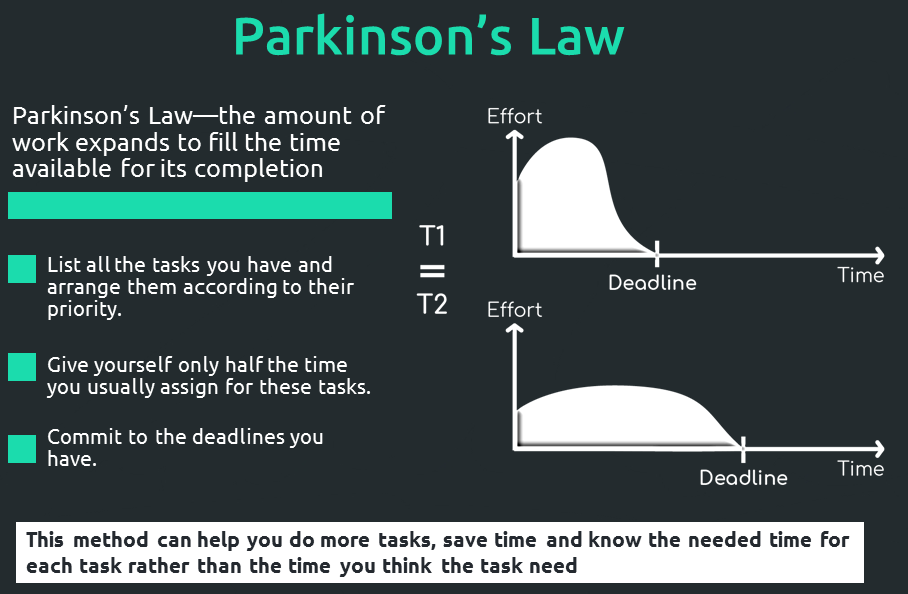
The Guru here, the epitome of the management science, is C Northcote Parkinson. Best remembered for Parkinson’s Law — work expands to fill the time available for its completion. But a deeper thinker than that aphorism.

The essential point being that the output of a bureaucracy is bureaucracy. There is nothing measurable that is being done, no financial value being put upon the work. Sure, sure, it might even be that what is being done is of value — we’ve not got a simple measure of it though.

Therefore a bureaucracy measures itself by the budget and staff count. The success of a bureaucracy — a bureau perhaps — is measured by increases in either or better both. Which really does mean that the output of having a bureaucracy is more bureaucracy.

In the private sector this occurs as well. That’s how the power skirts get to take over large corporations. Of course, at some point in that process the company runs out of money and goes bust — the land is cleared for the next attempt to actually add value.

With government that doesn’t happen. Which leads to one of my favourite little thoughts — every civilisation survives until it is parasitised, eaten from within, by its own bureaucracy. We’d probably prefer that this didn’t happen. Yes, anarchy is all very well in theory but no one does like it when the bins aren’t emptied and there’s no state left to keep the French at bay.

The result of this is that the state bureaucracy needs to be pruned. Always. The actual job of a minister is — should be at least — to muse on what shouldn’t be done any longer and who can we fire? As should be the waking thought of any CEO of course.

My preference — because I’m extremist, obviously — is that we just fire them all. Then hire back the 2% we actually do require in order to have a civilisation. Remember, the Empire ran India with 1,000 men. And, well, it’s not wholly obvious that it’s been run any better than that since then.

That’s therefore the job of a manager. To get all C Northcote on bureaucracy. Always and everywhere. If you prefer your phrasing a little more red blooded the answer to bureaucrats is the Carthaginian Solution. Not that anyone would buy them as slaves, not productive enough, but we can try, right?

What do you call 22,000 fewer civil servants in Washington? A good start:

Update: Fixed missing URL.

Star Trek and the New Frontier Story

Filed under: History, Media, Space, USA — Tags: , , , , , — Nicholas @ 02:00

Feral Historian
Published 28 Feb 2025

Star Trek has been the “new frontier” story for so long that it’s become more retro than futurist. But that doesn’t mean the frontier story itself is dead, only that there’s a disconnect between the future we want and the visions of it that we have.

00:00 Intro
02:19 Time and Space
06:06 Inhabited Spaces
09:44 A story of the Past

QotD: Above all else, helicopter parents hate … helicopter parenting

Filed under: Education, Quotations, USA — Tags: , , , — Nicholas @ 01:00

It’s a very weird, but oft-observed, phenomenon that the biggest opponents of “helicopter parenting” are … helicopter parents. You can go into a Starbucks and announce to the gaggle of Karens: “Kids these days are so soft; their parents never let them get hurt or make any mistakes, and so they never learn anything!” all you’ll get complete, enthusiastic agreement. Meanwhile, they’ve got their Jayden and Kayden and Brayden and Khaleesi coated in bubble wrap, wearing three masks and taking hand-sanitizer baths every half hour.

If the kid gets anything less than an A-triple-plus in Zoom School, Karen is immediately on the horn to the teacher … and since all schools these days, even the rare physical ones, are all wired up with “classroom management software”, they can bombard their kids’ teachers with emails and text messages 24 hours a day, 7 days a week.

Helmets, knee pads … kids these days wear more safety gear than a mountain climber just to ride their bikes, and I wouldn’t be at all surprised to see them kitted out like hockey goalies if recess ever becomes a thing again. Can the day be far off when every kid is trailed by xzheyr own personal injury lawyer, and parents are forced to sign waivers to let their kids use the bathroom?

Everyone knows how bad this is for childhood development, but if I told some kid with a scraped knee to rub some dirt on it, you’ll be fine, I’d probably get hauled up on child endangerment charges.

How can kids advance past age twelve, mentally and emotionally, if they’re never allowed to get hurt? To fail? To suffer the consequences of their own bad decisions?

I’m no developmental psychologist, but it seems obvious that such learning is time-limited. If you haven’t learned that X brings pain — and WHY — by the time you hit twelve years old, then on some fundamental level you’re never going to learn it.

Severian, “On Being Bad”, Founding Questions, 2021-12-12.

Powered by WordPress



