
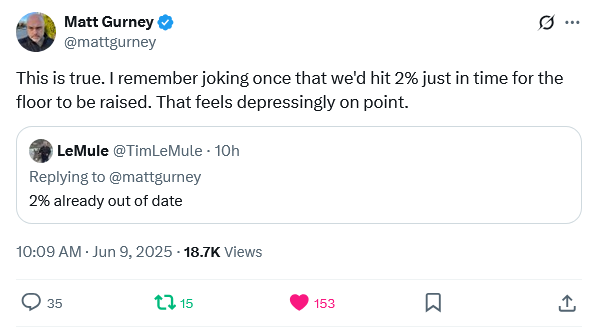
On Monday Morning, Prime Minister Mark Carney was in Toronto to make a major announcement on Canada’s military spending. After being one of the worst freeloaders in the western alliance, Canada was spending far less on the Canadian Armed Forces than the 2% of GDP we’d promised our NATO partners several years ago. Of course, at the same time that Canada seems to be finally getting serious about defence priorities, the rest of our allies are talking seriously about raising the agreed-upon target to 5%:
Chris Lambie in the National Post says it’s a C$9 billion bump in direct military spending in this (unbudgeted) year:
Canada’s plan to add more than $9 billion to defence spending this year was praised by military watchers Monday, but they cautioned that the country is shooting at a moving target.
Prime Minister Mark Carney announced the country would meet its commitment in this fiscal year of hitting the two per cent of gross domestic product mark that was agreed upon by NATO countries more than a decade back.
“It’s very encouraging that the prime minister has come out this early in his mandate and made such a strong commitment to defence,” said Vincent Rigby, a former top intelligence adviser to former prime minister Justin Trudeau, who spent 14 years with Canada’s Department of National Defence.
“You’ve gone from the former prime minister talking about the two per cent as a crass mathematical calculation to the current prime minister saying, no, this is actually a serious commitment. We committed to it 10 years ago and even before that. And we have to do it because we owe it to our allies. But we also owe it to the Canadian people. He made it quite clear this is about protecting Canada, protecting our national interests and protecting our values.”
New spending could do a lot to improve crumbling military infrastructure, said Michel Maisonneuve, a retired Canadian Army lieutenant-general who has served as assistant deputy chief of defence staff, and chief of staff of NATO’s Allied Command.
“The housing on bases is horrible,” Maisonneuve said.
He’s keen on Carney’s plan to participate in the $234-billion ReArm Europe program.
“This will bolster our ability to produce stuff for ourselves” while also helping the Europeans to do the same, Maisonneuve said.
“All the tree huggers are going to hate that, but that’s where we are today in the world.”
Carney’s cash injection includes $2.6 billion to recruit and retain military personnel. The military is short about 13,000 people. It aims to boost the regular force to 71,500 and the reserves to 30,000 by the end of this decade.
“There is no way we can protect Canada and Canadians with the strength that we have now,” Maisonneuve said.
Later in the day, Matt Gurney made some preliminary comments on the social media site formerly known as Twitter (I imagine he’ll have more to say in an upcoming Line post):
I’ve had a chance to actually look at some of the details of what was announced today for Canada’s defence. Overall, I am very supportive of everything that’s been announced.
There are some caveats. Or at least notes.
1. The new spending is mostly aimed at flushing out existing capabilities, not adding new ones.
That’s fine! We need to do that, definitely. I just don’t know if the public understands how much money we could sink into the military without actually adding any new capabilities. All we would do is backfill capabilities that we currently claim to have that don’t really exist.
2. Billions of additional dollars are going toward very basic things. More money to retain existing personnel. Apparently more money to build out recruitment. Spending more money to bring equipment and facilities up to state of proper repair.
Same as above. All good! Needed. Smart.
3. Some of what’s being announced today is entirely a matter of how we’re budgeting stuff. Certain existing expenditures are being redesignated as defence expenditures.
That’s okay! Some of our allies count things toward their defence total that we don’t. Everybody cooks the books a little bit, and I have no objection to this.
4. Everything being announced today should have been done years ago.
The only note I really have to add here is how the longer [Mark Carney] is Prime Minister, the harder it gets to explain away some of the shocking inactivity of his immediate predecessor.
5. None of this is going to be enough.
Remember, all we’re doing here is building out existing capabilities so that they are actually real things, not just things that exist on paper. That’s good. But the actual work of recapitalizing, expanding and adapting the military for 21st-century conflict hasn’t really begun yet. Everything announced today is a necessary start to getting that done. But the hard work is still to come.
And so are the really eye-watering numbers.
Of course, there are definite downsides to just opening up the spending taps the way things currently are set up:
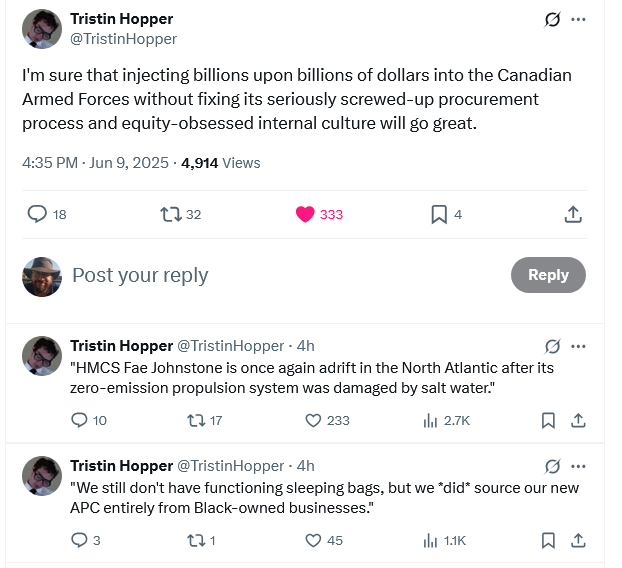
He’s not wrong.


