
Depending on who you read, it appears that the massive power outage in southwestern Europe nearly expanded across the continent, as Spain and Portugal went dark taking parts of other neighbouring countries’ networks down as well. James Price explains that this sort of thing is likely to be a recurring phenomenon as Europe leans ever more heavily on unreliable sources of electricity:
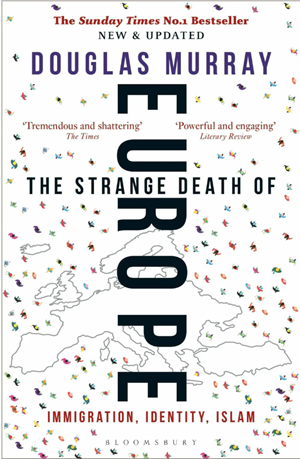
In his 2017 book The Strange Death of Europe, Douglas Murray accused Western European nations of Geschichtsmüde, being weary of history. President Trump might translate this by recycling a sobriquet he used against Jeb Bush — being low-energy.
This is now literally the case in both the United Kingdom and Germany, who have the most expensive energy costs in the developed world. The consequences have been catastrophic, in economic, political, environmental, and even geostrategic terms.
The true tragedy is that so much of the pain is self-inflicted, the result of bad, rushed policy designed to make people feel warm and fuzzy inside, rather than actually keeping people warm.
Net Zero
The commitment in Britain to “net zero emissions by 2050” was signed into law in the dying days of Theresa May’s premiership, as an attempt to give her a “legacy” after three painful years as Prime Minister. That legacy is likely to be lost, like the works of Ozymandias, as the world comes crashing back to economic reality.
The debate over the introduction of net zero was conducted during the Conservative Party’s leadership contest to succeed May, and therefore all attention was away from what would prove to be the most impactful economic decision of the year. The debate lasted all of 90 minutes.
The results have been completely devastating for Britain’s economy in all sorts of corrosive ways. For one, 169 years after Henry Bessemer worked out how to mass-produce steel in Sheffield, Yorkshire, Britain almost lost its ability to make the stuff here in Britain. Global factors like Chinese dumping play a part, but the extent of environmental regulation on British industry is making it impossible to sustain any kind of heavy industry. And now, British Steel has been nationalized once more, lumping the taxpayer with the losses and liabilities, but without doing anything to address the root causes.
But the government meddling does not stop there. In agriculture, a cruel, ideological attack on farmers (over whether farms can be charged inheritance tax) is going to spur more prime farmland to be turned into solar panel fields in a country where the sun often doesn’t shine.
There are now many statutory requirements to push environmental policies in all sorts of areas, to the complete detriment of other requirements, namely economic prosperity, that would otherwise be carefully balanced. So new homes in Britain have to have small windows, to increase insulation efficiency.
HS2, a much delayed and hideously over-budget high speed rail line between London and Birmingham, is building a one-kilometer-long tunnel to prevent bats being harmed by high-speed trains. The tunnel will cost over £100 million to build. Not only is there no evidence that the trains would interfere with bats, but there is also some evidence that the bat tunnel may actually be a bat-killing tunnel.
Hinkley Point C, the only nuclear power station being constructed at the moment in Britain, is having to construct a “fish disco” at huge costs to push fish away from being sucked into the cooling system.
This kind of environmental “everythingism” is not just holding back progress, not just costing huge amounts; it is corrosive of every attempt by people who just want to get on with building and growing — even “green” enterprises. Orsted, an offshore wind company, had to fill in forms five times longer than Tolstoy’s War and Peace, and had to wait nearly three years for a decision to build one farm.
And specifically about the Spanish situation that nearly triggered a Europe-wide blackout, from the social media network formerly known as Twitter:
SPAIN BLACKOUTS: AN ANONYMOUS EXPERT VIEW
From a deep groupchat, last night, translated from Spanish, written by an expert in transmission and distribution of power. Not my words.
“What has happened on April 28 has a well-located origin: the Aragón-Catalonia corridor, which is one of the most important electric highways in Spain. There is not only the electricity produced by our solar and wind farms in the northeast, but also the electricity that we import from France. This international interconnection, although weak (it can only contribute 3% of our demand, well below the minimum of 10% that marks the EU), in times of stress is essential to balance the network.
“At 12:32 p.m., in that Aragón-Catalonia corridor there was an electric [shake]. What exactly does “shake” mean? It means that suddenly and abnormally, the power that flowed through those lines began to vary violently, rising and falling in a very short time. Such abrupt variability can be due to three main causes:
“1. That a relay or transformer on that electric highway detects an abnormal flow of current or voltage (higher or lower than expected) and automatically disconnected to avoid burning or [being] destroyed. This is called that “opens” a relay or switch: it jumps and cuts the passage of electricity to protect itself.
“2. That the enormous concentration of renewable energy in that area (mainly solar and wind) has created an electrical resonance: electronic inverters, which synchronize current, can sometimes be amplified between them if a small voltage alteration (for example, due to clouds, strong wind or a slight failure) extends like an echo to all devices, causing widespread oscillations.
“3. That a wrong control order has been sent (by mistake or attack) from the SCADA systems, disconnecting or reducing the generation of multiple hit plants. There is no confirmation of this possibility yet, but it is being investigated.
“What is known is that as a consequence of that shake, the interconnection with France jumped: we were isolated just at the worst time, when the peninsula needed external support to stabilize.
“Without that French help, the frequency of the peninsular network (which should always be 50 Hz exact) began to drop quickly. The frequency is like the heartbeat of the network: if it falls too much, the systems understand that the patient (the network) is collapsing and automatically disconnected so as not to self-destruct. Thus, in just five seconds, the solar and wind farms were turned off — [they are] very sensitive to frequency variations — 15 GW of power was lost suddenly (60% of all the electricity generated at that time), and the network could not take it anymore: it collapsed completely, showing the Redeia Platform (REE) a “0 MW” nationwide. That does not mean that all the turbines were physically turned off, but there was no generator synchronized at the common frequency of 50 Hz. It was, for practical purposes, a country [turned] off.
“To [restart] a completely dead network, one essential thing is needed: plants that can start in black, that is, without receiving energy from anywhere else. Spain has identified five large hydroelectric jumps capable of doing this. However, and here is one of the great negligences that are coming to light, three of those five groups were stopped in scheduled maintenance, by business decision supervised by the administration. Only two were operational. That made the recovery much slower and weaker than it should be in a normal contingency plan.
“The result is that, after almost 10 hours, only 35% to 40% of the national supply has been recovered, and there are still large areas in the dark or under scheduled cuts.
“The situation reveals a very serious underlying problem:
“Spain is still an energy island: it only has 3% foreign exchange capacity compared to its total demand.”
Part 2:
“The network depends a lot on variable renewables, which are disconnected quickly in the face of any instability.
“The lack of physical inertia reserves (i.e. large rotating masses such as thermal power plants or classic hydraulics) prevents the disturbances from damping.
“And poor maintenance planning left without enough hydraulic muscle to respond to a crisis.
“The most likely causes, with current data, are:
“A combination of technical failure in protection or in synchronization, added to a serious lack of operational forecast and maintenance (probability ≈ 40%).
“The possibility of an intentional cyber-physical attack remains in analysis (≈ 25% estimated probability).
“Other factors such as human error, punctual atmospheric phenomenon or mixed causes complete the rest.
“In short: an initial shake at the most sensitive point of the Spanish network — the Aragón-Catalonia corridor, door to Europe — left the peninsula isolated and vulnerable. The network could not sustain its own demand because it did not have sufficient assistance, nor stable physical reserve, nor enough bootable plants in black. Three of five hydroelectric jumps were out of service when they were most needed.
“For this reason, Spain went out in five seconds, and that is why it still continues to light little by little, fragile, slow and exposed.”


