Quotulatiousness

October 15, 2019

Looking past October 21st

Filed under: Cancon, Politics — Tags: , , , , , — Nicholas @ 03:00

Jay Currie has already wasted his vote at the advanced polls (the same way I’m going to waste mine come election day), and now he’s considering what our parliament will look like on October 22nd (here’s a hint … we both know our guy isn’t going to be PM):

On October 22 we’re going to wake up to a politically very different Canada assuming that JT is unable to win a majority. The first thing which will change is Trudeau’s position. He could be Mr. Dressup with a majority but in a minority position – assuming he can form a government at all – his Teflon coating will have worn off. It is just possible that the bought and paid for Canadian media will rouse itself from its slumber and begin to ask slightly harder questions.

The second thing which will change is that third, fourth and even fifth parties will matter. For Trudeau to form a government he will need at least the NDP’s support and, perhaps, the Greens. To get that he is going to have to buy into a lot of nonsense which will be extremely bad for the country. The Liberals have plenty of idiotic policy but they don’t hold a candle to either the NDP or the Greens for economically useless virtue signalling.

Scheer would have an easier time of it in a minority position. His only possible ally would be the Bloc and while the Bloc wants to break up Canada they are financially sound and not nearly as eager as the NDP or the Greens for open borders and looney carbon taxes.

The key thing to remember is that regardless of who forms the government, that government is not going to last very long. In a sense, this election is about the next, more decisive, election. If Trudeau loses as big as he looks to be doing the Liberal Party will be looking for another leader. If Scheer ekes out a workable minority he will be looking to call an early election (in the face of the idiotic Fixed Terms act we have saddled ourselves with) to crush that new leader.

For Singh, especially if he picks up seats as well as popular vote, the election will cement his place as the NDP leader and silence the people who are talking about his unelectability. Lizzie May will be hailed as an emerging force in Canadian politics if she manages to pick up a couple more seats on Vancouver Island and, I suspect, that is exactly what she is going to do. (Old, white, retired, rich people just love a party committed to never changing anything.)

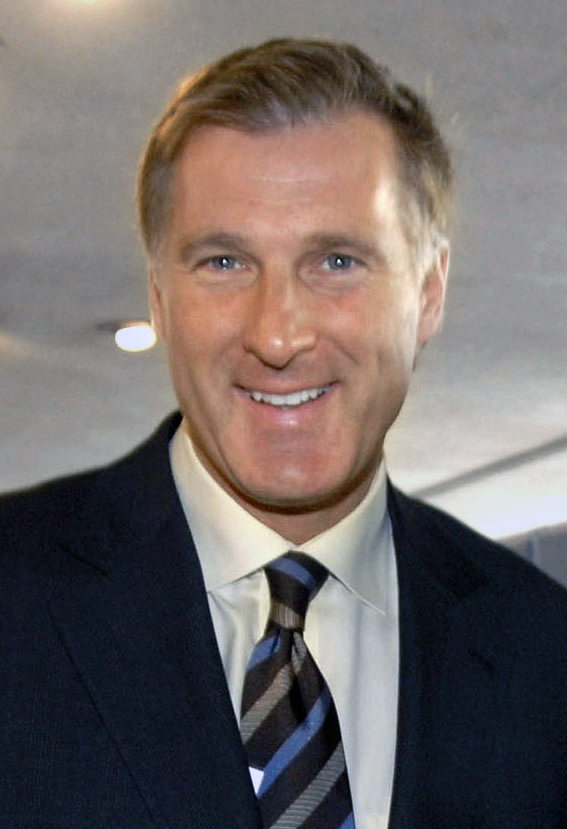
And what about Max? Obviously, he needs to hold his own seat. Which may be tough but I think he will pull through. I very much doubt he will win any other seats for a variety of reasons having nothing to do with Max or his policies. New parties take a while to gain traction. For Max, the biggest issue is how he does in the popular vote. Sitting at 1% is not going to cut it, but pop up over 4% and the table changes. Anything beyond that and Max will be the election night story.
October 11, 2019

A spectre is haunting the Liberal war room: the spectre of Jagmeet Singh

Filed under: Cancon, Politics — Tags: , , , — Nicholas @ 03:00

In the wake of the English language debate, NDP leader Jagmeet Singh is suddenly getting more of the kind of attention I thought he’d get from the media after he became party leader. Back in January, while he was campaigning for a seat in Parliament in a BC byelection, I wrote:

When Jagmeet Singh was elected NDP leader, I really did think he’d be a significant challenge to Justin Trudeau due to the media’s apparent fascination with Singh (a love affair that appeared to be as deep and lasting as that of Justin’s teeny-bopper [media] fan club for their darling), but it faded very quickly indeed. I guess as far as the Canadian media is concerned, there can only be one …

Now it appears that the Liberal Party backroom braintrust has suddenly woken up to the threat that Singh and the NDP are going to retain and even increase their support among left-leaning voters the Liberals had been taking for granted:

An even bigger risk for Trudeau is if lots of so-called low-information voters — who make their decisions late in a campaign — decide to cast a ballot for the charming Singh’s New Democrats.

But the biggest risk of all to the Liberals and Conservatives is if lots and lots of citizens give the finger to both parties and decide to vote NDP or Green to express their dissatisfaction with the status quo.

It looks like a long shot now with the economy humming along and a low unemployment rate.

But the same circumstances existed in B.C. in 2017. And plenty of voters decided that these were the right conditions for bringing the NDP back to power.

Nobody is expecting that Jagmeet Singh will be prime minister after the October 21 election.

But if he captures far more seats than the CBC poll tracker is projecting, it will be because of his genial nature and his ability to speak like a human being.

Surely, the Liberals realize that. The class differences between Trudeau and Singh are profound — and there are far fewer voters in Trudeau’s realm than Singh’s.

October 2, 2019

In a crowded field, Election 2019 may be the worst we’ve seen so far

Chris Selley makes the case that this year’s federal election is the worst of all:

It has been widely suggested that this might be Canada’s Worst Election. Certainly it is dreary as all get-out. We began with interminable back-and-forth about abortion, which all party leaders pledge to do absolutely nothing about. If one or more of them are lying, it seems very unlikely they would admit to it at a press conference. The next mania was over Justin Trudeau’s blackface revues, which were radioactively damaging to whatever was left of his Most Enlightened Gentleman brand, but which mostly served as an opportunity for exhibitionist partisan insanity and cringeworthy journalism.

[…]

By rights the Conservatives should be mopping the floor. But they can hardly attack Trudeau’s social-engineer budgeting when they’re relaunching their flotilla of boutique tax credits for kids’ sports and arts programs and public transit. Why not just make their tax cut even bigger and let people spend their money how they please?

Similarly, the Conservatives would be on much firmer ground criticizing Trudeau’s housing-market interventions if they weren’t promising to review the mortgage stress test and bring back 30-year mortgages — something Stephen Harper’s government eliminated in 2012. Having decided carbon pricing was evil almost entirely because Justin Trudeau supports it, the Tories still struggle to defend any effective or efficient policy against climate change.

Any hope that Maxime Bernier might hold Scheer’s feet to the fire on free minds and free markets went up in flames ages ago as his People’s Party attracted far more authoritarian/nativist refugees from the Conservative Party of Canada than libertarian ones. Jagmeet Singh is bargaining hard to sell the NDP’s credibility down the river to appease all-but-totally uninterested Quebec nationalists — shamefully promising not to intervene against Bill 21, as if he would ever get the chance. Elizabeth May and her Green Party constantly remind us that they’re really quite odd: May insisting Longueuil candidate Pierre Nantel isn’t a separatist while Nantel shouts “I’m a separatist!” through a bullhorn is the weirdest thing she has done since the last weird thing.

The debates have worked out as badly as conceivably possible: The Leaders’ Debate Commission, created by the Liberals to solve a problem that didn’t exist — aieeee! Too many debates! — has reinvented the wheel, crushing both Maclean’s debate (which Trudeau declined to attend) and the Munk debate on foreign affairs (which has been cancelled due to Trudeau’s lack of interest) beneath it.

September 13, 2019

NDP leader Jagmeet Singh gets his tax plans vetted by the Parliamentary Budget Office

Filed under: Cancon, Economics, Politics — Tags: , , , , , — Nicholas @ 03:00

A recent innovation for political campaigns is that they can ask the Parliamentary Budget Office to provide an estimate for the impact of any taxation proposals, and NDP leader Jagmeet Singh was the first out of the gate to have his “super-wealth tax” evaluated. The PBO estimates that the levy would net out some $6 billion in the first full year of implementation. Sounds like a lot of money! Colby Cosh explains why it’s not quite what it might seem:

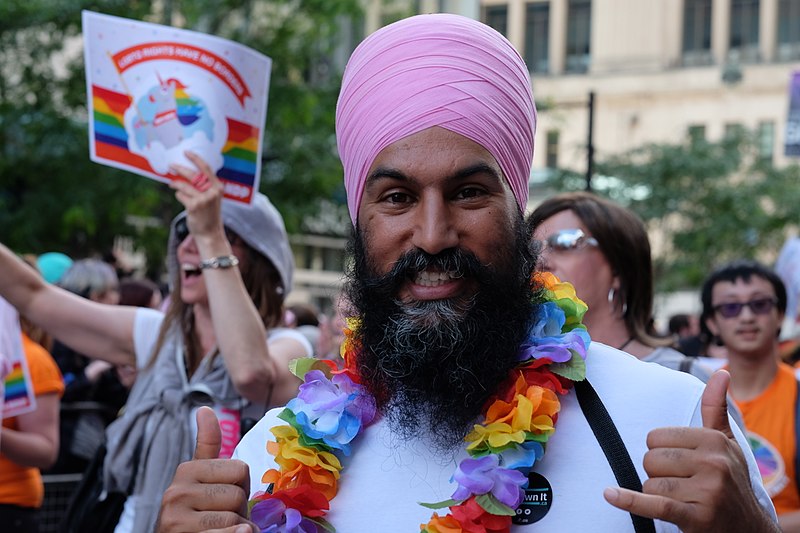
Federal NDP leader Jagmeet Singh taking part in a Pride Parade in June 2017 (during the leadership campaign).
Photo via Wikimedia.

Alas, the bean-counters always swoop in to spoil things. Singh’s wealth-tax scheme is instructive not only because he availed himself of PBO costing, but because it usefully reveals the limits of what the PBO or any other economic modeller can do. Look, in other words, at the fine print.

The PBO’s job was to estimate what you can extract from “an annual net wealth tax on Canadian resident economic families equal to one per cent of net wealth above $20 million.” In the PBO model this is a simple multiplication, but the roughly $6 billion take is arrived at only by reducing the revenue by 35 per cent to correct for “behavioural response” — that is, lawful (and unlawful) tricks employed to avoid the new tax by the rich targets. The net revenue is what’s left after you deduct another two per cent to cover administrative costs.

And, as the PBO immediately insists, “the estimate has high uncertainty” on both counts. This means they’re educated guesses. Jennifer Robson, a social policy prof at Carleton University’s Arthur Kroeger College, pointed out on Twitter that right now we don’t tax economic families per se and we don’t report assets and debts routinely to Revenue Canada. Ideas for pure wealth taxation (which is rare in practice) are predicated on the creation of, essentially, a new tax system — one which would have to detect and perpetually update how much, for example, the furniture in your house costs. The 35 per cent loss from behavioural response is at the high end of historic estimates from real-world examples. Even within our current tax system, Robson observes, we only get two extra dollars for every one we spend on expanding collections and compliance against the existing tax base.

As a practical matter, a wealth tax would mostly be, or would act most efficiently as, a tax on bank balances and investment accounts. Of course, there is always real estate. The super-rich seem to have a lot of that, and it is relatively easy to tax, and the resentment of Torontonians and Vancouverites who don’t own some is, for better or worse, a major reason the NDP is trying to weaponize envy.

But this reminds us that property taxes and taxes on property transfers perform a similar function, although they are not used primarily for income redistribution as such here — and in Canada ours are relatively high. The OECD does a little league table of tax structures, and compared with other industrialized countries Canada’s take from property taxes is about double the average. In a 36-country list we are near the bottom (33rd) in our dependence on taxing goods and services, and about average (12th) in dependence on corporate taxation, but fifth highest in dependence on personal taxation — and third in dependence on property taxes.

July 31, 2019

Federal NDP and Greens duel on climate platforms

Filed under: Cancon, Economics, Environment, Politics — Tags: , , , , — Nicholas @ 03:00

Colby Cosh looks at the two most environmentally conscious federal parties’ climate change stances as we head into the next general election:

Federal NDP leader Jagmeet Singh taking part in a Pride Parade in June 2017 (during the leadership campaign).
Photo via Wikimedia.

So why are our most radical, eco-aware parties so easily distracted on this front? Jagmeet Singh’s New Democrats talk tough on climate change in their “Power to Change” plan. It is maximum urgency right out of the gate in the preamble. “People across Canada are worried about the future.” True enough! They usually are! “Flooding and forest fires are threatening our homes.” Well, speak for yourself, but OK. “Polluted air and water are hitting communities hard.” Wait, polluted water…? Wasn’t this supposed to be a climate change thing? “And rising temperatures are threatening our farming and forestry industries.” Oh, good, back on track! “It’s clear there’s no time to waste.”

There is a whole load of radical measures in the NDP program, but they cannot resist this tendency to drag in grace notes of economic nationalism and other subjects at best vaguely related. They promise to “make it easier to own a zero-emission vehicle” in Canada, which might help with the Big Problem, but in mid-sentence they remember that they’re in hock to organized labour and add “and make sure those cars are made in Canada.” This means that if the price of a Tesla comes down to $500 tomorrow, you’ll still have to buy the carbon-neutral modern equivalent of a Bricklin, assuming someone can be found to try building one. Shouldn’t we be willing to buy zero-emission vehicles from Zanzibar or Antarctica if that’s the most efficient way, or the only way, to upgrade the fleet?

The document also smuggles in a promise to eliminate single-use plastic products, which take carbon from the bowels of Mother Earth and… restore it thither in landfills, with the evil molecules usefully imprisoned in polymer chains. We’ll be replacing all that plastic, presumably, with metal cutlery (from mines) and cloth bags (from forests) that have to be washed in hot water if you happen to be particular. There is no hint that this is an incongruous or irrelevant part of a climate-change plan.

So, perhaps a bit of mixed messaging there, as the NDP have to trim their sails in odd ways to keep some of their constituencies in line. How about the Green Party then?

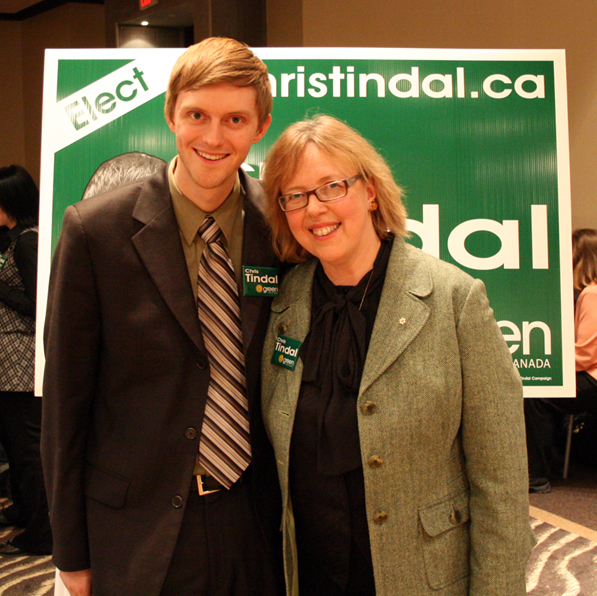
Green Party of Canada leader Elizabeth May with Green candidate Christ Tindal in 2008.
Photo by Shaun Merritt via Wikimedia Commons.

The Green list of climate-change policies is much more radical and earnest in appearance; Elizabeth May’s political liquidators intend to abolish internal-combustion vehicles by 2040 (such dates are no longer sci-fi, oldies) and retrofit every single building in the country for carbon neutrality by 2030.

But what, as the University of Alberta energy economist Andrew Leach asked in a CBC editorial on Monday, is this about “ending all imports of foreign oil”? This autarkic flake out flies in the face of the Greens’ entire approach; some of the oil we produce here is (please imagine me whispering this part) somewhat carbon-intensive relative to the stuff Eastern Canada takes from elsewhere in the world. Moreover, increasing use of domestic oil even in the short term implies a pretty major program of, uh, pipeline-building.

Not to mention the new refineries. The Green Climate Change War Cabinet (a real thing they want) would permit “investment in upgraders to turn Canadian solid bitumen into gas, diesel, propane and other products for the Canadian market, providing jobs in Alberta.” By 2050, they envision shifting “all Canadian bitumen from fuel to feedstock for the petrochemical industry.” This adds up to an awful lot of subsidized high-tech construction — executed at the same time as a total retrofit of the national housing stock! — that has nothing much to do with reducing emissions per se. Although it sounds as though the Greens are, if nothing else, definitely much bigger fans of plastic than the New Democrats.

May 14, 2019

Is Canada ready for a New Green Democratic Party?

Filed under: Cancon, Politics — Tags: , , , , — Nicholas @ 05:00

Ali Taghva explores the notion of the federal NDP and Green parties joining together:

With fundraising and polling numbers in sharp decline at the same time that experienced MPs and staff leave the party, it is evident, even the base of the NDP is beginning to lose faith in the current direction led by Jagmeet Singh.

Worryingly for every single NDP member in the country, this is occurring even when Justin Trudeau’s post-election honeymoon has long ended.

As a result, it appears that the Green Party has become the progressive vehicle gaining the most federal momentum. Their fundraising numbers are on the upswing, and if the trend in the latest by-election in B.C. holds up, they may be the preferred refuge for disenfranchised Liberal voters.

While the Green Party does have momentum, it will not be able to push forward as Canada’s progressive alternative, at least not alone.

The party is still astronomically behind the Conservatives and Liberals when it comes to fundraising, quality of candidates, and polling support.

Even in comparison to the NDP, the Greens are still behind in fundraising and polling, although the distance between the two parties is far more negligible.

With both parties too far back to do anything other than reducing the Liberal vote, ensuring a Conservative majority, it may be time for Canadian progressives to seriously consider a merger between the Green party and the New Democrats.

Okay, but why now? What would be the big draw … oh:

Perhaps most interestingly though, a united alternative progressive party could easily bring on-board the two highest-profile individuals who still have no declared party for the federal election, Jane Philpott and Jody Wilson-Raybould.

With most Canadians believing Jody Wilson-Raybould’s account over that of the Prime Minister’s, her entrance into the race along with Jane Philpott’s could be the final piece which catapults the party into contention for the role of governing party.

Of course, of course … the old celebrity candidates trick. That always works. Well, in urban downtown ridings, anyway.

January 17, 2019

Jagmeet Singh and the federal NDP

Filed under: Cancon, Media, Politics — Tags: , , , , , — Nicholas @ 03:00

Chris Selley on the political issues afflicting federal NDP leader Jagmeet Singh as he tries to win a byelection in British Columbia:

More and more New Democrats seem concerned that Jagmeet Singh mightn’t have been the best choice for leader, let alone deserving of a whopping 54 per cent first ballot victory. His various alleged crimes include rendering himself invisible for months, imposing draconian punishments on popular MPs, and going on TV to suggest we stop importing Saudi oil and get it from other countries instead — at a time when Alberta’s NDP government is fighting both for pipelines and for its continued existence.

[…]

Tom Mulcair was a pro. Dumping him appears to be the dumbest thing the NDP ever did. Still, if Singh wins his seat, there is reason to hope he might grow into the job. To skeptics he evinces a distinctly Trudeauvian brand of superficiality, and a similar gift for quotes that land well but fall to pieces if you actually read them back. That hasn’t hurt Trudeau, though — not much and not yet. Singh, a criminal lawyer, certainly boasts a more impressive resumé outside of politics. And goodness knows there are more than enough avenues for any NDP leader to attack a Liberal government that promised us the moon but left us conspicuously earthbound.

If Singh is an anchor on NDP fortunes, it doesn’t seem to be massively heavy one. Nanos Research has them at 15.4 per cent, as of last week — not good at all, but well within recovery distance of their 19.7 per cent performance in the 2015 election. Pre-campaign polls are generally held to be meaningless. Again assuming Singh wins his seat, he has plenty of time to introduce himself and his vision for the NDP.

It’s also possible, though, that the federal NDP in 2019 is a busted flush no matter who’s leading it. The combination of personal charisma and political circumstance that propelled it to Official Opposition status in 2011 might just be throttling back down toward cruising speed.

We shouldn’t overestimate just how improbable Jack Layton’s achievements were. He dragged the NDP to the political centre, where the votes are, marginalizing various breeds of crackpots along the way, while keeping the famously restive portside of the party relatively content. Then he stole a huge chunk of the Quebec nationalist vote in the dead of night.

When Jagmeet Singh was elected NDP leader, I really did think he’d be a significant challenge to Justin Trudeau due to the media’s apparent fascination with Singh (a love affair that appeared to be as deep and lasting as that of Justin’s teeny-bopper fan club for their darling), but it faded very quickly indeed. I guess as far as the Canadian media is concerned, there can only be one…

The byelection is looking pretty safe for Singh, as his Tory opponent beclowned himself quickly, and news broke on Wednesday that the Liberal candidate has withdrawn, after similarly beclowning herself:

January 15, 2019

Jagmeet Singh’s conservative opponent in Burnaby South

Filed under: Cancon, Politics — Tags: , , , , — Nicholas @ 03:00

Normally, the byelection campaign by a major party leader to gain a seat in the House of Commons doesn’t get quite this … snippy:

Federal NDP leader Jagmeet Singh taking part in a Pride Parade in June 2017 (during the leadership campaign).
Photo via Wikimedia.

Maybe someone should put in a kind word for Jagmeet Singh on the rare opportunities when an occasion presents itself. The federal NDP leader found himself on the right side of a ridiculous argument over the weekend as his byelection in the riding of Burnaby South got officially underway. Singh’s Conservative opponent for the open seat, commercial lawyer Jay Shin, promptly issued a press release suggesting that Singh was … apparently the wrong species of lawyer?

“While Jagmeet Singh has spent his pre-political career as a criminal defence lawyer keeping criminals out of jail, I have spent my legal career building Canadian businesses that create jobs and promote international trade,” Shin’s statement read.

When challenged by the Burnaby Now newspaper on his apparent suggestion that, as a former university instructor in International Mining Transactions, he was somehow ethically superior to the underpaid schmucks who provide criminal defence, Shin disavowed any such meaning.

Criminal lawyers “play an important role; everybody has a right to defence,” the Conservative candidate insisted. (Whew!) “What I’m saying is, he played that role. As a criminal lawyer, he defended criminals. That’s all I’m saying.”

One notices that even this characterization may leave a civil libertarian uneasy, since criminals aren’t criminals until the Crown successfully convicts them. A defence lawyer doesn’t “defend criminals”: he defends the accused. But maybe that is the sort of distinction you forget when you are busy building Canadian businesses, or trying to become a Conservative MP.

January 11, 2019

Jagmeet Singh’s plight

Filed under: Cancon, Media, Politics — Tags: , , , , — Nicholas @ 05:00

Federal NDP leader Jagmeet Singh will finally get his chance to win a seat in Parliament on February 25 in the Burnaby South byelection. Things have not been going well for Singh since he was elected leader in 2017. At that time, I thought he would be a serious threat to Justin Trudeau’s popularity with the media (Justin’s teeny-bopper fan club) and allow the NDP to be taken more seriously as a potential government. That hasn’t happened and Singh’s media coverage has been much more critical than any NDP leader might have expected. Andrew Coyne explains:

It is safe to say Singh has not proved quite the rock star New Democrats hoped when they elected him leader in October 2017. Undertaker would be closer to the mark. While the party trundles along at a little under 17 per cent in the polls, about its historic average, Singh himself is in single digits, slightly behind Elizabeth May as Canadians’ choice for prime minister.

Singh’s trajectory is a cautionary tale on the importance of experience in politics. With just six years in the Ontario legislature, Singh was barely ready for the job of provincial leader, still less the much sharper scrutiny to which federal leaders are subject. It has showed.

He appears frequently to be poorly briefed, on one memorable occasion having to ask a member of caucus, in full view of the cameras, what the party position was on a particular issue. He badly mishandled what should have been a softball question on where he stood on Sikh terrorism, and alienated many in the party with his knee-jerk expulsion of Saskatchewan MP Erin Weir for what appeared to be no worse a crime than standing too close to women at parties.

The decision not to seek a seat in the House until now has robbed him of what visibility the leader of a third party can expect, though his manifest weakness as a communicator makes it debatable whether this is a plus or a minus. Fundraising has dried up. Party morale is in freefall. Caucus members speak openly, if not on the record, of their desire to be rid of him.

For the Liberals, on the other hand, Singh is the answer to all their prayers. The prime minister’s own approval ratings may have dropped precipitously, but as long as the NDP vote can be kept to current levels of support or less the Liberals are unlikely to lose. (The NDP’s average share of the popular vote when the Conservatives win: 19.5 per cent. When the Liberals win: 14.8 per cent.) And nothing so guarantees a calamitous NDP showing as Singh’s continued leadership.

Hence the curious unspoken subtext of the Burnaby South race, with Liberals more or less openly rooting for him to win — and New Democrats hardly less publicly hoping he loses.

September 15, 2018

NDP leader Jagmeet Singh hits a rough patch

Filed under: Cancon, Media, Politics — Tags: , , , — Nicholas @ 05:00

Colby Cosh on the federal NDP leader’s travails:

The thing about being a New Democratic Party leader is that there’s an oh-so-fine class line to walk, a line that is easier for the leaders of less socially concerned parties. No one really expects that the leader of the NDP will actually be a working-class person, and since Ed Broadbent’s time, even the expectation that the leader will have been raised working-class has diminished. Jack Layton and Thomas Mulcair have so many politicians brachiating in their family trees that if they lived in the U.K. they would probably have had peerages to renounce.

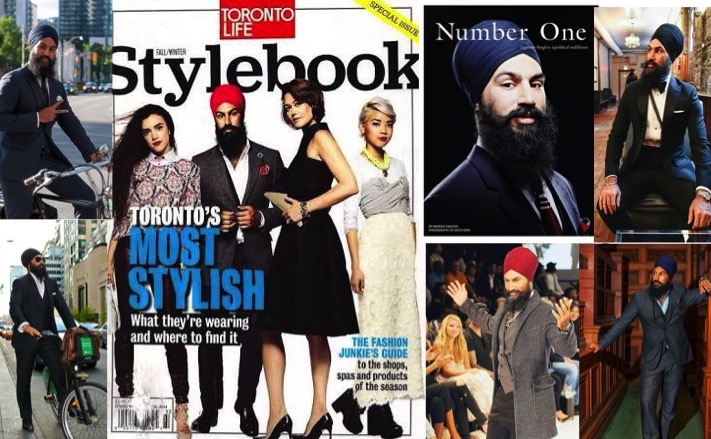
But until Jagmeet Singh came along, there was a still norm of personal austerity to be observed — a natural limit to how expensively one could dress, and how much conspicuous consumption one could indulge, while still serving up an NDP leader’s generous portion of lectures against selfishness and greed. Singh is the son of a psychiatrist: the tuition for the private American high school from which he graduated is, for the 2018-19 school year, US$31,260. He has been in GQ for his bespoke suits, and owns (according to Toronto Life) two Rolexes.

(I confess that the watches set me off. Rolexes aren’t arty like a Patek Philippe; they don’t do anything cool. They’re mostly kind of ugly. They are a pure, cold signifier of brute pride in wealth.)

Making Singh leader of the federal NDP was audacious. If ordinary New Democrats had a problem with his image and tastes, they probably felt that, with Justin Trudeau leading the Liberals, they had plenty of wiggle room on the left for a handsome leader with some celebrity dazzle. Trudeau had appetizing potential to make ghastly errors of Richie Rich cluelessness, and has delivered.

But it seems Singh will not entirely be able to avoid the day of reckoning, the day of exposure to a stricter New Democratic standard. The leader, as you probably know, has a problem in Saskatchewan, the party’s traditional heart. In May he threw MP Erin Weir out of the national NDP caucus after an independent investigation “upheld” complaints of harassment, sexual and otherwise, against Weir. Weir’s many friends in Saskatchewan are unhappy with how the case was handled.

September 10, 2018

Speculation on an early federal election

Filed under: Cancon, Politics — Tags: , , , — Nicholas @ 03:00

Ted Campbell on the recent musings in the official party organ Toronto Star on the pros and cons of the Prime Minister going to the polls this fall rather than next year:

The Star, a pretty Liberal friendly journal, says, in an article by Robin Sears, a former NDP insider (in fact he was national director of the NDP for seven years), that “Liberal hawks, like those of a generation earlier, are heatedly debating a snap election call. Not entirely surprising, since [we] have not seen a decade since the ’50s when a government has not been forced by events, or decided to seize a strategic advantage, and called an early election … [and] … The Liberal hawks’ arguments are getting stronger. Neither of their opponents is ready, and each will likely be stronger a year from now. The Federal Court and Donald Trump have both just stuck a finger in the Prime Minister’s eye. This is an opportunity to return the favour with a much harder counterpunch, a strong new political mandate.“

[…]

I agree with Robin Sears … going [to] the polls sooner, in the fall of 2017, and running against Donald Trump (and the ghost of Stephen Harper) makes good political sense because it seems, to me, highly unlikely that Justin Trudeau and his gang that cannot shoot straight are going to get any better in the next year or so. In fact the Trudeau regime’s record, to date, suggests that a year from now the country might be in ruins.

Right now the NDP appears to be in shambles; Jagmeet Singh’s leadership is being questioned at pretty high levels, and the Conservatives are still reeling from Maxime’s Bernier’s defection. Waiting until October 2018 risks giving both the Conservatives and the NDP time to reorganize and present new, attractive programmes and, perhaps even new, more attractive leaders, too.

Will he go to the polls in 2017? Who knows? Parliament is due to reconvene, after the long summer recess, in a week ~ on 17 September. Many people were expecting a new Throne Speech outlining a pre-election platform filled with promises that will, most likely, never be kept, but Robin Sears makes a good case for Prime Minister Trudeau to go to the Governor General, next week, and to tell her that the situation is such that Canada’s government needs a new mandate.

August 17, 2018

“…when he asked her about [Jagmeet] Singh’s CBC appearance, ‘Notley laughed out loud'”

Filed under: Cancon, Politics — Tags: , , , — Nicholas @ 03:00

Colby Cosh is apparently fascinated by the internecine fight shaping up between the NDP Premier of Alberta, Rachel Notley, and the federal NDP leader, Jagmeet Singh:

Federal NDP leader Jagmeet Singh taking part in a Pride Parade in June 2017 (during the leadership campaign).
Photo via Wikimedia.

If I am being honest, the thing about the Singh-Notley quarrel that interests me most is not the range of possible political consequences. Nor is it the brute economics of Canadian oil. No, I am most interested in the rhetorical style of it. Last week, on CBC’s Power and Politics, federal NDP Leader Jagmeet Singh was discussing Saudi Arabia’s strange diplomatic meltdown and started speculating about Canada’s need to look for imported oil from other countries. Western viewers — no doubt the CBC technically has some — were well aware that Singh had opposed the controversial Energy East pipeline.

[…]

With Saudi Arabia acting like the cranky, unstable extended family it is, Energy East is looking a bit like a missed opportunity — not only for landlocked Alberta, which has a permanent stake in the multiplication of oil export options, but for the entire country. So it did not take long for people to start laughing at Singh’s musings about where, oh where on this great planet Earth, Canada might obtain some oil.

I am using the word “laughing” literally. On Friday, the Edmonton Journal’s politics columnist, Graham Thomson, had a sitdown with Alberta NDP Premier Notley, and when he asked her about Singh’s CBC appearance, “Notley laughed out loud … ‘It struck me that that was a thing that maybe he should have thought through before he said it.’ ”

The premier went on to add “What happened with Jagmeet is that he’s learning that things are not as simple as they sometimes seem” and insisted that “to throw (workers) under the bus as collateral damage in pursuit of some other high-level policy objective is a recipe for failure, and it’s also very elitist.” The e-word! For New Democrats, that’s rough talk.

[…]

Her rough treatment of Singh is unlikely to hurt his by-electoral cause in Burnaby, so the Notley-Singh fight can still be dismissed as mutually beneficial political theatre. Still, Singh tried to defend himself, sort of, in a Monday interview with our Maura Forrest. “I know that Premier Notley’s in a tough political fight,” he said, “but I’ve always felt, and I believe, that personal attacks are beneath her. That’s not my way and I think she’s better than that.”

I will never stop being confused and amused by the way politicians speak in these situations. Read for pure ostensive meaning, Singh is not accusing Notley of making a personal attack on him: in fact, he’s specifically saying that she is incapable of such a thing. But then why should she need the excuse of a tough political fight? Of course, we all know that saying someone is “better than that” is another way of calling them a jerk — perhaps the cruellest.

October 6, 2017

New NDP leader Jagmeet Singh even gets the thumbs up from crusty old conservative fogey

Filed under: Cancon, Media, Politics — Tags: , , , , — Nicholas @ 06:00

That is, Singh is seen as a much bigger threat to Justin Trudeau than to “stodgy” Andrew Scheer … which, in electoral terms, might leave the Liberals and NDP fighting it out for second place in the polls and the Conservatives up near majority territory. He’s certainly teh new hotness as far as the newspapers are concerned:

The media is buzzing about Jagmeet Singh being a game changer. Campbell Clark, writing in the Globe and Mail, says that “The NDP once picked stalwarts to fight the good fight as leader. Now, they have chosen someone who might disrupt Canadian politics. Don’t underestimate the potential for Jagmeet Singh to shake things up.” Chantal Hébert, writing in the Toronto Star, says “[Andrew] Scheer has to be hoping that Singh will give Trudeau more of a run for his money, for it usually takes a divided progressive vote for the Conservatives to win power.” And Lorne Gunter, writing in the Edmonton Sun, says that “Trudeau is a paper “progressive” – a poser – compared to Singh … [and] … unlike Thomas Mulcair, Singh’s predecessor as NDP leader, Singh won’t lose core social democrat voters by running to the right of the Liberals in the next federal election the way Mulcair did in 2015 … [thus, and] … In short, Singh is a headache the Liberals never imagined having. Compared to Trudeau, he is younger (38 rather than 45), smarter, at least as well-dressed and even more of a trendy, politically correct symbol.“

“But,” Mr Gunter says, while Jagmeet’s Singh’s selection is bad news for the Liberals, it “should be good for the Tories … [because] … It should revive vote-splitting on the left. And it should allow Tory Leader Andrew Scheer, while dull, to appear as the only clear alternative to the two Big Government leaders.”

Singh isn’t likely to draw a lot of votes from the Tories, but he’s a major threat to Trudeau in exactly those mediagenic qualities that Trudeau used to such great effect in the last federal election. Justin is in danger of being out-cooled by the new guy. A lot will depend on how long the media allows Singh’s political honeymoon to last, as they will be the primary channel for the “cool duel” to play out.

October 3, 2017

Jagmeet Singh wins the federal NDP leadership race

Filed under: Cancon, Politics — Tags: , , , , — Nicholas @ 05:00

The NDP have finally selected a leader who may be able to recapture some of the “lightning in a bottle” phenomenon of the late Jack Layton’s time as party leader (and bring back some former NDP voters who plumped for Justin last time around). Jay Currie is enthusiastic about the new guy:

Federal NDP leader Jagmeet Singh taking part in a Pride Parade in June 2017 (during the leadership campaign).
Photo via Wikimedia.

… I was cheered to see the rollover victory of Jagmeet Singh for the NDP leadership. Singh seems to be from the pragmatic end of the NDP and will be relatively immune from identitarian and intersectional attack simply because he’s brown and wears brilliant turbans. He’s intelligent, well spoken and has a bit of charisma. And he is just going to kill Justin Trudeau in places Trudeau needs to win.

It is simplistic to say that the Sikh community in Canada will universally support one of its own, there will certainly be a temptation to defect from Trudeau to Singh. While that might have some effect in Tory ridings, it will be felt most strongly in seats which have traditionally swung from Liberal to New Democrat and back again.

I am not sure, however, that Singh’s ethnicity is his biggest threat to Trudeau. By 2019 the emptiness of much of the Liberal’s program will be apparent to all. The broken promises, the tepid policy initiatives and, above all, the fiscal incompetence on the revenue side and on expenditures will be pretty apparent. For small business owners and consumers with half a clue, the combination of the lunatic small business tax measures and the expensive, but pointless, carbon tax will pour votes into the Conservative column. But with Canada’s first past the post system, that may not be enough.

Singh’s real threat to Trudeau is in marginal seats where the Libs beat the Conservatives by a few thousand votes in the last election because a) people had had enough of Harper, b) Justin seemed bright and shiny. People who would have voted NDP in the past were so eager to get rid of Harper they voted for Trudeau. Mulclair simply lacked the appeal to keep the faithful in the pews. At a guess, the rank and file NDP voters, as well as the multi-culti virtue signallers, will be much more inclined to give Singh a go. Which means he has the capacity to bleed off Liberal voters in significant numbers.

« Newer Posts

Powered by WordPress