Forgotten Weapons
Published 23 Nov 2016Cool Forgotten Weapons Merch! http://shop.bbtv.com/collections/forg…
The Pritchard bayonet for the Webley revolver is one of the more photogenic and less truly practical weapons to come out of the Great War. Designed by one Captain Pritchard after he spent a year in France in 1915-1916 with the Royal Berkshire Regiment, the idea was to use the front 8 inches or so of a sword on a cast gunmetal hilt to create a bayonet mounted on a British service revolver. He first presented the idea to the Wilkinson Sword Company, but they were too busy making sabers and rifle bayonets, and suggested that having to sacrifice usable sword blades for production would make it quite the expensive endeavor.
Pritchard next took his idea to W.W. Greener, where he found a more receptive audience. Greener had a large supply of surplus French Gras bayonets, which were cheap and served as excellent donors for the Pritchard bayonets. Something like 200 were made in total — not formally adopted by the British but available for commercial sale to officers who might want them. While some may have seen service, no hard evidence has been found to prove any combat action with them.
Over the decades, a great many fake and reproduction Pritchard bayonets have been made — many times more than there are originals. As far as I can determine, this one is a legitimate original (although it may have a replacement locking lever). A few things to look for in authenticating a Pritchard are engraved patent and manufacturer marks (most reproductions have no manufacturer logo and a stamped patent number) and a quality casting. When you hold the blade and tap the handle with a hard object, it should ring bright and bell-like (which this one does).
November 10, 2020
WWI Pritchard Bayonet for the Webley Revolver
November 7, 2020
Major Fosbery’s Breechloading Prototype Rifle
Forgotten Weapons
Published 5 Aug 2017http://www.patreon.com/ForgottenWeapons
Cool Forgotten Weapons merch! http://shop.bbtv.com/collections/forg…
George Fosbery was the British officer (Major, at the time of this particular design) responsible for the quite famous Webley-Fosbery self-cocking revolver, as well as the Paradox system for shotgun slugs and many other lesser known firearms inventions. This rifle was his entry into British trials in the late 1860s for a cartridge firing rifle. Ultimately the Martini-Henry would be chosen, but nine different guns were put through testing including Fosbery’s.
One of the aspects that Fosbery’s design was particularly well suited for was the requirement that the gun be able to be loaded with a minimum amount of movement required that might interfere with men standing in close formation. Despite this, Fosbery only managed to come in 6th place in the trials, and only a small number of his guns were sold on the civilian market afterwards.
If you enjoy Forgotten Weapons, check out its sister channel, InRangeTV! http://www.youtube.com/InRangeTVShow

November 4, 2020
Suppressing 9mm Carbines: Dead Air Wolfman on an AR, AK, and HK
Forgotten Weapons
Published 25 Jul 2020http://www.patreon.com/ForgottenWeapons
https://www.floatplane.com/channel/Fo…
Cool Forgotten Weapons merch! http://shop.bbtv.com/collections/forg…
Contact:
Forgotten Weapons
6281 N. Oracle #36270
Tucson, AZ 85740
From the comments:
ArfurFaulkesHake
44 minutes ago (edited)
It’s a shame that we can’t really hear how quiet this suppressor actually is, since the normalisation of the microphone doesn’t transmit how earshatteringly loud a normal shot is. But the fact that I could hear the bullets ricochet of the targets (4:01) speaks volumes about how good this suppressor is.
November 1, 2020
Arcelin Mousqueton: An 1850s Breechloader with a Ludicrous Bayonet
Forgotten Weapons
Published 26 Jun 2020http://www.patreon.com/ForgottenWeapons
https://www.floatplane.com/channel/Fo…
Cool Forgotten Weapons merch! http://shop.bbtv.com/collections/forg…
The Arcelin system was a capping breechloader provisionally adopted by the French military in 1854. It was a bolt action system with a folding bolt handle, firing a paper cartridge. It impressed Emperor Louis Napoleon III in initial trials, and he directed it be used to arm his elite Cent Gardes bodyguard. More extensive testing showed that it suffered from insufficient obturation, and would with extended use, eventually become so difficult to close that bolt handles would break. Its adoption was rescinded, and it was replaced by the Treuille de Beaulieu 9mm pinfire carbine in Cent Gardes use within just a few years.
The most distinctive element of the Arcelin in use was its bayonet — a true full-length sword complete with brass handguard that could be clipped to the muzzle. This was chosen for its impressive length, although it would have been cumbersome if used beyond ceremonial guard duties.
Thanks to the Cody Firearms Museum for allowing me access to film this very rare and very cool musketoon and its bayonet! Check them out here: https://centerofthewest.org/explore/f…
Contact:
Forgotten Weapons
6281 N. Oracle #36270
Tucson, AZ 85740
October 26, 2020
Classic Imperial British Revolvers: the Webley WG Army and Target
Forgotten Weapons
Published 19 Aug 2018http://www.patreon.com/ForgottenWeapons
Cool Forgotten Weapons merch! http://shop.bbtv.com/collections/forg…
The Webley company used the “WG” (Webley Government) nomenclature in its literature starting in 1883, but the first revolver actually marketed as such was the WG Model of 1889. These revolvers were made primarily for the military market, as officers were responsible for supplying their own sidearms in the British military until 1915. The WG was a full size service revolver in .455 caliber (accepting a wide variety of .45 inch British cartridges, including the .450, .455, .476, Enfield Mk II, and Enfield MkIII). A series of refinements would be made to the design culminating in the generally-accepted standard WG pattern in 1896. These would be produced until 1902, when they were replaced by the Webley WS (Webley Service).
The two main variation of the WG were the Army and the Target. The Army typically had a bird’s-head grip and a 6 inch barrel, where the Target had a longer 7.5 inch barrel and a flared square-butt grip, as well as adjustable sights. However, Webley was happy to supply and mix of features to a customer, and many branded patterns exist. The Target pattern proved very successful for shooters at the Dublin, Glasgow, and Wimbledon matches of the period. A total of about 22,000 WG pattern revolvers were made, with the “standard” 1896 model appearing around s/n 10,000.
Contact:
Forgotten Weapons
6281 N Oracle #36270
Tucson, AZ 85704
October 22, 2020
Winchester Lever Action Development: Model 1895
Forgotten Weapons
Published 19 Jun 2017We have reached the final iteration of the Winchester lever action rifle development story today, the Model 1895. This was another John Browning design, although the locking system is basically the same as the 1894 but with the bolt extending over the top of the locking block and hiding it from sight.
The new feature of the Model 1895 was the replacement of the traditional tube magazine with a single stack box magazine located under the action. By this time, spitzer (pointed) bullets were becoming commonplace, to exploit the new high velocities made possible by the new smokeless powders. In a tubular magazine, these pointed bullets would rest on the primer of the next cartridge in the magazine, and ran the risk of causing rounds to detonate in the magazine tube under recoil. The box magazine, of course, negated this danger completely.
The Model 1895 was built around the .30-40 military cartridge, although was initially released in two black powder chamberings. It would eventually be offered in a wide variety of chamberings, including .30-03, .30-06, .303 British, and the .405 Winchester — Theodore Roosevelt’s “Big Medicine”. In addition, more than half of the total production (nearly 300,000 rifles) would be for the Russian military, with the rifles chambered for 7.62x54R and fitted with stripper clip guides.
Cool Forgotten Weapons merchandise! http://shop.bbtv.com/collections/forg…
http://www.patreon.com/ForgottenWeapons
If you enjoy Forgotten Weapons, check out its sister channel, InRangeTV! http://www.youtube.com/InRangeTVShow

October 20, 2020
Winchester Lever Action Development: Model 1894
Forgotten Weapons
Published 17 Jun 2017The Winchester 1894 has become one of the most manufactured and most popular sporting rifles in American history, and it owes this success to a combination of factors. Mechanically, the 1894 was a continued improvement on John Browning’s already-excellent 1892 model. It was strong and simple to operate, offering both speed and power. The cartridge that cannot be separated from the history of the Winchester 94 is the .30-30 Winchester, aka the .30 WCF (Winchester Center Fire).
While the .30-30 shared a naming convention with the many black powder rounds that were in use (a .30 caliber bullet over 30 grains of powder), this new round was a smokeless powder cartridge. As such, it offered a very significant increase in velocity over everything else that was then available (just shy of 2000 fps). The cartridge was well suited for taking nearly any North American game, and the package of the 94 and the .30-30 made an outstanding general purpose weapon for a huge swathe of the American market.
By 1927, one million had been manufactured (the millionth one was presented to President Coolidge), and by 2006 production had exceeded 7 million. This truly is the iconic American deer and ranch rifle — so ubiquitous that its remarkable quality has set a new standard for the entire industry.
Cool Forgotten Weapons merchandise! http://shop.bbtv.com/collections/forg…
http://www.patreon.com/ForgottenWeapons
If you enjoy Forgotten Weapons, check out its sister channel, InRangeTV! http://www.youtube.com/InRangeTVShow
October 17, 2020
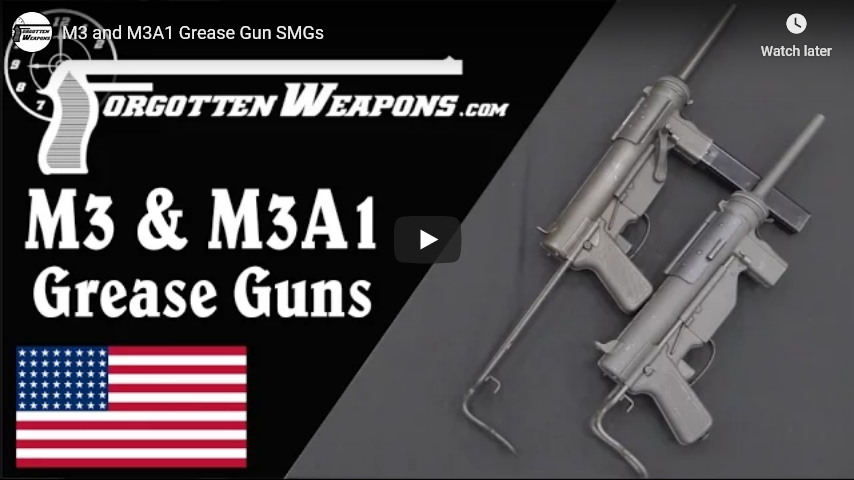
Winchester Lever Action Development: Model 1892
Forgotten Weapons
Published 15 Jun 2017As the Model 1873 began to show its age, Winchester wanted a new rifle to take its place in the company catalog. Scaling down the Model 1886 to the pistol cartridges of the 1873 seemed like a fine option, and Winchester executives approached John Browning, offering him $10,000 if he could produce such a gun within 3 months, or $15,000 if he could do the job in two months. Browning’s response was to say that he would take $20,000 and have the rifle in company hands within 30 days — or else he would give it to them for free.
The $20,000 that Winchester paid him for the new rifle was well worth it, as the 1892 would become the best-selling Winchester rifle to that date, selling more than a million guns by the 1930s. It used the stronger and more cost-effective locking system of the 1886, while being chambered for the same cartridges as the 1873 — the .44 WCF (.44-40), .38 WCF (.38-40), and .32 WCF (.32-20), as well as a few new cartridges added over time.
Cool Forgotten Weapons merchandise! http://shop.bbtv.com/collections/forg…
http://www.patreon.com/ForgottenWeapons
If you enjoy Forgotten Weapons, check out its sister channel, InRangeTV! http://www.youtube.com/InRangeTVShow

October 14, 2020
Winchester Lever Action Development: Model 1886
Forgotten Weapons
Published 13 Jun 2017The Model 1886 was the first Winchester repeating rifle to improve on the original toggle locking system of the 1860 Henry, and it is also the first of John Moses Browning’s lever action designs. Browning met with Winchester executives to sell them his design for the Winchester 1885 single shot rifle, and mentioned that he was also working on a lever action repeating rifle that would be much stronger than the existing Model 1876. This was very interesting to Winchester, and they agreed to buy that design as well.
The new rifle used a pair of vertically sliding blocks to lock the bolt into the receiver upon firing, and allowed the weapon to safely chamber much more powerful rounds, up to and including the .50-100 Express. This rifle superseded the Model 1876 almost overnight, as it finally allowed a single rifle to have the power of the single shot buffalo rifles and the rapid firepower of the smaller caliber Winchesters.
Cool Forgotten Weapons merchandise! http://shop.bbtv.com/collections/forg…
http://www.patreon.com/ForgottenWeapons
If you enjoy Forgotten Weapons, check out its sister channel, InRangeTV! http://www.youtube.com/InRangeTVShow

October 11, 2020
Winchester Lever Action Development: Model 1876
Forgotten Weapons
Published 11 Jun 2017While the Model 1873 was a very popular rifle, its pistol caliber cartridge did leave a segment of the market unaddressed. Winchester wanted a rifle that could chamber the larger and more powerful cartridges popular with long range hunters, and the Model 1876 would be that rifle.
Early attempts to enlarge the 1873 action to use the .45-70 Government cartridge were unsuccessful, for two reasons. First, the cartridge in its 45-70-500 infantry configuration was simply too powerful for the toggle lock design that had been the core of all Winchester’s rifles back to the 1860 Henry. In addition, the elevator mechanism used to feed the rifle had to be sized to a specific (and fairly precise) overall cartridge length. The variety of different bullet weights used in the .45-70 did not affect use in single shot weapons, but did cause problems for Winchester’s repeater.
The solution was for Winchester to design a new round for its scaled-up Model 1876. This was the .45-75, and it used a relatively light bullet and a bottlenecked case similar to the general design of the .44 WCF from the Model 1873. This bottleneck improved obturation, preventing powder fouling from leaking around the cartridge case and into the working parts of the rifle. This was not strictly necessary though, as new chambering of the 1876 would be quickly added, including the .45-60; a straight-wall shortened version of the .45-70 Government round.
While it did not blow the doors off the factory like the 1873 had, the Model 1876 was a popular rifle with its intended audience, with tens of thousands of rifles sold to men including Theodore Roosevelt.
Cool Forgotten Weapons merchandise! http://shop.bbtv.com/collections/forg…
http://www.patreon.com/ForgottenWeapons
If you enjoy Forgotten Weapons, check out its sister channel, InRangeTV! http://www.youtube.com/InRangeTVShow

October 8, 2020
Winchester Lever Action Development: Model 1873
Forgotten Weapons
Published 9 Jun 2017With the Model of 1873, Winchester was able to address the major remaining weakness of the Henry and 1866 rifles — the cartridge. The 1873 was introduced in tandem with the .44 Winchester Center Fire cartridge (known more commonly today as the .44-40). This cartridge kept the 200 grain bullet from the .44 Henry Rimfire round, but used a brass case (as opposed to copper) and was able to increase the powder charge from 28 grains to 40, for a substantial increase in velocity.
In addition, the Model 1873 used a lighter steel frame and introduced a sliding dust cover on the top of the action to help keep out dirt and debris. The centerfire nature of the cartridge made it possible to handload ammunition when a commercial source was not available (Winchester sold the reloading tools). The 1873 was available with a wide variety of options, including barrel and magazine lengths, buttstock and grips, sights, and fancy options like engraving. It would prove to be a massively popular weapon both in the United States and abroad, cementing Winchester’s position as the premier manufacturer of American repeating rifles.
Cool Forgotten Weapons merchandise! http://shop.bbtv.com/collections/forg…
http://www.patreon.com/ForgottenWeapons
If you enjoy Forgotten Weapons, check out its sister channel, InRangeTV! http://www.youtube.com/InRangeTVShow
October 5, 2020
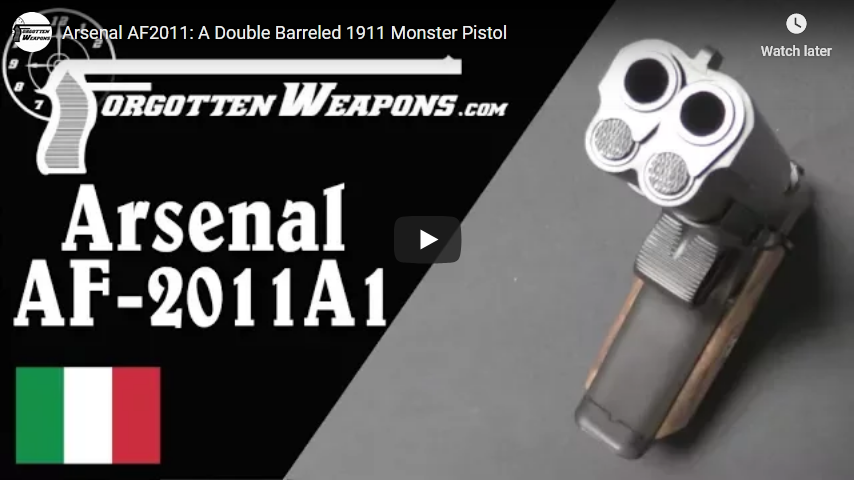
Winchester Lever Action Development: Model 1866
Forgotten Weapons
Published 7 Jun 2017While the Henry Repeating Rifle had been an serious leap forward in firearms capability, it was not without problems. The biggest single weakness of the Henry was its magazine. The tube magazine was open to dirt and debris, the follower could easily come to rest on the shooter’s hand or anything used as a rest and stop the weapon from feeding, and the while system was rather prone to being damaged.
These problems would all be addressed with the addition of Nelson King’s new loading gate idea, which allowed Winchester to omit the exposed follower entirely, solving a bunch of complaints all at once. The new system was more durable, more reliable, and allowed the rifle to be loaded without the awkward manipulation required by the Henry. The King improvement also allowed the addition of a wooden handguard, which was a welcome addition — it does not take very many black powder rounds for a barrel to become uncomfortably hot to the touch.
At the same time that these improvements were being made, company politics were taking shape to end Benjamin T. Henry’s involvement with the company. Henry attempted to take over ownership of the company because he felt he was not profiting as much as he should, but he had assigned his patent rights to Oliver Winchester in exchange for his contract to manufacture the guns. As a result, Winchester was able to create a new company (the Winchester Repeating Arms Company) with full rights to the design patents and sideline Henry.
The 1866 rifle, which was formally called simply the Winchester Repeating Rifle would continue to use the .44 Henry Rimfire cartridge, but would be made in a wider variety of configurations than the Henry had been, including carbine, rifle, and musket barrel lengths. It would prove to be a very popular rifle, and opened the path to further improvement, as it put the Winchester company on excellent financial footing.
Cool Forgotten Weapons merchandise! http://shop.bbtv.com/collections/forg…
http://www.patreon.com/ForgottenWeapons
If you enjoy Forgotten Weapons, check out its sister channel, InRangeTV! http://www.youtube.com/InRangeTVShow
October 2, 2020
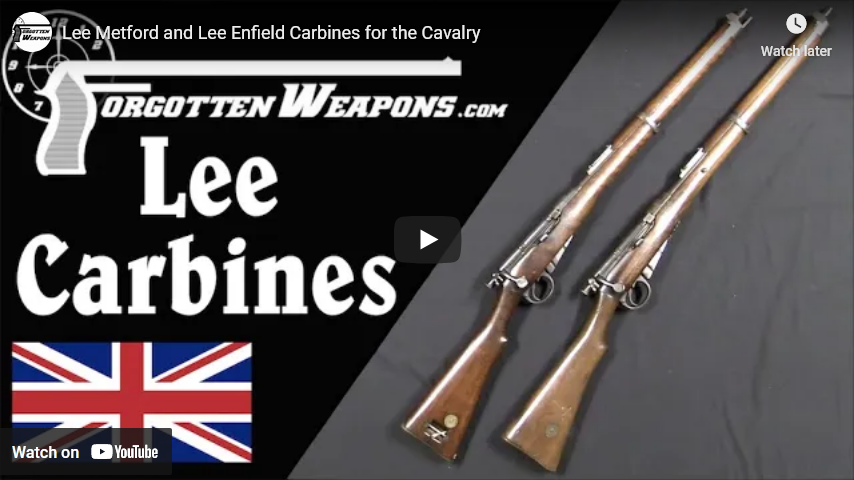
Winchester Lever Action Development: 1860 Henry
Forgotten Weapons
Published 5 Jun 2017The Henry Repeating Rifle was a truly revolutionary development in firearms technology. It was not the first repeating rifle, but it was the best of a emerging class of new arms, reliable in function and very fast to shoot (much faster than the contemporary Spencers). The Henry used a simple toggle lock locking system, with a single throw of its lever performing all the elements necessary to reload and recock the action.
The Henry’s quick action was coupled with a 15-round magazine, more than double what the Spencer offered. It fired the .44 Henry rimfire cartridge, which threw a 216 grain bullet at about 1125 feet per second (this would change to 200 grains at 1200 fps within a few years). This was substantially less powerful than a heavy muzzleloader charge, but the volume of fire more than made up for it. Within 200 yards, the Henry could produce a devastating volume of fire.
The Henry was only produced for about 5 years (1862 – 1866), with about 12,000 manufactured in total. The Henry was made almost exclusively in a standard rifle pattern, with a 24 inch barrel. Some were later cut down into carbines, though. While the US military rejected the Henry for a variety of reasons, nearly all of the guns produced before the end of the war did actually see military service, with state units or individuals who supplied their own arms. In the few engagements where Henry rifles were present in substantial numbers, they proved to be a significant force multiplier.
Cool Forgotten Weapons merchandise! http://shop.bbtv.com/collections/forg…
http://www.patreon.com/ForgottenWeapons
If you enjoy Forgotten Weapons, check out its sister channel, InRangeTV! http://www.youtube.com/InRangeTVShow
September 29, 2020
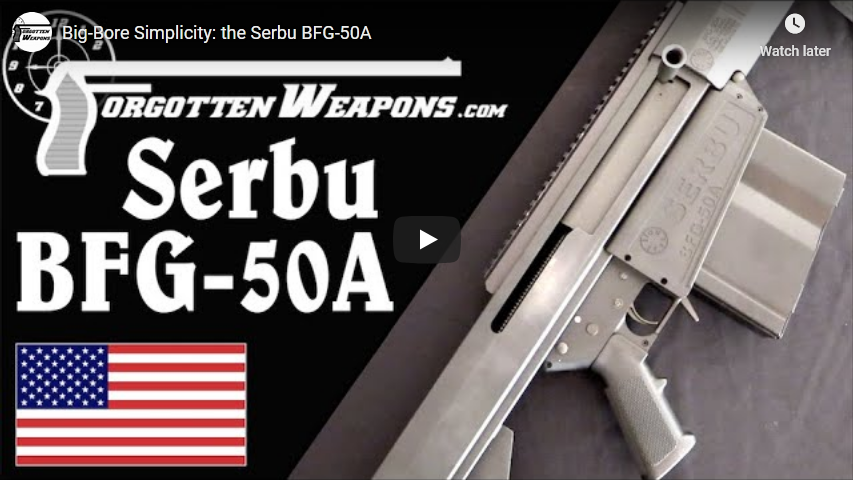
Light Fifty: the Barrett M82A1
Forgotten Weapons
Published 10 Aug 2016Sold for $6,900.
The story of the development of the Barrett M82 .50 BMG semiauto rifle is really a neat story — much more interesting than most people probably expect, and reminiscent of many firearms development stories of the 1800s. Ronnie Barrett was working as a photographer in the late 70s, and became interested (perhaps obsessed?) with the idea of a semiauto .50 caliber rifle after a photo session with a Vietnam War jungle patrol boat (which was armed with a pair of M2 .50 caliber machine guns). At the time, the only civilian options for the .50 BMG cartridge were conversions of WWII antitank rifles like the Boys and PTRD.
Barrett, with basically no formal engineering background, sketched up a design and approached some machine shops for advice and assistance. He started working in his garage, and after a couple years had a functioning prototype completed. He sold the rifles commercially at gun shows and through publications like Shotgun News until making his first military sale in 1989, to the Swedish government. The following year he received an order from the US military, and sales took off from there.
Contrary to common expectation, the Barrett M82A1 is not really a “sniper” rifle — as a semiautomatic design with a recoil-operated action it’s potential accuracy is much less than that of a bolt action precision rifle — and this is amplified by the lack of a precision .50 BMG cartridge in US military service. In practice, the M82A1 will shoot about 3 MOA with normal ball ammunition, and about 1.5-2 MOA with good handloads. It is used primarily as an EOD rifle to detonate heavy-walled unexploded shells at a safe distance, and as an anti-material rifle to attack light vehicles and infrastructure at a long distance. These are relatively large targets, which require the large payload of a .50 BMG projectile but not the extreme accuracy of a true “sniper’s” rifle.
September 26, 2020
Perdition to Conspirators! Magnificent 14-Barrel Flintlock
Forgotten Weapons
Published 29 May 2020http://www.patreon.com/ForgottenWeapons
https://www.floatplane.com/channel/Fo…
Cool Forgotten Weapons merch! http://shop.bbtv.com/collections/forg…
Colonel Thomas Thornton was a wealthy and somewhat flamboyant character in England in the late 18th and early 19th century. He commanded a militia unit with which he had some disagreement, and which mutinied against his comment at Roborough Camp in 1795. Some years later, he commissioned this quite unique firearm from Dupe & Company of London.
The gun is a single stock with two flintlock actions, two triggers, and two clusters of seven .30 caliber rifled barrels each. Each trigger fires a complete barrel cluster simultaneously. In addition to the firepower of this very remarkable weapon, he also had it finished in a truly magnificent fashion, including the fantastic line “PERDITION TO CONSPIRATORS” on ons of the barrel clusters — clearly he harbored some resentment towards his unruly militia subordinates even years later.
In addition, he had a second stock made to fit just one lock plate and barrel cluster, for when 14 barrels might be a bit of overkill. That stock is even more decorated that the first, with beautiful wooden relief carvings and the motto “A Verite Gagner“, meaning something to the effect of “Truth From Victory”.
This gun is part of the Liege arms museum’s display of civilian arms, and I’d like to thank them for taking it out of their display so I could show it to you! If you are in Liege, stop in and see the museum:
Contact:
Forgotten Weapons
6281 N. Oracle #36270
Tucson, AZ 85740