Quotulatiousness

November 19, 2021

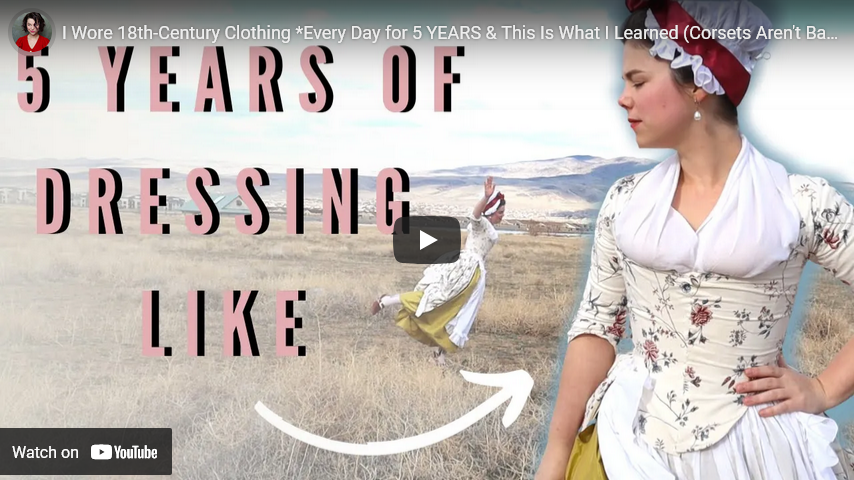
I Wore 18th-Century Clothing *Every Day for 5 YEARS & This Is What I Learned (Corsets Aren’t Bad!)

Filed under: History — Tags: , , , , — Nicholas @ 02:00

Abby Cox
Published 10 May 2020

I wore 18th-century women’s clothing, all day, 5 days a week, for 5 years of my life. Over those 5 years, I learned *a lot* about my body, fashion in the 1700s — the good and the not so good, and how we can take these lessons and improve modern fashion.

***Trigger Warning: I do talk about body image in this video (as a reflection of my own, long, long journey with my own body & how wearing historical clothing has given me a different perspective on body image) which may or may not be upsetting for some. ***

*Ok, so not “every day” but you get the idea…😉

💌Business Inquiries *ONLY* abbycox@semaphorebrands.com
(This email goes directly to my management and not to me.)

More Videos:

🎉🎉 Answering YOUR FAQs from THIS Video: https://youtu.be/SN3agbKZVP0
“Becoming an 18th-Century MEME LORD” https://youtu.be/a0pRE3uXWu8
“Historical Costumers and Their Hogwarts Houses” https://youtu.be/vxmRsc9Qj8M
Rachel Maksy – “Born in the Wrong Era” – https://www.youtube.com/watch?v=r5GAJ…

A lot of these photos of me were taken by the lovely Fred Blystone. You can see more of his photography here: https://www.facebook.com/groups/13664…

Also, @Edwardian Tailor (https://www.youtube.com/channel/UCBSf…)

We like to assume that the people in the past are “stupid” (it’s normal human behavior), and one of the ways that we, as a modern society, do this is by judging the past for their fashion trends and practices. We’ve been taught to demonize corsetry (or in this case, stays) for being restrictive and a tool of oppression towards women, and take pride in our culture of diet and exercise, without considering the issues that can be found in our body-obsessed culture. We praise jeans and a t-shirt, as being “comfortable” but the insecurities that so many of us have about our bodies are put on display in our 21st-century uniforms. We take for granted our modern homes, and how that has made us lazy in dressing for the seasons, resulting (in part) the loss of various types of textiles and weaving technology. I learned a lot over those 5 years, including how to indulge in an Indian Buffet while wearing my 18th-century stays, and I’m excited to share my insights with you. Also, can we just discuss how stupid modern underwear is?? 😉

Images Used:

*Summer Dresses, 1783, Object Number – J,5.139, Asset Number – 79588001 © The Trustees of the British Museum. https://www.britishmuseum.org/collect…

*Sheer Cottton Mull Italian Gown, 1780s, The Metropolitan Museum of Art, 17.107.6a, b, https://www.metmuseum.org/art/collect…

*Kofta, 1760s-90s, Nordiska Museet, NM.0186311, https://digitaltmuseum.se/01102369100…

*Women 1790-1799, Plate 052, Fashion Plate from August 1796, The Metropolitan Museum of Art Library Costume Institute Fashion Plate Collection, https://libmma.contentdm.oclc.org/dig…

*Robe a l’anglais c. 1780, The Metropolitan Museum of Art, 1982.291a, b, https://www.metmuseum.org/art/collect…

*Attributed to Isaac Cruikshank, Cestina Warehouse or Belly Piece Shop
April 16, 1793, The Metropolitan Museum of Art, 59.533.475 https://www.metmuseum.org/art/collect…

*Stays, The Metropolitan Museum of Art,
2009.300.3330a–d
https://www.metmuseum.org/art/collect…

*The Bum Shop, Attributed to R. Rushworth (British, active 1785–86), July 11 1785, The Metropolitan Museum of Art, 1970.541.12, https://www.metmuseum.org/art/collect…

*Chemise, 1780-1800s, The Metropolitan Museum of Art, 2005.368 https://www.metmuseum.org/art/collect…

*Corset, 1880s, The Metropolitan Museum of Art, 2009.300.3497a–c
https://www.metmuseum.org/art/collect…

——-

Music from Epidemic Sound:

“Gold Among the Sand”- Trevor Kowalski
“To Clarity” – Airae
“The Path to Innovation” – Airae
“Caffeinated and Motivated” – Airae
“Alice is on her Way” – Airae
“Cafe Laurent” – Medite
“In a Jiffy” – Moins Le Quartet
“Moonlight Night” – Gabriel Lucas

———

Instagrams: https://www.instagram.com/abbyelyn

From the comments:

Abby Cox
1 year ago (edited)

Hey Everyone! 👋🏻

Thank you all so much for taking the time to watch this video about my experience! I’ve noticed a lot of the same questions in the comments, so I want to take a minute to answer them here –
🎉UPDATE (Sept 27, 2020) – I’ve answered your questions about menstruation here: https://www.youtube.com/watch?v=iV2TgwjjhOE
🎉UPDATE (June 7, 2020) – I’ve taken the most commonly asked questions from the comments and have done a video to answer them! You can watch it here: https://youtu.be/SN3agbKZVP0

– My stays (18th-century term for a corset) are from https://redthreaded.com/ – they’re a fantastic historical corset company that I adore. (and for the couple of you trying to call me out – my 100% hand-sewn, me-made, reproduction stays are so worn out that they’re in retirement, and just because I can make stays by hand doesn’t mean I have the time. I’d also rather support a small business that I believe in.❤️Finally, the gown I’m wearing in this video was cut to go over those stays, but if you’d like to see my hand-sewn reproduction stays in action you can buy the book I co-wrote here: https://www.american-duchess.com/book/american-duchess-guide) ☺️

– While I haven’t gone down the menstruation research rabbit hole (cause it is its own subject of study) I am going to do my best with limited access to primary source documentation (which is what I really need to be able to answer this question) to produce a video about what 18th-century women would do. I don’t know when this will be, but I will do my absolute best to answer this question, and if I can do some experimental archeology in the process, I will. 😎 (ravenclaws gotta ravenclaw…)

– Thigh chafing – so I think that varies from person to person. I never really had a lot of issues with it (and my narrow hips mean that I will never have a thigh gap) because my linen shift would always kind of end up between my leg and absorb the sweat. However, I know a lot of costumers who will wear split-crotched drawers because they find it more comfortable, even though drawers weren’t a thing in the 18th-century.

Ok! I hope this helps answer some of your questions! Thank you all so much for watching and engaging in this video. I really can’t tell you all how much I appreciate it! ❤️

August 10, 2021

Art Deco in the 1920s

Filed under: Architecture, France, History, Media, USA — Tags: , , , , — Nicholas @ 02:00

The1920sChannel
Published 1 Nov 2019

The aesthetic of the 1920s was certainly unique and instantly recognizable. For those of us (me included) who don’t know much about art, it’s difficult to pinpoint the characteristics. The most important art movement of the ’20 was Art Deco. So here’s a closer, though unprofessional, look at 1920s aesthetic.

May 19, 2021

Why Did We Stop Wearing Hats?

Filed under: Europe, History, USA — Tags: , , , — Nicholas @ 02:00

Karolina Żebrowska
Published 28 Apr 2020

should we bring hats back? what do you think?
_____________
My Instagram: https://bit.ly/2Qo9rrI​
My nudes: https://bit.ly/2UHHY6N​
My merch: bit.ly/2CCq5jE

November 24, 2020

The History of Fabric Is the History of Civilization

Filed under: Americas, Books, Economics, Europe, History, India — Tags: , , , , — Nicholas @ 04:00

ReasonTV
Published 23 Nov 2020

Virginia Postrel’s new book explores economics, politics, and technology through textiles.

——————
Full text and links: https://reason.com/video/2020/11/23/t…

Follow us on Twitter: https://twitter.com/reason

Reason is the planet’s leading source of news, politics, and culture from a libertarian perspective. Go to reason.com for a point of view you won’t get from legacy media and old left-right opinion magazines.
—————-

The Fabric of Civilization: How Textiles Made the World, a new book by former Reason editor in chief Virginia Postrel, is a rich, endlessly fascinating history of the remarkable luck, invention, and innovation that made our fabric-rich world possible.

The book aims to make the mundane miraculous. Consider cotton. Most of the cotton we grow today is descended in part from a plant species that evolved in Africa and somehow got over to what is now Peru, where it mixed with New World strains.

“The fact that we have cotton at all, that it exists anywhere, is amazing,” says Postrel. “It happened long before there were human beings, but much more recently than when the continents were together. So we don’t know. It could have gotten caught up in a hurricane. It could have floated on a piece of pumice. So it’s this random, very unlikely happening that had tremendous world-changing consequences.”

The story of textiles is rife with attempts at protectionism and prohibition. In 17th and 18th century Europe, countries banned the importation of super-soft, super-colorful cotton prints from India known as calicos because they threatened domestic producers of everything from lower-quality cotton fabric to luxury silks. “For 73 years, France treated calico the way the U.S. treats cocaine,” Postrel says. “There was this huge amount of smuggling, and they were constantly ratcheting up the penalties [so] that they got quite grotesque, at least for the major traffic.” Some of “the earliest writings of classical liberalism are in this context, people saying not only is this not working, but … it is unjust to be sentencing people to the galleys in order to protect silk makers’ profits.”

Postrel also documents how the Luddites, the 19th century English textile workers famous for smashing the power looms threatening to put them out of work, owed their jobs to an earlier technological breakthrough: the spinning machines that emerged in the late 1700s.

“If you go back to that earlier period, when spinning machines were introduced, the same thing happened,” she says. “They had their own period of rebelling against the new technologies and saying they’re putting people out of work.”

The book also upends some contemporary myths, such as the claim that commercial production of hemp for clothing was a casualty of the war on drugs. “Hemp historically was a very coarse kind of fabric for poor people who didn’t have an alternative,” says Postrel. “It was replaced by cotton for good reasons. Cotton was also affordable, but it was soft and washable and just a much better fabric.”

“Human beings live in history and we inherit the legacies, positive and negative, of that history,” says Postrel, whose previous books include The Power of Glamour, The Substance of Style, and The Future and Its Enemies. Discussing the large themes of her work she says, “All you can do is start from where you are and try to do better from where you are.”

Narrated by Nick Gillespie. Edited by Isaac Reese.

Music: “Thoughts,” by ANBR

Photos: World History Archive/Newscom; The Print Collector Heritage Images/Newsroom; The “Réale” returning to port, Med/CC BY-SA 3.0; Smithsonian National Museum of African American History and Culture/CC0; Battle of Grand Port, Rama/Wikimedia Commons/CC BY-SA 2.0 FR; Fine Art Images Heritage Images/Newscom; Seton, M., Müller, R., Zahirovic, S., Gaina, C., Torsvik, T., Shephard, G., Talsma, A., Gurnis, M., Turner, M., Maus, S., and Chandler, M., 2012, Global continental and ocean basin reconstructions since 200 Ma: Earth-Science Reviews, v. 113, no. 3-4, p. 212-270

October 14, 2020

“For Generation Z — roughly speaking, those born between 1995 and 2010 — ‘flattering’ is becoming a new F-word”

Filed under: Britain — Tags: , , , , — Nicholas @ 03:00

Hannah Betts explains why it’s now somewhere between awkward and mortally offensive to use the word “flattering” to or about a member of Gen Z:

Why do we wear clothes? The mundane answer runs “for protection against the elements”, pointing to the succession of Ice Ages to which homo sapiens was subjected, forced to borrow fur from more hirsute species.

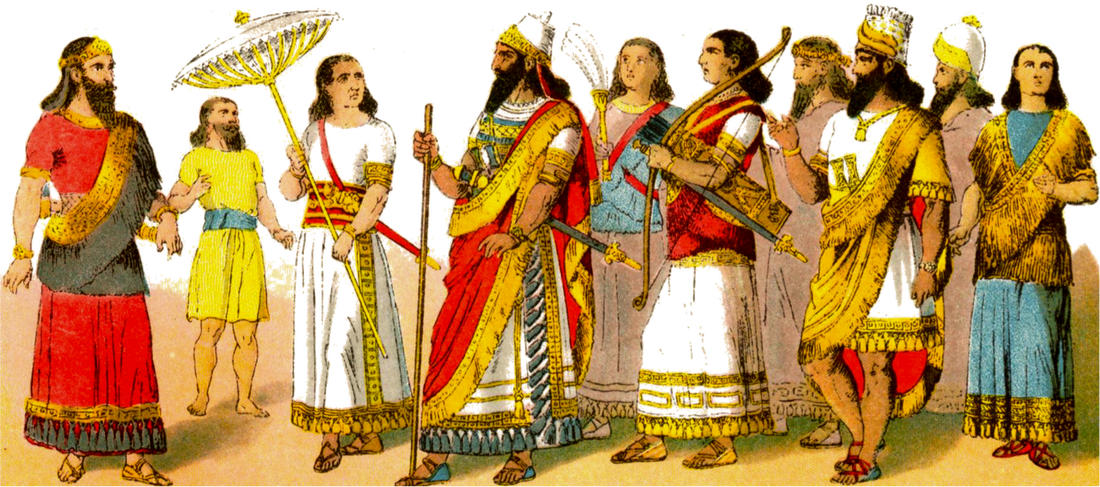
Well, up to a point, Lord Copper. The ancient civilisations that grew up in the fertile valleys of the Euphrates, the Nile and the Indus, were more tropical than a Wham! video, and clearly using their outfits to signify status, occupational, sex and gender differentiation.

Some may even have wanted to be regarded as individuals — despite we modern types imagining we invented all that — cutting a dash with a tufted Mesopotamian fringe here, or supple Egyptian weave there.

I raise the question because the issue of why we dress is feeling modish again, and not merely because the great grounding brought about by Covid has made comfort king.

The costumes of both genders had been heading in this direction already — what with normcore, athleezure, and the lemming-like “casualisation”. But, I’m talking about something else here, a resistance to the at-one-time uncontroversial notion of what is “flattering”, a term now considered oppressive by the young.

To quote the Guardian‘s Jess Cartner-Morley, never backward about coming forward in identifying a zeitgeist moment: “For Generation Z — roughly speaking, those born between 1995 and 2010 — ‘flattering’ is becoming a new F-word.

“To compliment a woman on her ‘flattering’ dress is passive-aggressive body-policing, sneaked into our consciousness in a Trojan horse of sisterly helpfulness. It is a euphemism for fat-shaming, a sniper attack slyly targeting our hidden vulnerabilities. ‘Flattering’, in other words, is cancelled.”

November 25, 2019

Historical hats

Filed under: Europe, History, USA — Tags: , , , — Nicholas @ 06:00

Lindybeige
Published 4 Mar 2015

Support me on Patreon: https://www.patreon.com/Lindybeige
More videos here: https://www.youtube.com/playlist?list…

There were so many types of hat in the past, and yet it turns out that many of them were actually the same.

Lindybeige: a channel of archaeology, ancient and medieval warfare, rants, swing dance, travelogues, evolution, and whatever else occurs to me to make.

▼ Follow me…

Twitter: https://twitter.com/Lindybeige I may have some drivel to contribute to the Twittersphere, plus you get notice of uploads.

website: http://www.LloydianAspects.co.uk

September 5, 2019

QotD: Fashion

Filed under: Humour, Quotations, Randomness, USA — Tags: , , , — Nicholas @ 01:00

Sometimes I fear we are on the cusp of another age du merde again — a catastrophic meltdown in taste not seen since the 70s. I check the weekly catalogs with mounting dread. This week’s report: Furniture is in good shape. Appliances have survived the iMac wannabee phase. Men’s fashions are reasonably dull, as usual. Woman, as it often happens, are screwed:

[… image from Marshall Fields catalogue …]

Ponchos. Good God. Ponchos. And what’s with this blonde’s hair? How many My Little Ponys did they kill to make this wig?

[…]

God forbid our children should ever be happy. Not when they can have ATTITUDE, which is what we all really want from our kids.

[… image of sneering, posturing child models …]

Charming. Remember: Fashion means never having to say you’re happy. From Dutch supermodels to haughty tykes, the watchword from Dame Fashion is “pissed.” Now put on your poncho and radiate sullen blankness.

James Lileks, “The Bleat”, 2004-08-17 (Reposted from the old blog).

Note: Jon mentioned that he looked at the images in Lileks’ article and at first thought they were actual 1970s catalogue photos, but in that dreckful decade, the models would have been smiling. A valid point, I think, and one of the issues Lileks has with the current fashion industry. Nowadays, you can’t be a fashion model without the kind of surly attitude best expressed by thugs and angry bar patrons after last call.

August 26, 2019

QotD: Princesses

Filed under: Humour, Media, Quotations — Tags: , , , , , — Nicholas @ 01:00

[Princesses] think of themselves as Strong, Independent Women, even while saying “I like a man to open doors and pay for everything — and treat me like a princess!” No, dear, if a man opens doors for you he’s treating you like a simpleton and if he pays for everything, he’s treating you like a hooker. (The crossover between the princess look and the hooker look, as the late Barbara Cartland grotesquely illustrated, is considerable.) And it’s a man knowing that you can be bought with a dinner and a pair of shoes which leads to him so frequently mugging you off — royally — in favour of a better bargain. Back on the pink plastic shelf you go!

How do you spot a Princess? She’ll be keen on pampering to an extent which indicates to the casual onlooker that her natural self must be extraordinarily rank if it takes such effort and expense to keep in check. (Princesses shouldn’t be confused with Professional Beauties, most of whom retain a healthy contempt for the business of exchanging physical gifts for fiscal rewards, from Hedy Lamarr saying “Any girl can be glamorous — all you have to do is stand still and look stupid” to the catwalk models who invariably live in jeans and sneakers after shrugging off the stupid clothes which Princesses pine for.)

The Princess believes that retail therapy is the answer to everything, even though the rest of us avert our eyes from this most obvious manifestation of the essential hollowness of a life that an over-enthusiasm for clothes-shopping invariably indicates in anyone out of their teens. They’ll have long nails, ostensibly to show that they’re ladies of leisure, but signalling to the rest of us that they’re very likely parasites with low sex-drives. They like big weddings — and as a liking for big weddings often goes hand in hand with humourlessness, they often have very short marriages. They are in short practitioners of the Violet Elizabeth Bott school of feminism – less about equal rights and fulfilling one’s potential than about stamping your foot till you get what you want.

They dislike men, seeing them not as flesh-and-blood people so much as platinum-and-titanium meal-tickets, and they mistrust women, seeing them as competition. An ageing Princess is more than likely to end up lonely — and with no life of the mind to comfort her, this loneliness may make her mentally addled at a comparatively young age. Once the sheen is off her skin, the Princess has nothing that would make one seek her out; like a lot of people over-keen on spangles and glitter, they are at heart rather drab people — drains not radiators, personality-wise — who never make things happen or drive things forward but rather wait to be rescued. They tend to find themselves eternally in the passenger seat of their life’s journey, stranded on the hard shoulder with their souvenirs, waiting in vain for hunky help to arrive.

Julie Burchill, “The Princess generation needs to grow up”, The Spectator, 2017-07-18.

June 22, 2018

What the well-dressed politician shouldn’t be wearing

Filed under: Media, Politics, USA — Tags: , , , — Nicholas @ 05:00

Ann Althouse reacts to a New York Times article on what clothes “say” about the wearer:

I clicked on that title because I thought it was going to say that it’s a mistake for female candidates to wear pants (in any form) rather than a skirt/dress (of some kind). But the article lumped skirted suits and pantsuits together.

To my eye, women in pants look less dressed up than a man in a standard business suit, and I don’t think women should put themselves at that disadvantage, especially since pantsuits look sloppier on a woman’s body than a business suit on a man’s body.

I don’t mean to insult women by saying that, but women’s bodies are (generally) shaped differently than men’s and women’s pants are (generally) fitted differently from men’s suit pants. Men’s suit pants do not hug the legs or crotch, so they completely deflect attention away from the lower body. Men’s suits bring us right up to the shoulders — the idealized shoulders — and and then, via shirt and tie, aim us straight at the face.

Women’s pantsuits are more fitted in the leg and use color in a way that draws the eye downward, and they often do things with the jacket — such as making it very long — to cover up what’s happening down there in the legs. But then the jacket is distracting.

In the 2016 campaign, Hillary Clinton’s jackets were flat-out weird, with perplexing patch pockets. In fact, I don’t like Vanessa Friedman’s reference to the “Elizabeth Warren/Hillary Clinton/Kirsten Gillibrand mold,” because Warren and Gillibrand wear very low-key things and Hillary Clinton launched into clothes that we struggled to understand, that got compared to loungewear or sci-fi costumery.

I don’t really know what the best answer is. It depends on the individual. But you’re asking to be trusted with responsibility, not to be enjoyed as a pop star or fashion maven. You don’t want to look as though you’re seeking power for purpose of expressing your individuality.

February 18, 2018

How WWI Got Women to Start Wearing Bras

Filed under: Business, History, WW1 — Tags: , , , — Nicholas @ 02:00

Today I Found Out
Published on 3 Oct 2016

In this video:

Corsets dominated the undergarments of wealthier women in the Western world for centuries, until WWI. So how did the war help popularize the bra? In a word, or two words in this case: metal shortage. The making of corsets required quite a bit of metal. Thus, in 1917, the U.S. War Industries Board asked American women to help their “men win the war” by not wearing or buying corsets.

Want the text version?: http://www.todayifoundout.com/index.p…

October 24, 2017

Why Women Fainted So Much in the 19th Century

Filed under: Health, History — Tags: , , , , , — Nicholas @ 02:00

Today I Found Out
Published on 8 Oct 2016

In this video:

Dropping like flies (or at least as far as many stories indicate), it seems as if well-bred ladies in the 1800s struggled to maintain consciousness when faced with even the slightest emotional or physical shock. Over the years there have been several theories as to why this seemed to happen, from the women’s garb to simply conforming to societal expectations.

Want the text version?: http://www.todayifoundout.com/index.php/2015/05/women-fainted-much-19th-century/

April 24, 2017

Today’s study in “problematic” issues for Teen Vogue

Amy Alkon fisks a recent Teen Vogue piece on soi-disant “cultural appropriation”:

Silly Teen Vogue-ers, Fashion *Is* Appropriation

This bit — from Teen Vogue — is hilariously sad and sadly hilarious:

    In our new column Don’t Do It Girl, Jessica Andrews explores the cultural appropriation epidemic at Coachella.

EPIDEMIC! Like AIDS, Zika, or Ebola!

Fashion always has been about appropriation. Appropriating style and appropriating culture. Those lace-up-the-ankle sandals? Ancient Rome!

Yet, do you see Italian kids mewling that you stole their culture? Of course not, because Italians, generally speaking, are exuberant people who really know how to live life.

Meanwhile, back here in America…

The kids growing up now, especially in the United States, are the freest people in human history — both as individuals and through the technology that removes the drudgery that’s been a constant companion for humans throughout the ages.

Naturally, their response to all this unparalleled freedom is to try to control other people’s behavior.

Fashion policing, in this case. Here, from Andrews story on that EPIDEMIC of appreciation:

    Even when people feign ignorance, there’s little excuse. In the past, I’ve worn a Pocahontas costume for Halloween. It’s a mistake I regret, and I’ll never do it again knowing how hurtful it is.

Oh, please. I grew up Jewish. If you pretend to be a character from Fiddler on the Roof, should I take to bed and cry for a few days?

    With appropriation being such a huge conversation these days…

So much talk…so little reasoning

    Like fashion, appropriative hairstyles are now ubiquitous at Coachella. Cornrows or box braids are not a “hot new festival trend”; black women have been wearing them for centuries. When outlets cover the hairstyle as if it started with Kylie Jenner, it’s not appreciation; it’s erasure. Those celebratory headlines are yet another reminder that black hairstyles are only acceptable when they’re removed from actual black people.

Do you need to be high to write for Teen Vogue? It’s a fucking hairstyle. Women wear it because they think it will look good on them. If they’re white with dark hair, they’re probably wrong (nothing like rows of scalpage showing through to make a woman’s head remind us of freshly plowed fields). Women with big honking faces like mine don’t look so hot in them, either.

    Unbeknownst to some Coachella attendees, there’s a stigma associated with cornrows and braids when black people wear them.

Unbeknownst to a fucking lot of us, I’d guess.

January 28, 2016

QotD: George Orwell on American fashion magazines of the 1940s

Filed under: History, Media, Quotations, USA — Tags: , , — Nicholas @ 01:00

Someone has just sent me a copy of an American fashion magazine which shall be nameless. It consists of 325 large quarto pages, of which no less than 15 are given up to articles on world politics, literature, etc. The rest consists entirely of pictures with a little letterpress creeping round their edges: pictures of ball dresses, mink coats, step-ins, panties, brassières, silk stockings, slippers, perfumes, lipsticks, nail polish — and, of course, of the women, unrelievedly beautiful, who wear them or make use of them.

One striking thing when one looks at these pictures is the overbred, exhausted, even decadent style of beauty that now seems to be striven after. Nearly all of these women are immensely elongated. A thin-boned, ancient-Egyptian type of face seems to predominate: narrow hips are general, and slender, non-prehensile hands like those of a lizard are quite universal. Evidently it is a real physical type, for it occurs as much in the photographs as in the drawings. Another striking thing is the prose style of the advertisements, an extraordinary mixture of sheer lushness with clipped and sometimes very expensive technical jargon. Words like suave-mannered, custom-finished, contour-conforming, mitt-back, inner-sole, backdip, midriff, swoosh, swash, curvaceous, slenderize and pet-smooth are flung about with evident full expectation that the reader will understand them at a glance. Here are a few sample sentences taken at random:

“A new Shimmer Sheen color that sets your hands and his head in a whirl.” “Bared and beautifully bosomy.” “Feathery-light Milliken Fleece to keep her kitten-snug!” “Others see you through a veil of sheer beauty, and they wonder why!” “An exclamation point of a dress that depends on fluid fabric for much of its drama.” “The miracle of figure flattery!” “Molds your bosom into proud feminine lines.” “Isn’t it wonderful to know that Corsets wash and wear and whittle you down… even though they weigh only four ounces!” “The distilled witchery of one woman who was forever desirable… forever beloved… Forever Amber.” And so on and so on and so on.

A fairly diligent search through the magazine reveals two discreet allusions to gray hair, but if there is anywhere a direct mention of fatness or middle-age I have not found it. Birth and death are not mentioned either: nor is work, except that a few recipes for breakfast dishes are given. The male sex enters directly or indirectly into perhaps one advertisement in twenty, and photographs of dogs or kittens appear here and there. In only two pictures, out of about three hundred, is a child represented.

On the front cover there is a colored photograph of the usual elegant female, standing on a chair while a gray-haired, spectacled, crushed-looking man in shirtsleeves kneels at her feet, doing something to the edge of her skirt. If one looks closely one finds that actually he is about to take a measurement with a yardstick. But to a casual glance he looks as though he were kissing the hem of the woman’s garment — not a bad symbolical picture of American civilization, or at least of one important side of it.

George Orwell, retitled as “George Orwell Wrote One of the Most Incensed Takedowns of American Fashion Magazines”, The New Republic, 1946-12-02.

May 6, 2015

The “salted caramel inquisition”

Filed under: Business, Food, USA — Tags: , — Nicholas @ 03:00

Food fashions and the current tyranny of the salted caramel inquisition, by Megan McArdle:

I don’t need to tell you that food has fashions. Remember when every restaurant with any ambition had a spinach salad with pecans, goat cheese and some sort of onion shaving? That’s now passé even in its last refuge, the twee cafes of Rust Belt suburbs. Or when truffles seemed to sprout from menus like, er, mushrooms, only to disappear almost as quickly, presumably off to hibernate in some subterranean darkness?

We are currently living through what I like to call the salted caramel inquisition, with every perfectly law-abiding caramelized dish in the land, however perfect in its simple sweetness, assaulted and forcibly converted to its more aggressive modern version.

For the last 5 to 10 years, the most notable fashion has been for the complex, spicy and exotic. Foodies exchange worried tips for storing the “basic” spices now grown too numerous for any sort of conventional cupboard. Bitter supertasters exchange angry polemics on the snobs who don’t seem to realize that those of us with less blunted palates might not want every alcoholic beverage well fortified with hops, Campari and an extra-strong helping of Angosturas. Those whose sensitive or aging gastrointestinal tracts cannot cope with all that glorious capsaicin sigh, and order the roasted chicken. Again.

History is reaction and counterreaction. The pendulum is swinging back, as gravity says it must, and I detect a new movement afoot: KISS. Which means, yes: Keep it simple, stupid. And I have to say, I like it.

March 21, 2015

QotD: The modern snob

Filed under: Europe, Quotations, Randomness — Tags: , , , , — Nicholas @ 01:00

Walking through Amsterdam recently, a paradox that I had long noticed in an inchoate way formulated itself clearly in my mind. It was this: A century ago, there would have been one clothes shop for every hundred well-dressed people. Nowadays there is one well-dressed person (if that) for every hundred clothes shops. What accounts for this strange reversal of ratios?

Beyond the fact that clothes are now mass-produced rather than made individually, there is an act of will involved. Practically everyone now dresses not merely in a casual way, but with studied slovenliness for fear of being thought elegant, as elegance is a metonym for undemocratic sentiment or belief. You can dress as expensively as you like, indeed expensive scruffiness is a form of chic, but on no account must you dress with taste and discrimination. To do so might be to draw hostile attention to yourself. Who on Earth do you think you are to dress like that?

[…]

Modern scruffiness, then, is a manifestation of egotism. Outside one of the shops in Amsterdam was a large plasma screen showing models wearing the kind of clothes to be had within. They were precisely the insolently ragged clothes that the great majority of people in the street were wearing anyway. This was a form of flattery of the public, for it implied that its members had nothing to aspire to in the matter of dress higher than that which they themselves were already wearing — that in the matter of appearance they had already reached acme of the possible.

There was yet more. The models, in their T-shirts, baseball caps, sneakers, and so forth, as uniform as any army, walked with the kind of vulpine lope that one associates with the less law-abiding young males of the American ghettoes. But even more striking was the expression on their faces, which were cachectic in the case of the women, androgynous in the case of men: a fixed, determined, humorless stare that indicated a hatred of the world and all that was in it, including their fellow-beings. If one saw such a person at a social event, one would go to some effort to avoid or to flee or not to talk to him or her. The models’ faces were vacantly earnest, as if they wished for annihilation of everything around them for some personal reason, no doubt trifling.

This is the first age in which people do not dress to please others, but dress to displease others, to make sure that everyone knows that I’m not going to make any effort just for you. And this, no doubt, is because I am as good as anyone in the world, bar none: His Majesty, myself. And what starts out as an attitude becomes an unexamined and ingrained habit.

Theodore Dalrymple, “Slobbery as Snobbery”, Taki’s Magazine, 2014-06-15.

« Newer PostsOlder Posts »

Powered by WordPress