KnowledgeHub
Published 16 Jan 2017Sign Up For One Free Month of ‘The Great Courses Plus’ http://ow.ly/uz5c307Lfvl
The Fourth Crusade was a blunder of epic proportions and ended up ruining one of the greatest empires ever seen in Western civilization. While the Crusades can be tales of knights and religious battle, this was a war of infighting, petty deals and financial debt.
Follow on Twitter: https://twitter.com/AltHistoryHub
Music by Holfix: https://www.youtube.com/user/holfix
The second channel from AlternateHistoryHub. Since I can’t talk about everything on that channel, I decided to have a channel where I can? Geography, history, economics? I can talk about anything, as long as it’s knowledge!
I discuss the different parts of history and try to bring a new perspective on education taught in schools.
March 25, 2021
The Crusade That Ruined Everything
February 22, 2021
The “Infantry Revolution” of the Late Middle Ages
SandRhoman History
Published 21 Feb 2021CuriosityStream link: https://curiositystream.com/sandrhoman
The “Infantry Revolution” of the late Middle Ages is kind of a hot topic among armchair historians and academics alike. This is how the argument goes: In the late Middle Ages, infantry grew in importance to the detriment of heavy cavalry; by then battles were increasingly won with pikes, longbows and arquebuses instead of mounted knights with lances, the argument continues, and as a result of that, the socio-political make-up and development of European polities changed lastingly. So, this Infantry Revolution supposedly had an incredible impact on European state building processes AND, the argument finally concludes, it laid the foundation to Europe’s conquest and colonization of many parts of the world. However, in public spaces such as YouTube this whole debate is more discussed in regards to tactics and fighting techniques than economics and politics. Consequently, much of the public discussion is about how and if the importance of knights changed after the High Middle Ages. Likewise, topics such as the efficacy of the English longbow or the impact of pikes in the late Middle Ages are frequently the subject of discussions. All of that is controversial to say the least but it gets worse: these changes must be viewed in the broader military changes such as the rise of gunpowder artillery between 1420 and 1530 — called an artillery revolution — the decline of sieges between the 1420s and the 1530s which, among many things, led to the resurgence of heavy cavalry in the later late Middle Ages. Lastly, all of these revolutions belong to a notion called “military revolution”. This video is not intended to argue one side or the other of the “infantry revolution” but to provide a broad overview over both the debate and the military changes during the 14th and 15th centuries. It explains how contemporary historiography quarrels over the infantry revolution.
Patreon: https://www.patreon.com/sandrhomanhis…
Twitter: https://twitter.com/SandrhomanBibliog…
Bibliography:
Bane, M., English Longbow Testing against various armor circa 1400, 2006.
Ayton, A., / Price, J. L., (Hrsg.), The Medieval Military Revolution. State, Society and Military Change in Medieval and Early Modern Europe, 199J.
Black, A Military Revolution? Military Change and European Society 1550–1800, 1991.
Devries, K., Medieval Military Technology, 1994.
Dierk, W., s.v. “Heeresreform”, in: Enzyklopädie der Neuzeit
Ortenburg, G., “Waffe und Waffengebrauch im Zeitalter der Landsknechte” (Heerwesen der Neuzeit, Abt. 1, Bd. 1) Koblenz 1984.
Magier, Mariusz; Nowak, Adrian; et al., “Numerical Analysis of English Bows used in Battle of Crécy”. Problemy Techniki Uzbrojenia. 142 (2), 2017, 69–85.
Meumann, M., s.v. “Military Revolution”, in: Enzyklopädie der Neuzeit.
Parker G., “The ‘Military Revolution’, 1560–1660 – a Myth?”, in: Journal of Modern History 48.2, 1976, 196–214
Parker, G., Die militärische Revolution. Die Kriegskunst und der Aufstieg des Westens 1500–1800, 1990 (Engl. 1988)
Roberts, M.: “The military revolution, 1560–1660”. In: Clifford J. Rogers: The military revolution debate. Readings on the military transformation of early modern Europe. Westview Press, Boulder, Colo. 1995, S. 13–35.
Rogers, C.J. / Tallet F. (editors), European Warfare, 1350–1750, 2010.
Rogers, C.J., The Efficacy of the English Longbow, 1998.
Schmidtchen, Volker, Kriegswesen im späten Mittelalter. Technik, Taktik, Theorie, Weinheim 1990.
Soar, H., Gibbs, J., Jury, C., Stretton, M., Secrets of the English War Bow. Westholme, 2010, pp. 127–151.

December 15, 2020
History Summarized: Spread of Christianity
Overly Sarcastic Productions
Published 10 Jan 2017Things I learned when making this video: 1) when your script goes beyond 4 single-spaced pages, you’re heading into the danger zone 2) Gregorian Chants are awesome and you should totally listen to them, 3) editing always takes longer than you’d hope 4) self care is huffing frankincense for breakfast lunch and dinner and single-handedly sacking a levantine city!
Have a question about something I mentioned, or maybe something I might have left out? Leave it down below and I’ll do my best to respond!
PATREON: https://www.patreon.com/OSP
MERCH LINKS:
Shirts – https://overlysarcasticproducts.threa…
All the other stuff – http://www.cafepress.com/OverlySarcas…Find us on Twitter @OSPYouTube!
twitter.com/OSPyoutube
December 5, 2020
The Fall of the Byzantine Empire — History Summarized
Overly Sarcastic Productions
Published 4 Dec 2020At long last, the concluding chapter of Roman history! Let’s tie the bow on Byzantine Constantinople as the empire comes to an end, slightly earlier than we might think, but far later than anybody ever could have expected.
SOURCES & Further Reading: Byzantium: The Decline and Fall & A Short History of Byzantium by John Julius Norwich, Osman’s Dream by Finkel, https://www.ancient.eu/Despotate_of_t…
This video was edited by Sophia Ricciardi AKA “Indigo”. https://www.sophiakricci.com/
Our content is intended for teenage audiences and up.
PATREON: https://www.Patreon.com/OSP
PODCAST: https://overlysarcasticpodcast.transi…
DISCORD: https://discord.gg/osp
MERCH LINKS: http://rdbl.co/osp
OUR WEBSITE: https://www.OverlySarcasticProductions.com
Find us on Twitter https://www.Twitter.com/OSPYouTube
Find us on Reddit https://www.Reddit.com/r/OSP/
July 4, 2020
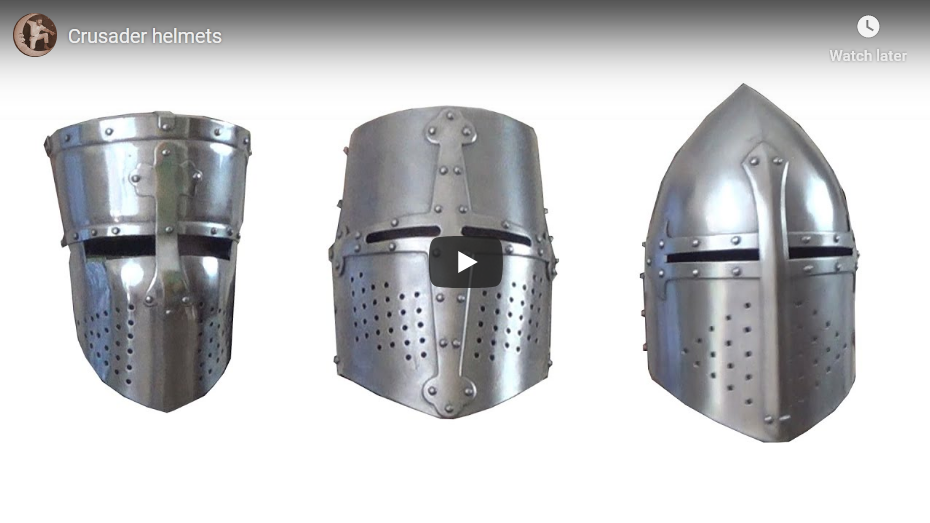
Crusader helmets
Lindybeige
Published 4 Sep 2014Here I show you three common styles of crusader helmet, and I comment upon them.
Thanks to Dr David Tetard for the loan of his helmets. These particular ones were bought here:
www.getdressedforbattle.co.uk
http://www.kovexars.cz/index.php (HL 007 and 103)Lindybeige: a channel of archaeology, ancient and medieval warfare, rants, swing dance, travelogues, evolution, and whatever else occurs to me to make.
▼ Follow me…
Twitter: https://twitter.com/Lindybeige I may have some drivel to contribute to the Twittersphere, plus you get notice of uploads.
website: www.LloydianAspects.co.uk
June 12, 2020
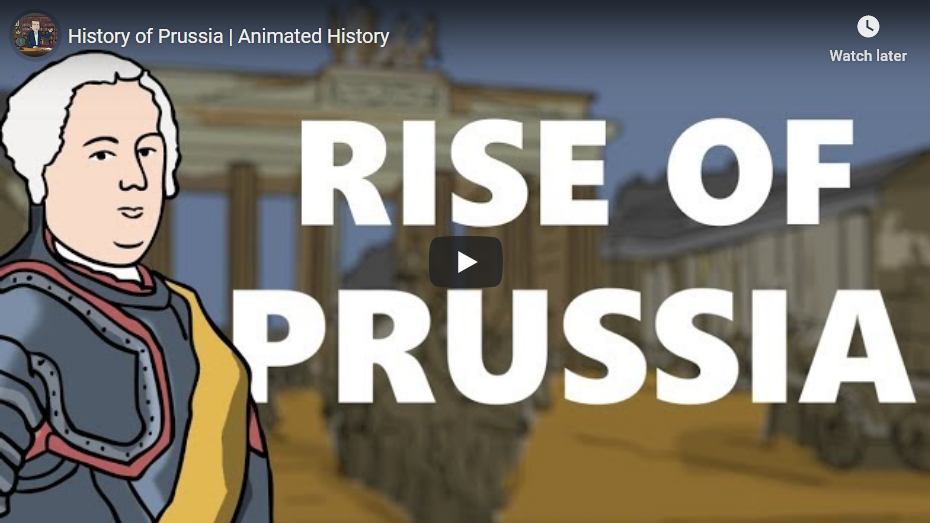
History of Prussia | Animated History
The Armchair Historian
Published 14 Sep 2018Sign up for The Armchair Historian website today:
https://www.thearmchairhistorian.com/Our Twitter: https://twitter.com/ArmchairHist
Sources:
The Rise and Fall of Prussia, Sebastian Haffner
Germans and Slavs, Arno Lubos
Frederick the Great, Tim BlanningMusic:
“Hungarian Rhapsody” by Franz Liszt“Twenty six variations on La Folia de Spagna”, London Mozart Players
Matthias Bamert, conductor*Correction 1: In 1648, Brandenburg-Prussia also acquired parts of Pomerania, which isn’t shown in the video. Pomerania is a state directly above Brandenburg.
June 1, 2020
The true GOAT
Nigel Davies explains why even the greatest athletes and sportspersons of today are no match for the Greatest Of All Time – William the Marshal, 1st Earl of Pembroke:

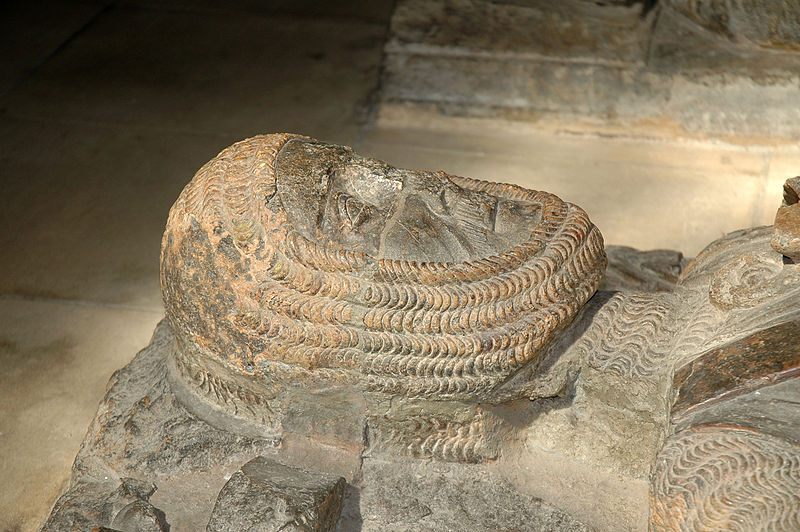
Head of the effigy of William Marshal, 1st Earl of Pembroke, in Temple Church, London.
Photo by Kjetil Bjørnsrud via Wikimedia Commons.
William the Marshall is almost universally recognised as “the best knight that ever lived”, by all those who consider his extraordinary career as a fighter, warrior, war leader, political leader, guardian, and shining light of courtly and knightly achievements at the height of the chivalric and troubadouring shift (that moved culture from adoring thugs who hit hard, to adoring all round “renaissance men” who could dance, sing, write poetry, play chess, fight, and negotiate treaties that bought peace to generations). He was one of the men whom the word “paragon” — a person or thing regarded as a perfect example of a particular quality — was invented for.
But he was also the GOAT athlete and sportsman.
Tournament fighting and jousting were the Olympic Games of the medieval world, and — far from being an elitist sport, or an act of middle class pretention — tournament fighting in both its foot and horseback forms is a sport common to all classes from all cultures throughout most of human history … from the Olympics and gladiatorial combats, to the foot combat of Fencing and Kendo and Judo, to the horse archery of most of the nomadic tribes of Asia and Africa and even the American Indians: combat games are virtually the only universal human sport there has ever been.
William the Marshall was competing at a sport — armed combat — that is universal, worldwide, and largely classless. Admittedly he was competing at the most elite level (only the Samurai or Persian or Eastern Roman Cataphracts really come close to European kinghts for an equivalent dedication to a lifetime of training and specialist equipment and expense). But you can confidently say that here was a sport whose experts could face any other expert in any other combat sport in the world without confusion or fear.
And you could confidently predict that William the Marshall could defeat the equivalent character in any of those other combat sports … (As he apparently did when he fought Muslim horse archers or Mameluke foot soldiers in his brief years on Crusade.)
As a man whose prowess in his chosen field could adapt to all equivalent fields, he certainly outranks Muhammed Ali: who is the closest competitor on the above list to a world class showman and rough and tumble performer for the crowds.
As a person who statistically outperformed even Donald Bradman in comparison to his competition. He comes out in front there too.
As a winner above all others — his deathbed comment that he had bested more than 500 knights in hs career from all over Europe and the Middle East is not something that a squash player with 555 wins is likely to compare.
And as an athletic freak, even Usain Bolt or Michael Phelps — with their scant decade or so of dominance, could dream of competing with.
William the Marshall won his first international class tournaments in his teens, and was still winning them in his 60s. His unsurpassed competitiveness lasted not a few years, but several decades. He beat the GRANDCHILDREN of his previous conquests. And did so in a deadly serious full contact sport, not a namby pamby game like tennis or golf!
May 4, 2020
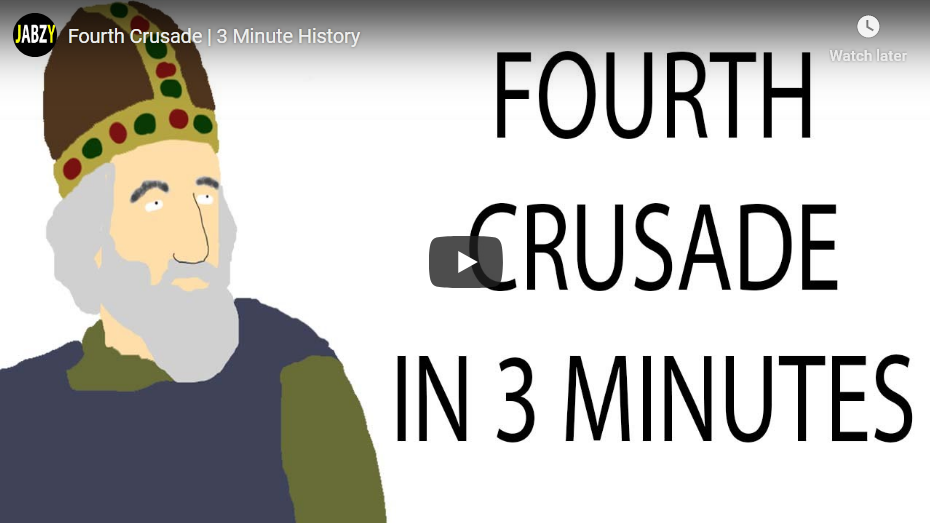
Fourth Crusade | 3 Minute History
Jabzy
Published 24 Sep 2016https://www.patreon.com/Jabzy
Thanks to Xios, Alan Haskayne, Lachlan Lindenmayer, Victor Yau, William Crabb, Derpvic, Seth Reeves and all my other Patrons.
March 31, 2020
Third Crusade | 3 Minute History
Jabzy
Published 25 Jul 2015Thanks to Xios, Alan Haskayne, Lachlan Lindenmayer, William Crabb, Derpvic, Seth Reeves and all my other Patrons. If you want to help out – https://www.patreon.com/Jabzy?ty=h
March 19, 2020
Second Crusade | 3 Minute History
March 5, 2020
First Crusade | 3 Minute History
March 2, 2020
History-Makers: Anna Komnena
Overly Sarcastic Productions
Published 28 Feb 2020She’s a Princess! She’s a Poet! She’s a Historian! She’s Anna Komnena — the COOLEST writer in the Byzantine Empire! On this episode of History-Makers, jump into the reign of Alexios Komnenos from the perspective of his daughter Anna, and learn about the emperor who saved the Byzantines from certain doom, as well as the traits that make Anna’s Alexiad a masterpiece.
This video was edited by Sophia Ricciardi, AKA “Indigo”.
Our content is intended for teenage audiences and up.Sources & Further Reading: The Alexiad — obviously, what are you waiting for? (Also Norwich’s Byzantium)
PATREON: https://www.Patreon.com/OSP
DISCORD: https://discord.gg/h3AqJPe
MERCH LINKS: https://www.redbubble.com/people/OSPY…
OUR WEBSITE: https://www.OverlySarcasticProductions.com
Find us on Twitter https://www.Twitter.com/OSPYouTube
Find us on Reddit https://www.Reddit.com/r/OSP/
March 1, 2020
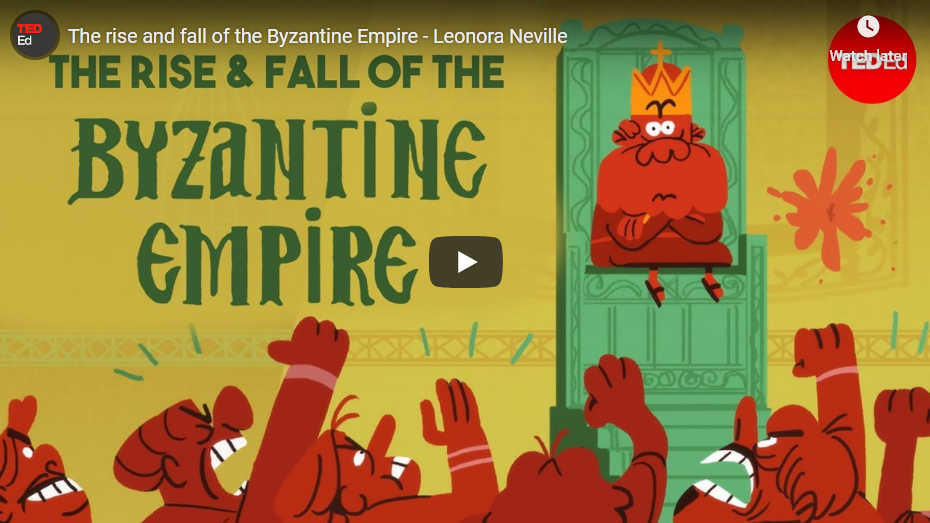
The rise and fall of the Byzantine Empire – Leonora Neville
TED-Ed
Published 9 Apr 2018Check out our Patreon page: https://www.patreon.com/teded
View full lesson: https://ed.ted.com/lessons/the-rise-a…
Most history books will tell you that the Roman Empire fell in the fifth century CE, but this would’ve come as a surprise to the millions who lived in the Roman Empire through the Middle Ages. This Medieval Roman Empire, today called the Byzantine Empire, began when Constantine, the first Christian emperor, moved Rome’s capital. Leonora Neville details the rise and fall of the Byzantine Empire.
Lesson by Leonora Neville, animation by Remus & Kiki.
Thank you so much to our patrons for your support! Without you this video would not be possible! Abhijit Kiran Valluri, Mandeep Singh, Sama aafghani, Vinicius Lhullier, Connor Wytko, Marylise CHAUFFETON, Marvin Vizuett, Jayant Sahewal, Quinn Shen, Caleb ross, Elnathan Joshua Bangayan, Gaurav Rana, Mullaiarasu Sundaramurthy, Jose Henrique Leopoldo e Silva, Dan Paterniti, Jose Schroeder, Jerome Froelich, Tyler Yoshizumi, Martin Stephen, Justin Carpani, Faiza Imtiaz, Khalifa Alhulail, Tejas Dc, Govind Shukla, Srikote Naewchampa, Ex Foedus, Sage Curie, Exal Enrique Cisneros Tuch, Vignan Velivela, Ahmad Hyari, A Hundred Years, eden sher, Travis Wehrman, Minh Tran, Louisa Lee, Kiara Taylor, Hoang Viet, Nathan A. Wright, Jast3 , Аркадий Скайуокер, Milad Mostafavi, Singh Devesh Sourabh, Ashley Maldonado, Clarence E. Harper Jr., Bojana Golubovic, Mihail Radu Pantilimon, Sarah Yaghi, Benedict Chuah, Karthik Cherala, haventfiguredout, Violeta Cervantes, Elaine Fitzpatrick, Lyn-z Schulte, cnorahs, Henrique ‘Sorín’ Cassús, Tim Robinson, Jun Cai, Paul Schneider, Amber Wood, Ophelia Gibson Best, and Cas Jamieson.
February 10, 2020
History Buffs: Kingdom of Heaven
History Buffs
Published 15 Aug 2015Apparently, Orlando Bloom was suffering from a nasty cold when shooting a big chunk of this movie. I think it shows … Anyway, it’s time for a brand new episode of History Buffs! Enjoy guys and thank you so much for all your support!
March 17, 2019
Apologizing for the Crusades
Perhaps our media-seeking politicians and activists are running out of other things to apologize for, so next on the apology tour may well be the Crusades:
Wherever one looks, the historic crusades against Islam are demonized and distorted in ways designed to exonerate jihadi terror. “Unless we get on our high horse,” Barack Obama once chided Americans who were overly critical of Islamic terror, “and think this [beheadings, sex-slavery, crucifixion, roasting humans] is unique to some other place, remember that during the Crusades and the Inquisition, people committed terrible deeds in the name of Christ.”
Others, primarily academics and self-professed “experts,” insist that the crusades are one of the main reasons modern day Muslims are still angry. According to Georgetown University’s John Esposito, “[f]ive centuries of peaceful coexistence [between Islam and Christendom] elapsed before political events and an imperial-papal power play led to [a] centuries-long series of so-called holy wars that pitted Christendom against Islam and left an enduring legacy of misunderstanding and distrust.”
Nor is this characterization limited to abstract theorizing; it continues to have a profound impact on the psyche of Westerners everywhere. Thus in 1999 and to mark the 900th anniversary of the crusader conquest of Jerusalem, hundreds of devout Protestants participated in a so-called “reconciliation walk” that began in Germany and ended in the holy city. Along the way, they wore T-shirts bearing the message “I apologize” in Arabic. Their official statement:
Nine hundred years ago, our forefathers carried the name of Jesus Christ in battle across the Middle East. Fueled by fear, greed and hatred … the Crusaders lifted the banner of the Cross above your people … On the anniversary of the first Crusade, we … wish to retrace the footsteps of the Crusaders in apology for their deeds … We deeply regret the atrocities committed in the name of Christ by our predecessors. We renounce greed, hatred and fear, and condemn all violence done in the name of Jesus Christ.
After outlining the Western concept of “Just War” in contrast to the Islamic concept of “Jihad”, Raymond Ibrahim puts the Crusades into historical context:
From the very start, at Clermont in 1095, Pope Urban never offered forgiveness of sins (but rather remission of the penances for sins to which crusaders had already confessed). Those who took the cross were required to be sincerely penitent.
This is a far cry from what Muslims were (and are) taught about fighting and dying in jihad: Every sin they ever committed is instantly forgiven, and the highest level of paradise is theirs. “Lining up for battle in the path of Allah,” Muhammad had decreed in a canonical hadith, “is worthier than 60 years of worship.” Muhammad also said, “I cannot find anything” as meritorious as jihad, which he further likened to “praying ceaselessly and fasting continuously.” As for the “martyr” — the shahid — he “is special to Allah,” announced the prophet. “He is forgiven from the first drop of blood [he sheds]. He sees his throne in paradise. … Fixed atop his head will be a crown of honor, a ruby that is greater than the world and all it contains. And he will copulate with seventy-two Houris.” (The houris are supernatural, celestial women — “wide-eyed” and “big-bosomed,” says the Koran — created by Allah for the express purpose of gratifying his favorites in perpetuity.)
Crusader motives also had to be sincere: “Whoever shall set forth to liberate the church of God at Jerusalem for the sake of devotion alone and not to obtain honor or money will be able to substitute that journey for all penance,” Urban had said. Similarly, Spanish Prince Juan Manuel (d. 1348) explained that “all those who go to war against the Moors in true repentance and with a right intention … and die are without any doubt holy and rightful martyrs, and they have no other punishment than the death they suffer.”
In this, Christian war significantly departed from Islamic jihad. Allah and his prophet never asked for or required sincere hearts from those flocking to the jihad; as long as they proclaimed the shahada — thereby pledging allegiance to Islam — and nominally fought for and obeyed the caliph or sultan, men could invade, plunder, rape and enslave infidels to their hearts’ content.
The cold, businesslike language of the Koran makes this clear. Whoever wages jihad makes a “fine loan to Allah,” which the latter guarantees to pay back “many times over” in booty and bliss either in the here or hereafter (e.g., Koran 2:245, 4:95, 9:111). “I guarantee him [the jihadi] either admission to Paradise,” said Muhammad, “or return to whence he set out with a reward or booty.”
In short, fighting in Islam’s service — with the risk of dying — is all the proof of piety needed. Indeed, sometimes fighting has precedence over piety: Many dispensations, including not upholding prayers and fasting, are granted those who participate in jihad. Ottoman sultans were actually forbidden from going on pilgrimage to Mecca — an otherwise individual obligation for Muslims, especially those who can afford it, such as the sultan — simply because doing so could jeopardize the prosecution of the jihad.
Little wonder that, whereas there was never a shortage of Muslims willing to participate in a jihad, “85-90 percent of the Frankish knights did not respond to the pope’s call to the Crusade,” explains Tony Stark, and “those [10-15 percent] who went were motivated primarily by pious idealism.”
Little wonder that there are still countless jihadis today but no crusaders.