
When you want to point at amazingly vast political failures, the Chinese plan to have peasants produce steel in tiny backyard furnaces must rank near the very top of boneheaded notions. It would be funny except for the huge costs in material, environmental damage, and human lives:
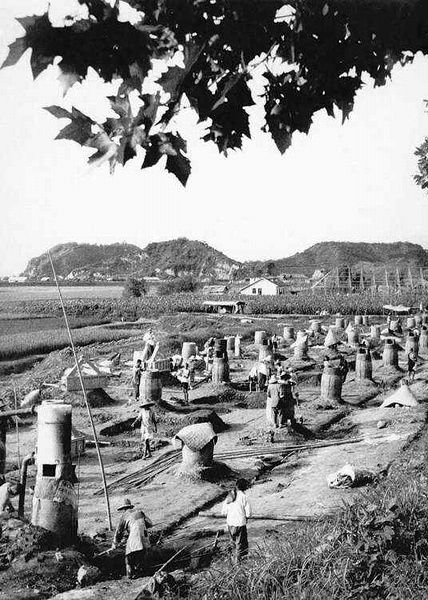
Mao Zedong killed roughly 45 million people between 1958 and 1962, and the backyard steel furnace campaign sits at the center of that catastrophe as a textbook case of central planning consuming itself alive.
The logic of the Great Leap Forward went like this: if the Soviet Union industrialized through state-directed production, China would do it faster and bigger. Mao ordered peasants across every province to smelt steel in small furnaces built on collective land. Party officials set output quotas with no reference to actual resources, actual skills, or actual demand. Farmers melted down their own plows, woks, and door hinges to hit the numbers. They stripped hillsides bare for fuel. What came out of those furnaces was overwhelmingly pig iron so brittle it had zero industrial use. The quotas got reported as fulfilled, the statistics traveled up the command chain, and Beijing celebrated a triumph that existed only on paper.
You have to understand what those farmers were abandoning to stand at furnaces all day. The 1958 harvest was, by most estimates, actually decent. But with the rural labor force diverted to smelting operations, crops rotted in the fields unharvested. Free market economists call this opportunity cost: every hour a farmer spent producing worthless slag was an hour not spent producing food. The price system, had anyone been allowed to use it, would have made this tradeoff immediately visible. Prices signal scarcity. Planners just issue directives and wait for reality to disobey them.
Local officials faced execution or labor camps for reporting shortfalls, so they reported surpluses. Beijing then exported grain abroad, partly to service debts to the Soviet Union, partly to project an image of socialist success, even as provinces like Anhui and Sichuan descended into mass starvation. The state had monopolized food distribution, so when the numbers were wrong, there was no private market, no informal trade network, no alternative channel to move grain to the dying. The apparatus designed to feed people became the mechanism that starved them.
This is what the elimination of private property and price signals actually produces in practice: 45 million corpses and a generation of Chinese children who grew up stunted by famine.


