Quotulatiousness

January 10, 2026

Luxury beliefs thrive when there is no personal cost for embracing them

Filed under: Media, Politics — Tags: , , , , — Nicholas @ 04:00

Lorenzo Warby on the inevitable result of well-to-do people espousing luxury beliefs when there is no feedback mechanism to inform them of the negative impact of those beliefs:

Look at anyone making consequential decisions. Ask the question: what penalty do they suffer if they are wrong? That is, what are the consequences for them if they adopt a belief that is not true; if they make a decision hostile to human flourishing; if they retard the operation of the organisation or society around them.

For a horrifying number of people in our modern, highly bureaucratised, highly regulated, highly taxed, highly subsidised societies, the answer is: nothing. Nothing happens to them if they are wrong.

Note, this is different from the question of: did you follow the correct process? It is relatively easy for failure to follow the correct processes to have consequences. The what-if-you-are-wrong question also applies to: what if you follow the correct process and are wrong?

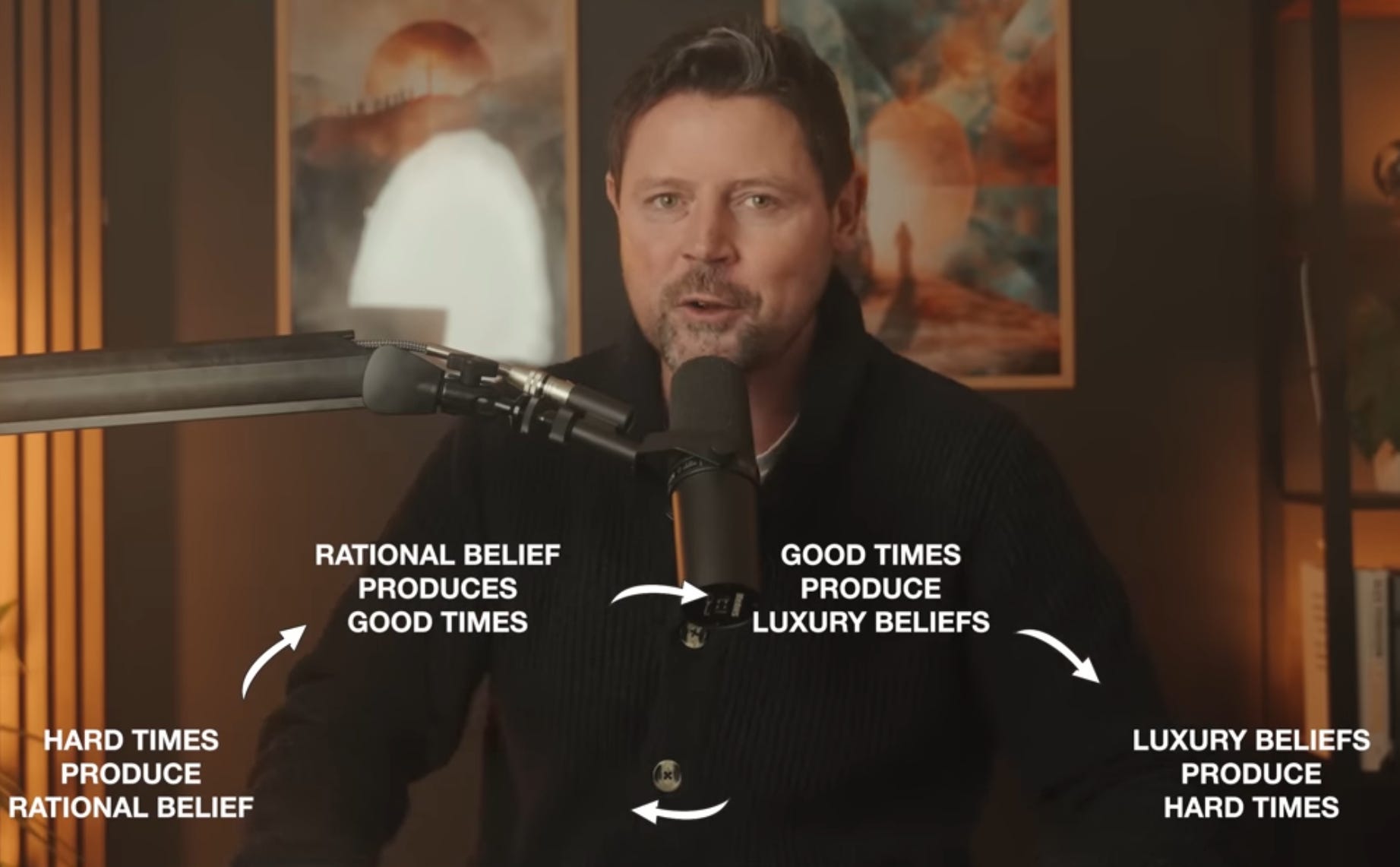
Source. A luxury belief is a belief insulated from reality-tests that there are social motives to adopt — e.g. as shared status play; as a resource or power grab — that imposes costs on others (typically, lower down the social scale).

The question of being wrong has lots of layers. Something can simply block good things from happening, but those good things’ lack of happening is typically invisible.

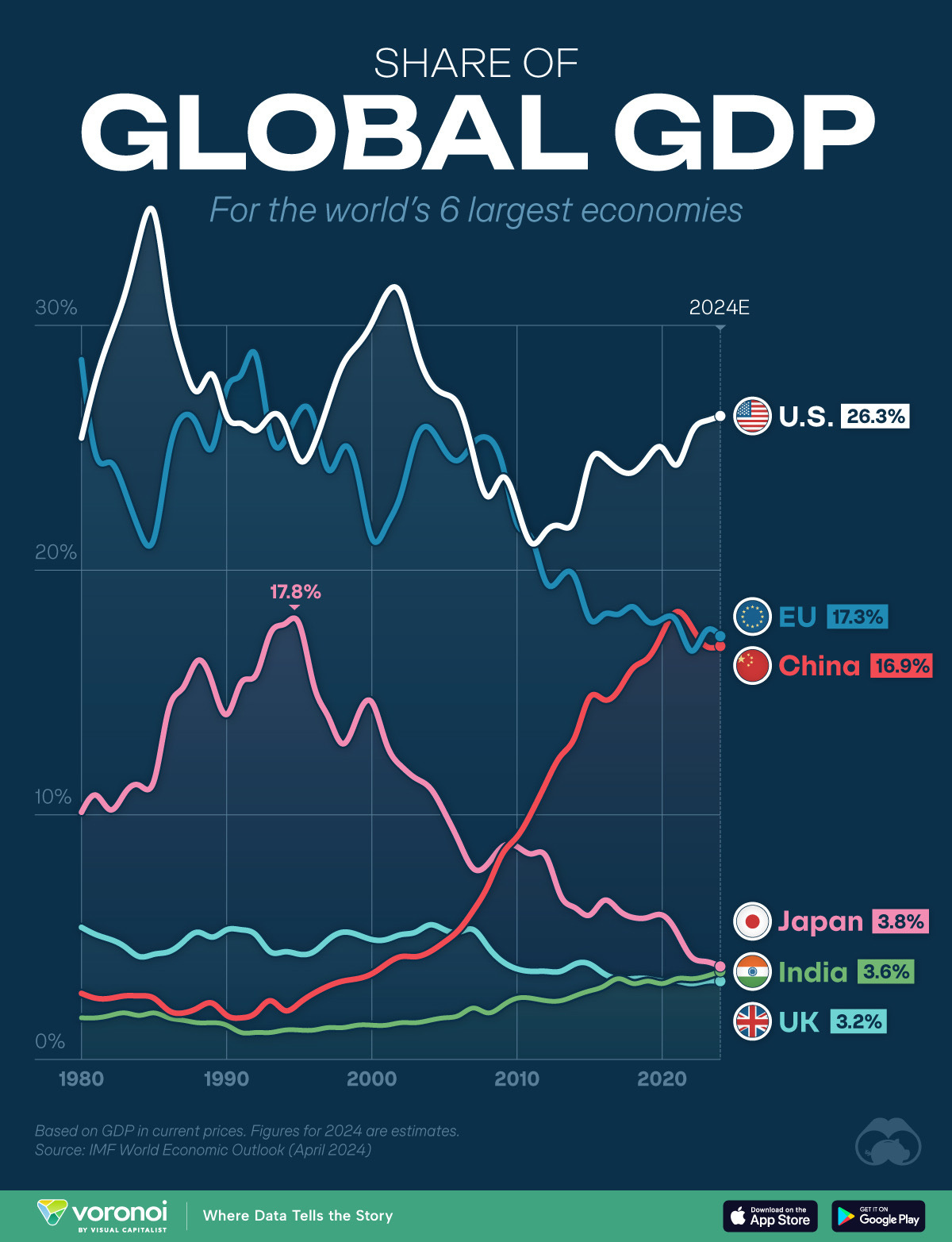
Economic stagnation is a normal condition of human societies, in large part because what is blocked from happening is invisible. Such has become more visible in the world since the 1820s, as mass prosperity has been demonstrated to be an achievable thing. Compare, for example, the post-2008 economic performance of the UK and much of the EU with, say, the US. But such is more visible only by comparison with other societies—we cannot directly observe good things that are blocked from happening.

Source. Japan shows the compounding effects of economic stagnation. Those of us who can remember the 1980s commentary on how the US needed to copy Japan can enjoy the irony and suggest caution about similar commentary re: China.

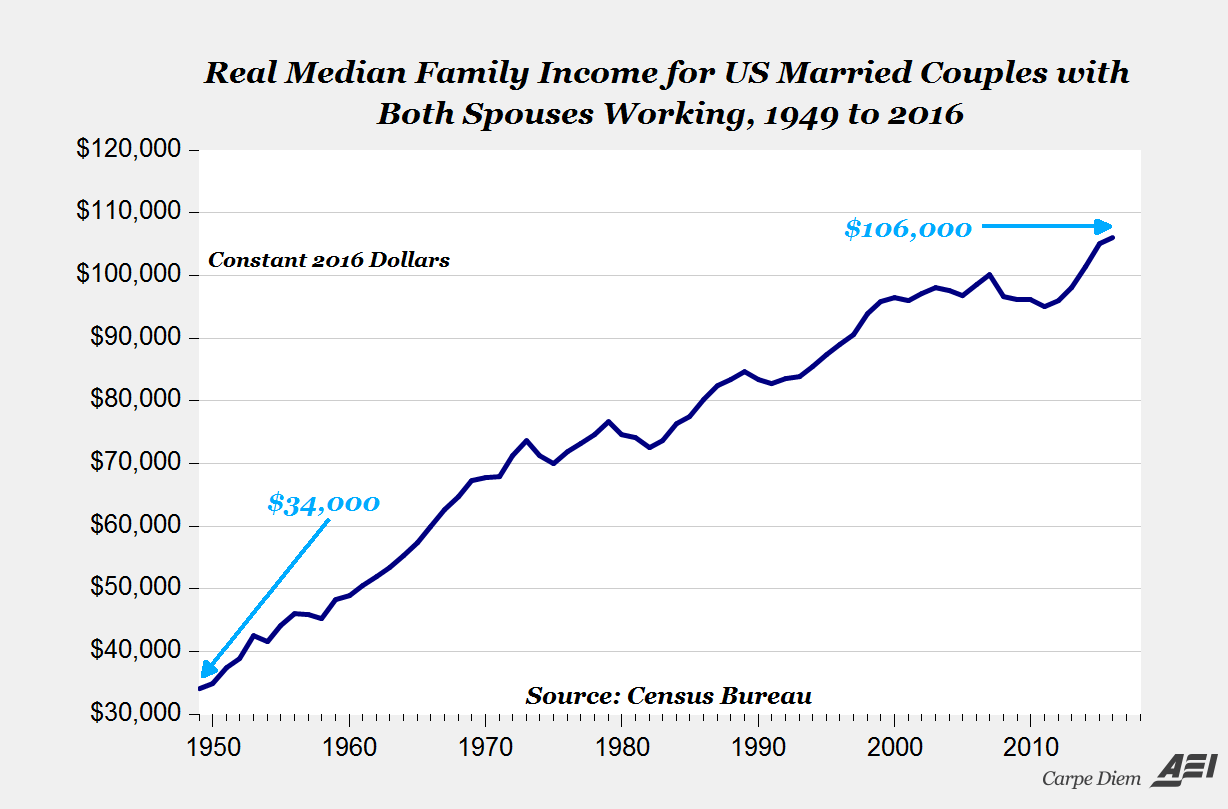
Even in the US, comparing the path of median incomes in different postwar periods shows that there has been a fair bit of blocking of good things from happening.

Moreover, comparison does not always resonate. People can not bother to compare or think that the comparisons do not apply. This time will be different has a great deal of wish-fulfilment appeal.

Across so much of modern societies, the what-are-the-consequences-of-being-wrong? question has the horrifying answer of no consequences to the person being wrong. (Real consequences, but very delayed, is not much better.)

I have already discussed this no consequences for being wrong with regard to the universities. But the same point applies across much of the non-profit world, the apparatus of the welfare state, etc. It applies intensely to UN bodies.
Why Greenland of all places?

Filed under: Europe, Media, Military, Politics, USA — Tags: , , , , — Nicholas @ 03:00

President Trump’s renewed interest in Greenland seems inexplicable to most of us, unless it’s part of his notorious 51st state plan to further encircle Canada (forget I said that, the Liberals might use it to scare the boomers again…). A few days back, CDR Salamander discussed the “unfortunate Greenland kerfuffle” on his Substack:

It would be an understatement to say that I am not all that pleased with where we are in January 2026 with the Greenland question. This would not have been the productive path I would have recommended because, in the end, this is a very serious issue.

Sure, in the first few months of 2025, the meme-ish nature of it all was fun and funny … but only to a point.

In 2026, Denmark is not going to sell or otherwise transfer Greenland to the USA like they did with the now-U.S. Virgin Islands a bit more than a century ago.

However, before we go further, if you have a knee-jerk reaction to support or oppose anything or any topic because DJT is involved, please repress that feeling until at least the end of the post. It isn’t productive, enlightening, or good for your health — so give it a rest for a bit until we are done, then you can carry on as before.

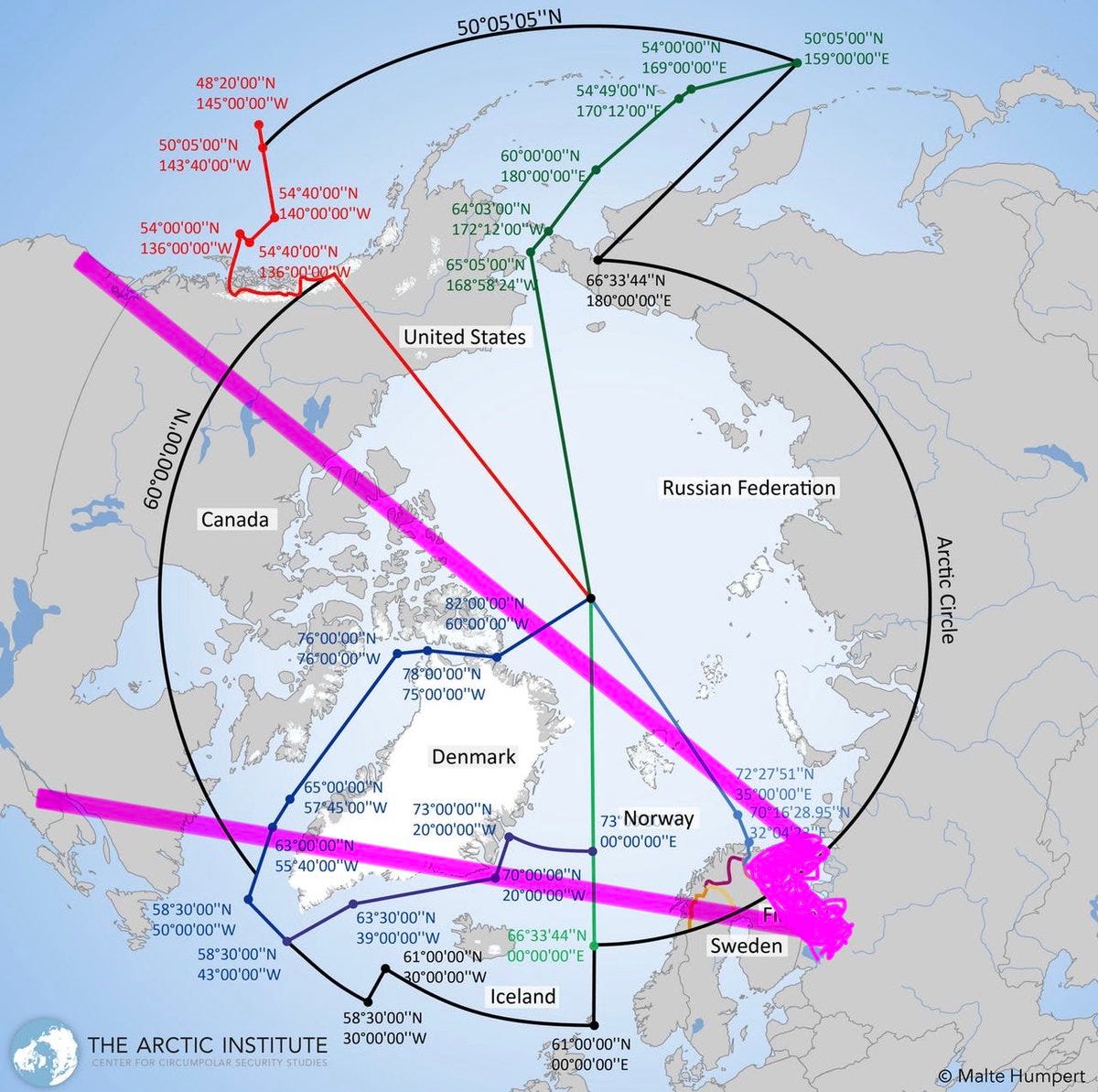
Next, let’s do as we should in most things: let’s go to the chartroom.

Object Zero’s crayon work on the Arctic Institute’s map is superb to illustrate that point.

The Europeans have whipped themselves into an almost comical lather over it all. Having lived with their NATSEC nomenklatura for years, I’m not shocked. They tend to be very narrowly read, get their ideas about the USA from NYT, WaPo, the usual suspects in East Coast Universitlandia, and their nomenklatura is worm-ridden with the same people who opposed Cold War NATO efforts to counter the Soviet Union’s militarism and supported every anti-USA trend of the fiscal quarter, etc. It is always 1968 or 1983 with these people.

Unhelpful to trans-Atlantic cooperation has been an almost gleeful approach to triggering these people who never thought DJT would come back to power, and from 2020-24 acted like it. The vengeful and bitter are fighting with the frag-pattern hitting everyone else.

Behind that triggering and, at least from this side of the pond, trolling, is a very serious security concern in the high north that Greenland is, literally, right in the middle of.

At The Conservative Woman, Jonathon Riley wonders if Greenland is worth more than the NATO alliance:

Satellite view of Greenland, Iceland, and parts of Northern Canada.
NASA/Ames Research Center, 17 May, 2005.

Greenland is the world’s largest island, (just) contiguous with Canada, and geographically part of North America. It was colonised by Denmark in the tenth century but the Norse settlements, which farmed sheep and cattle, died out during the mini-ice age of the medieval period, not long before the rediscovery of America by Columbus.

The majority of the population is now Inuit with only about 10 per cent being Nordic. Following a 1979 referendum, Denmark granted Greenland home rule and in 2008, self-government increased further. Denmark retains control of citizenship, security, finance and foreign affairs. Greenland joined the EU with Denmark but has since left. As a self-governing part of Denmark, it remains a member of Nato.

Greenland sits astride an area of great strategic importance. First, the Arctic ice is retreating as the result of an entirely natural process of cyclical warming – nothing to do with so-called man-made “climate change”. This will end when the world enters the next ice age, which is long overdue.

As the Arctic ice retreats, ships can sail through the north-east and north-west passages, sought for so long by explorers. This means not only that transit times can be reduced but also that the Russian “shadow fleet” of unregistered oil tankers engaged in moving sanctioned oil can more easily dodge interception, as is happening to Venezuelan oil tankers.

Second, Greenland probably has reserves of oil, coal and gas concealed beneath the ice cap, but exploration has been slow and difficult, for obvious reasons. Estimates put Greenland fourth in terms of likely reserves in the Arctic region.

Third, in Greenland’s territorial waters in the Arctic Ocean there are huge reserves of fish, shrimp, whales and seals – valuable food resources especially for China and Japan.

Finally, there is the matter of fresh water, an increasingly scarce commodity in many parts of the world. The Greenland ice sheet holds about 10 per cent of the world’s fresh water.

It is therefore easy to see why both the Russians and the Americans see Greenland as a valuable asset. Donald Trump made aggressive noises about “acquiring” Greenland during his first presidential term and has now made further remarks, perhaps emboldened by his successes in Iran and Venezuela.

Special envoy Jeff Landry has been appointed to examine how the US could acquire Greenland. The means so far mentioned have included diplomacy, a territorial purchase – the US has done this before in its history, for example Louisiana and Alaska – or a lease agreement.

The problem here is that the Greenlanders and the Danes are having none of it. Danish Prime Minister Lars Lokke Rasmussen told the BBC: “As long as we have a kingdom consisting of Denmark, the Faroe Islands and Greenland, we cannot accept actions that undermine our territorial integrity”. Rasmussen is on solid legal ground, as the UN Charter specifically states that frontiers must not be changed by force.

In his weekly post, Andrew Sullivan says that Trump is conducting a “Viking foreign policy” (trigger warning: contains Andrew Sullivan):

(more…)

A Short Tour of Roman London

Filed under: Architecture, Britain, History — Tags: , , , , — Nicholas @ 02:00

Scenic Routes to the Past
Published 19 Sept 2025

The ruins of Londinium – London’s Roman predecessor – are not spectacular. But they are extremely interesting …

0:00 Introduction
0:40 City walls
1:47 St. Magnus the Martyr
2:26 Monument to the Great Fire
3:12 Leadenhall Market
4:10 London Mithraeum
6:19 Bank of England
7:08 Guildhall Amphitheater
8:14 The Gherkin

QotD: The United Nations

Filed under: Quotations, USA — Tags: — Nicholas @ 01:00

Were serious reform of the UN accomplished, it would be turned from an ineffective anti-American and anti-Western organization, into an effective anti-American and anti-Western organization. That is absolutely inevitable from the membership structure, with its voting blocs. So, better a UN that continues in a state of abject dysfunction, than one that can be more efficiently evil.

David Warren, “The nuts, & Bolton”, Ottawa Citizen, 2005-09-17.

Powered by WordPress