Janice Fiamengo responds to a recent discussion between former Fox News host Tucker Carlson and happiness coach Chris Williamson which was intended to be about men’s lives but “quickly becomes a conversation about what women want”:
Chris Williamson: “It’s very hard to try and put forward something that doesn’t sound like putting the brakes on women. And I don’t think that’s what either of us …”
Here is the problem in a nutshell. We must never say No to a woman, no matter the social atrophy and misery she and her sisters are causing. Carlson, in turn, gives the only permissible response: “Are women happier than they were?”
A conversation about men’s lives quickly becomes a conversation about what women want.
**
Men’s issues have long been the purview of a tiny group of outliers who gained traction in the early days of the internet and were popularized in Cassie Jaye’s The Red Pill.
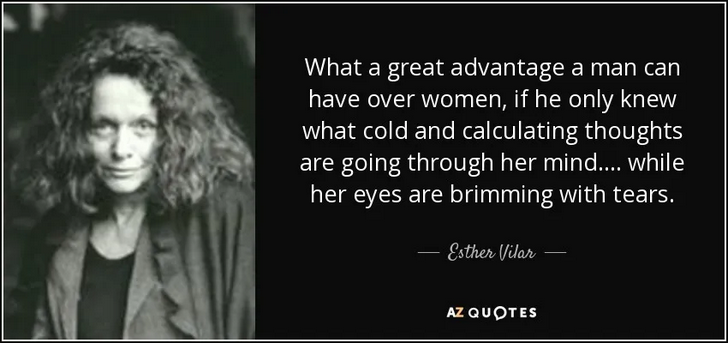
Following in the footsteps of iconoclasts like Ernest Belfort Bax (The Legal Subjection of Men, 1896), Esther Vilar (The Manipulated Man, 1971), and Warren Farrell (The Myth of Male Power, 1993), they questioned standard feminist wisdom, focusing on male disposability (see also here) and the empathy gap. For years, they were voices crying in the wilderness.
Now, decades into our Female Future, it’s becoming harder to ignore the suffering and plummeting fortunes of men and boys — and their knock-on social effects. But what happens when the red pill begins to go mainstream?
As the recent discussion between former Fox News host Tucker Carlson and happiness coach Chris Williamson makes clear, most hard truths get leached away, and we’re left with half-hearted calls for a compassion that the influencers themselves seem unable to maintain.
Spoiler Alert: “Chris Williamson’s Guide to Being Happy, and Debunking the Feminist Lies Sabotaging You” doesn’t debunk any feminist lies. Even the MeToo movement, which harmed or destroyed thousands of men’s lives through unproven accusations (some of them almost inconceivably ridiculous and trivial), is accepted as an attempt to “sanitize the toxic elements of male behavior”. Accusers’ falsehoods, ‘Poor-me-I’m-so-desirable’ showboating, manipulations, and blithe indifference to evidence are all passed over in feminist-compliant silence.
Sadly, the discussion is full of feminist lies.
**
Near the beginning of the discussion, Williamson expresses frustration that in order to acknowledge any of the troubles of men and boys in the modern world, it has become obligatory first to rehearse women and girls’ (always at least equal, if not greater) suffering. Unfortunately, Williamson is a prime example of such gynocentric genuflecting, visibly uncomfortable every time the conversation seems to be moving into non-feminist territory.
In order to talk about the drastic decline in men’s higher education attainment, for example, Williamson seems to think it necessary to point out that women were at some point in the past discouraged from getting university degrees. Both Williamson and Carlson refer to men’s diminishing earning power, but pivot immediately to stressing how hard this is on professional women looking for marriageable men.
The sexual revolution is alleged to have mainly benefited men who can now, with impunity, “use and abuse women”; nothing is said about women’s rampant OnlyFans activity or their exploitation of men in divorce.
It goes on and on like this: for every male suicide, divorce-raped father, falsely accused or incarcerated man, there must be at least one woman somewhere who felt at some point that she wasn’t encouraged to do something.
There is a small amount of criticism directed at women, but only when women act badly towards other women, as is the case, according to Carlson, with female bosses. But about female cruelty to men or children (over half of child maltreatment, for example, is female-perpetrated), we do not hear anything.
There is a good deal said about women as a civilizing force, how much women bring to family life, how women are better with social cues, how they are “unbullshittable.” Carlson even gushes about how kind women are to their hubbies: “They wash your underwear. They listen to you snore,” he rhapsodizes. For the considerable number of men who have rarely had a kind word from any woman or who have gone through a hellish marriage and/or divorce with a vindictive shrew, the adulation seems quite unhelpful.