It’s been decades since I last visited New York City, so I don’t know if they really deserve what they’ve just voted for, but I guess we’ll all get to find out over the next few years. On the City Journal substack, Reihan Salam weighs in on the newly elected mayor and what to watch for:
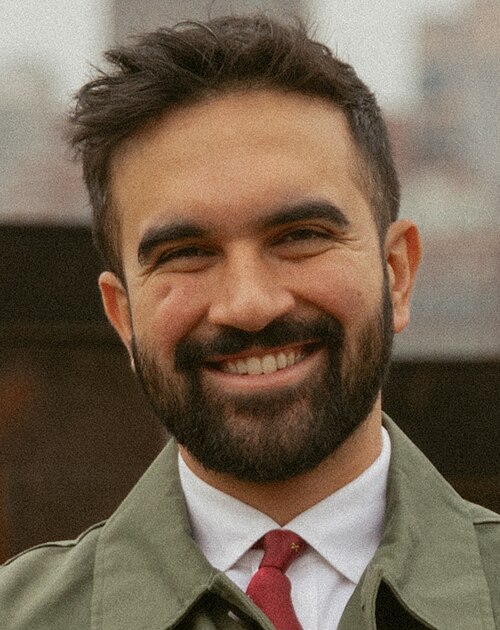
New York State Assemblymember Zohran Mamdani photographed in Assembly District 36, 10 February 2024.
Photo by Kara McCurdy via Wikimedia Commons.
A year ago, not even the most perfervid Astoria leftist would have thought that Zohran Mamdani would soon be elected mayor of New York City. Back then, it was easier to imagine Eric Adams coasting to reelection on the strength of declining crime, or state attorney general Tish James, who came close to running for mayor in 2021, swooping in to unite a fractious Democratic coalition. With Adams badly damaged by a federal indictment and James anxious about what a mayoral bid would mean for her ongoing battle with President Donald Trump, however, the path was seemingly clear for Andrew Cuomo to make a dramatic comeback.
Though it was no secret that Cuomo had real weaknesses, thanks to his polarizing tenure as governor, his name recognition and formidable fundraising machine were enough to freeze out other serious contenders. As a result, the Democratic mayoral field was so bereft of talent that Mamdani — an obscure, hard-left state assemblymember with no legislative or professional accomplishments to speak of — was able to cut through, buoyed by surging anti-Israel sentiment and a series of half-baked pseudo-solutions to the city’s very real affordability crisis.
From one vantage point, then, Mamdani is best understood as an accidental mayor. If federal prosecutors had declined to prosecute Adams, if James had jumped in and Cuomo had stayed out, if Hamas had surrendered its hostages a few months sooner, if moderates and conservatives had consolidated behind a single candidate in the general election, or if any of a number of other possibilities had obtained — the outcome of New York City’s 2025 mayoral race would have been quite different.
In another sense, however, Mamdani’s victory represents the culmination of New York’s larger leftward turn. The shift started in 2018 with the dissolution, at Cuomo’s behest, of the state’s Independent Democratic Conference, an eight-member coalition of centrist Democratic senators who caucused with the Republicans. Their subsequent replacement heralded a broader takeover of Albany by progressives who — again, with Cuomo’s assent — passed a series of ideologically inflected bills: bail reform, the “most aggressive climate change legislation in the nation“, and a major overhaul of tenant protection statutes, to name only a few.
The Mamdani revolution was led by downwardly mobile elites — children of the professional class struggling to make ends meet and entranced by the promises of frozen rent and fare-free buses. They were fired by the same ideas that animated those Albany progressives: that some New Yorkers have been handed the short straw, that soak-the-rich policies can correct these imbalances, and that New York’s private sector was resilient enough to sustain a further ratcheting up of punitive taxation and regulation.
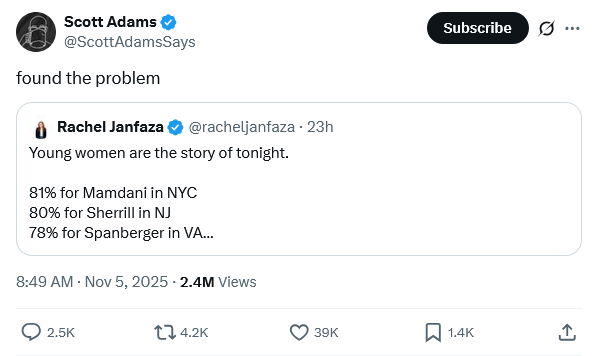
The voters of NYC are not the same demographic distribution as of old … among other things, the Jewish population has shrunk while the Muslim population has grown to nearly the same over the last 25 years, although Jewish women probably voted more similarly to women generally in this election: