
World War Two
Published 17 May 2025Today, Indy and Sparty tackle some questions on the North African theatre. Why did the Italians think invading was a good idea in the first place? Was Allied treatment of Axis POWs a war crime? How did Italian and Allied tanks stack up?
(more…)
May 18, 2025
Why it Sucked to be an Italian Prisoner in North Africa – WW2 Fireside Chat
Comments Off on Why it Sucked to be an Italian Prisoner in North Africa – WW2 Fireside Chat
Trump today, Taft a century ago – interfering with Canadian federal elections
In the Coolidge Review, Amity Shlaes looks at the long-ago pre-Trumpian example of US interference in Canadian federal politics:
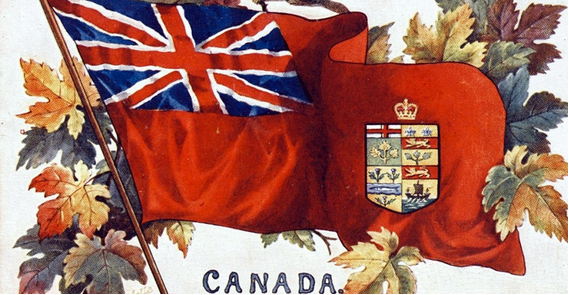
President Trump isn’t the first U.S. leader to turn a Canadian election with a few remarks. A little over a century back another president, William Howard Taft, managed the same feat.
The story starts in 1908, when outgoing president Theodore Roosevelt handpicked a successor, the lawyerly Taft. Taft won election. But from the eve of inauguration, Roosevelt began to voice doubts that Taft was up to the job. Word got around. Taft reacted to this disloyalty by attempting to prove he was no Roosevelt puppet. Where Roosevelt had invaded nations, Taft would write trade treaties. As Taft biographer Jeffrey Rosen writes, the motto of Roosevelt had been “speak softly and carry a big stick”. Taft’s maxim could have been “speak softly and carry a free-trade agreement”.
Taft’s marquee effort was to be a trade agreement with Canada, then lodged in the ambiguous status of “self-governing dominion”. As Taft noted, the dominion did have the freedom to conduct trade policy. Canada’s prime minister, Wilfrid Laurier, was a distinguished free marketeer. The political stars appeared to align. In his enthusiasm Taft praised Canada, practically crowing: “She has cost us nothing in the way of preparations for defense against her possible assault, and she never will … I therefore earnestly hope that the measure will be promptly enacted into law.” Such a treaty, Taft said, would mark a new “epoch” for North America.
In those days, tariffs represented a much more important share of U.S. federal revenues. Selling free trade was no easy work, especially not to Republicans, for whom tariffs were part of the brand. Then as now, trade treaties, unlike peace treaties, required support from both chambers of Congress. But again Taft sang his heart out, not only making the usual case for an “increase in trade on both sides of the boundary line” but also trying out wider arguments.
Early in 1911, Taft infused urgency into negotiations by threatening Canada via ultimatum: Team up with the United States, or there might be a “parting of the ways”. Hunting votes at home, Taft wrote a private letter to the still influential Roosevelt. Appealing to the imperialist in his predecessor, though not very hard, Taft suggested such a treaty might render Canada “only an adjunct of the United States”. Historians debate whether the “adjunct” letter was leaked or stayed private over the course of the 1911 negotiations. Lawmakers on the Hill, in any case, began to speak in similar tones.
Next, Taft called a special session of Congress. Congress warmed to the treaty but pounded the imperialist angle as much as Taft’s main case. “I hope to see the day when the American flag will float over every square foot of the British North American possessions, clear to the North Pole,” thundered the soon-to-be House Speaker, James Beauchamp “Champ” Clark of Missouri.
Such statements did not elude Canadian ears. Some loathed the treaty for pulling Canada farther from Britain; others, independence minded, loathed the idea of trading the thumb of one empire upon them for the thumb of another. By the time Taft signed the Tariff Reciprocity Agreement in July 1911, Canadian reciprocity opponents were on the march. By September, Canada was rejecting in a landslide referendum Taft’s and Laurier’s work.
As The Literary Digest commented in 1912, these flamboyant statements from U.S. politicians were handy weapons for Canada’s treaty opponents. They had put into Canadian Conservatives’ hands “an excellent club with which to cudgel the Liberals and their brilliant leader, Laurier”. Laurier himself was defeated in an election as well, on the argument he was pandering to the U.S.
Comments Off on Trump today, Taft a century ago – interfering with Canadian federal elections
The FAL for British Troop Trials in 1954: X8E1 & X8E2
Forgotten Weapons
Published 21 Feb 2020The NATO rifle trials of the early 1950s eventually chose the 7.62mm x 51mm cartridge, and the British and Belgians agreed on the FAL rifle to shoot it (and they thought the US would as well, but that’s another story). The British government formally accepted the FAL for troop trials, and in 1954 an order for 4,000 X8E1 rifles (with iron sights) and 1,000 X8E2 rifles (with SUIT 1x optical sights) was placed. These rifles were mechanically the same as what would be finalized as the L1A1 rifle, but they include a number of differing features. Both models had 3-position selector switches allowing automatic fire, and they also had manual forward assists on the bolt handles. The iron sights had top covers with integrated stripper clip guides, as there was concern that troops would have to manually reload their magazines, and stripper clips would speed this process up.
(more…)
Comments Off on The FAL for British Troop Trials in 1954: X8E1 & X8E2
QotD: Processing raw wool to make woollen cloth
Now when we left our wool it had just been shorn from our sheep. It is however, raw, oily from being on the sheep, likely still somewhat dirty, of uneven grades and types and also of course contains the other two fibers in the fleece (hair and kemp) which need to be removed before it can be used. The various processes used to get wool ready for spinning (or for sale) were sometimes collectively called “dressing” and involved various methods of sorting, scouring, combing, and washing.
The first step is sorting, dividing the raw wool into grades and types based on any number of factors, including fiber length, color, texture, crimp, strength, ability to take dye and so on. Different parts of the sheep produce wool with somewhat different qualities in this regard, but there are also differences based on the sex of the sheep, their health, age, diet, and for ewes whether they have had lambs. In order to get the best results in spinning (or the best value in selling) it is necessary to separate these grades out, grouping like wool with like. Too much mixing of fiber quality can make the end-product textile patchy in color, texture and its ability to take dye (the last one being quite visible, of course) and is to be avoided. This sorting was generally done by hand.
At this point, with the wool sorted, it could be sold, or further processed. The key question at this point was if the wool was to be washed or scoured (it would be combed or carded in either case, but this decision generally has to be made at this point). Scouring removes the lanolin (an oil secreted by the sheep which effectively waterproofs their wool) and other impurities. Leaving the lanolin in the wool can help with the spinning process and also to preserve the wool, but if the wool is to be dyed before being spun (for instance, if it is to be made into colored yarn rather than dyed as a whole fabric after weaving), it must be washed (or the lanolin will prevent the dye from sticking). Scouring could also be useful for wool that was going to be transported; in some cases the lanolin and other impurities might amount for up to 40% of the total weight of the raw wool (Gleba, op. cit. 98).
Practices in this regard clearly differed. In Greece, wool seems often to have been spun unwashed and women might use an epinetron, a ceramic thigh-protector, to keep the grease of the wool roving off of their clothes. On the flip side, both Varro (Rust 2.2.18) and Columella (De Rust. 11.35) assume that wool is generally to be washed (though they are thinking of wool being sold by large estates for commercial purposes and thus may have dyeing in mind). J.S. Lee notes that in medieval England wools with longer staples (that is, that forms into longer clusters or locks of fibers) were unscoured while short staple wools (which might be used in knitting) were more likely to be scoured. Scouring might be done on a small scale in the home or on a larger scale by either producers (before sale) or by clothiers and other purchasers (before dyeing).
Pre-modern scouring generally meant bathing the wool in a solution of warm water along with some agent that would remove the lanolin and other greases and impurities. The most common scouring agent was urine, something that pre-modern communities had in abundance; the ammonia content of urine allows it to break up and wash away the greases in the wool. Alternately, in the ancient period, the soapwort was sometimes used, as soaking its leaves in water could create a form of soap. By the early modern period, potash might also be used for this purpose, but even in the 1500s, it seems that urine was the most commons scouring agent in England. The process is smelly but generally fairly simple: the wool is allowed to sit in a solution of the scouring agent (again, generally urine) and warm water. Scoured wool would need to be re-oiled after it was dried to lubricate and protect the wool; typically olive oil was used for this purpose (both during the ancient and early modern periods) although J.S. Lee notes (op. cit. 45) that in the earlier parts of the Middle Ages, butter might be used instead in parts of Europe where olive oil was difficult to obtain in quantity.
Next, the wool has to be carded or combed, to remove any unusable or imperfect fibers or dirt, along with separating the strands by length and getting any tangles out before spinning. Let’s treat combing first, as it is the older of the two methods. Wool combs (in the ancient world, these were generally made of wood, bone or horn, but combs from the medieval period onward seem to generally be made with metal teeth projecting through a wooden handle) were used in pairs with the aid of a lubricant (grease, olive oil; these days there are specialty “combing oils”). One comb, the “moving comb” would be worked through the wool while the other comb which held the wool together was kept stationary, sometimes on the comber’s knee; in some cases it would secured to a fixed post (called a “combing stock”). You can see a demonstration of the basic method here.
Carding came later, though I have found no consensus on how much later. Gleba (Textile Production, 98) suggests that carding may have been in use in Italy by the end of the Roman period, while J.S. Lee (op. cit., 45) supposes carding to have been adopted into Europe via borrowing from the Islamic cotton industries of Sicily or Spain in the late 1200s. These suggestions are, of course, not mutually exclusive but I am hesitant to render a verdict between them. In any event, by late Middle Ages, carding is also a reasonably common processing method. Hand carders are generally wider, more paddle-like wooden boards with handles and pierced through by iron teeth; the earliest carders used teasel heads in place of the iron teeth (and the word “card” here actually comes from Latin, carduus, meaning thistle, referring to the use of teasel heads). Like combs they are used in pairs, with the wool placed on one, often held on the thigh, and then the other carder is drawn over the first until the wool is ready for spinning. You can see a demonstration here, and a direct comparison of the two kinds of tools here.
Though obviously quite similar methods (albeit with different tools) the two methods produce importantly different results in a couple of different ways. Both methods will remove remaining hair or kemp along with dirt or other particles that aren’t wool. But combed fibers generally produced stronger yarns (as I understand it, this is partly because it doesn’t straighten them out so much, allowing them to better tangle together during spinning), but combing is also a bit more wasteful in material terms, as shorter fibers are discarded in the process. Consequently, once both processes were available, they might both be used (and still are by practitioners of traditional wool-working today, as the video links above show), with combing more often used for long-fibered wools and carding for short-fibered wools.
Bret Devereaux, “Collections: Clothing, How Did They Make It? Part II: Scouring in the Shire”, A Collection of Unmitigated Pedantry, 2021-03-12.
Comments Off on QotD: Processing raw wool to make woollen cloth


