
Paul Sellers
Published 1 Jul 2022When it comes to wood finishes, for most, it is like watching paint dry, but we woodworkers must come up with something that makes our work look good, has durability, and is generally easy to apply. Over the years, I have tried most, and the two I lean on the most are shellac and water-based clear varnishes.
Chemicals as solvents used in paints have harmful effects, and we have become more conscious of the problems they cause. I wanted to let people know what I use in the day-to-day.
These two are the ones I rely on the most, but I do use other finishes from time to time.
(more…)
November 2, 2022
Essential Wood Finishes | Paul Sellers
Comments Off on Essential Wood Finishes | Paul Sellers
July 14, 2022
July 12, 2022
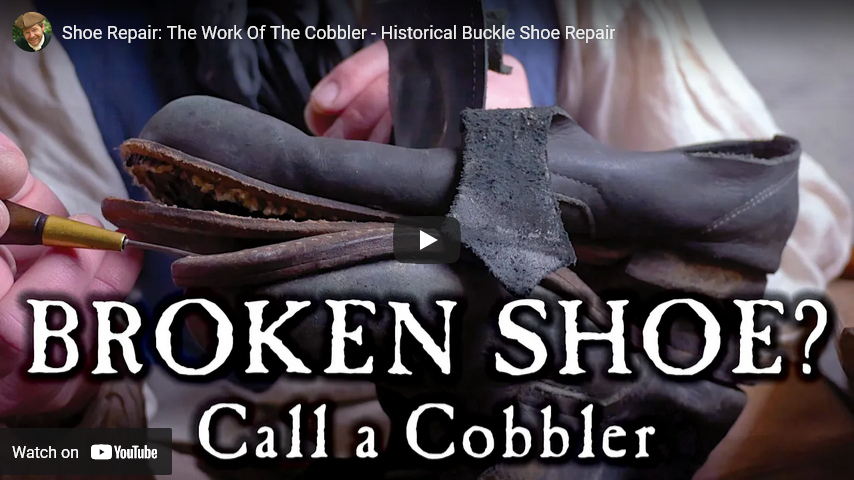
Shoe Repair: The Work Of The Cobbler – Historical Buckle Shoe Repair
Townsends
Published 21 Mar 2022Our Brand New Viewing Experience ➧ https://townsendsplus.com/ ➧➧
Retail Website ➧ http://www.townsends.us/ ➧➧
Help support the channel with Patreon ➧ https://www.patreon.com/townsend ➧➧
Instagram ➧ townsends_official
Comments Off on Shoe Repair: The Work Of The Cobbler – Historical Buckle Shoe Repair
June 30, 2022
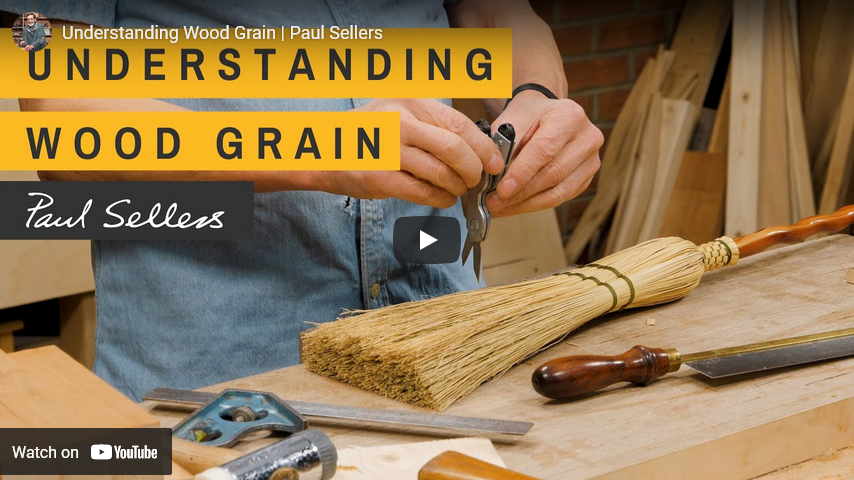
Understanding Wood Grain | Paul Sellers
Paul Sellers
Published 4 Mar 2022Grain for most people is the look wood has in its diverse colour and configuration. For the woodworker, grain is the inner depth that must be worked with saws, chisels, and planes, and the understanding reinforces the way the wood must always be worked to work “with” the grain rather than against it.
Paul put this video together to help bridge the gap of information between the observer, who needs only to see and feel, and the maker, who must understand how the fibre of wood works like the material in their life.
——————–
Want to learn more about woodworking?
Go to Woodworking Masterclasses for weekly project episodes: http://bit.ly/2JeH3a9
Go to Common Woodworking for step-by-step beginner guides and courses: http://bit.ly/35VQV2o
http://bit.ly/2BXmuei for Paul’s latest ventures on his blog
——————–
Instagram: http://bit.ly/2oWpy7W
Twitter: http://bit.ly/33S7RFa
Pinterest: http://bit.ly/35X5uTf
Comments Off on Understanding Wood Grain | Paul Sellers
June 17, 2022
QotD: The work of the blacksmith
There are a few basic behaviors of iron that fundamentally control what blacksmiths are going to do with it in this stage. To begin with, we need to introduce some terminology to avoid this coming confusing: a given piece of metal can be hard (resistant to deformation) or soft; it can also be ductile (able to deform significantly before breaking) or brittle (likely to break without deformation). This is easiest to understand at the extremes: a soft, brittle material (like a thin wooden dowel) takes very little energy and breaks immediately without bending, while a hard, ductile material (the same dowel, made of spring-steel) bends more easily under stress but resists breaking. But it is also possible to have hard brittle materials (pottery being a classic example) which fiercely resist deforming but break catastrophically the moment they exceed their tolerances or a soft, ductile material (think wet-noodle) which bends very easily.
(I should note that all of these factors are, in fact, very complex – far more complex than we are going to discuss. In particular, as I understand it, some of what I am using “hardness” to describe also falls under the related category of yield strength. Hopefully you will all pardon the necessary simplification; if it makes you feel any better, ancient blacksmiths didn’t understand how any of this worked either, only that it worked.)
Of course these are not binaries but a spectrum. Materials have a degree of hardness or ductility; as we’ll see, these are not quite opposed, but changing one does change the other – increasing hardness often reduces ductility.
The sort of things that pre-modern people are going to want to be made in iron are going to have fairly tight tolerances for these sorts of things. Objects that had wide tolerances (that is, things which could be weak or a little bendy or didn’t have to take much force) got made out of other cheaper, easier materials like ceramics, stone or wood; metals were really only used for things that had to be both strong and relatively light for precisely the reasons we’ve seen: they were too expensive for anything else. That means that a blacksmith doesn’t merely need to bring the metal to the right shape but also to the right characteristics. Some tools would need to finish up being quite hard (like the tip of a pick, or the edge of a blade), while others needed to be able to bend to absorb strain (like the core of a blade or the back of a saw).
Bret Devereaux, “Collections: Iron, How Did They Make It, Part III: Hammer-time”, A Collection of Unmitigated Pedantry, 2020-10-02.
Comments Off on QotD: The work of the blacksmith
May 23, 2022
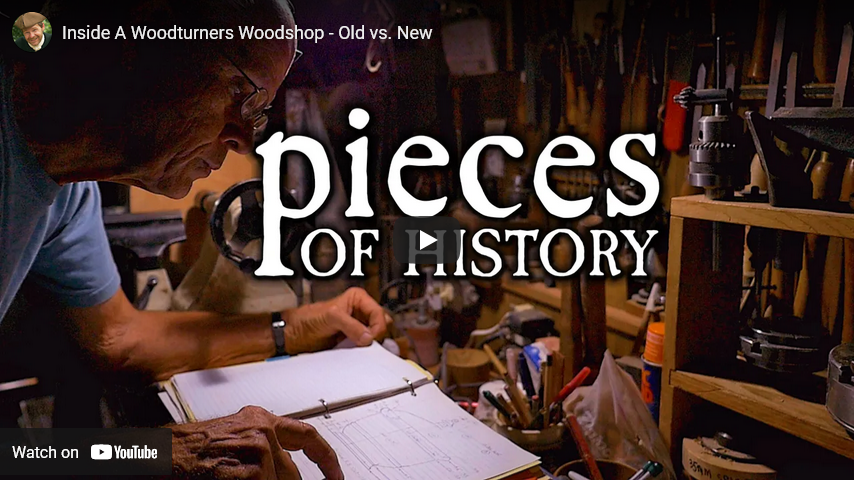
Inside A Woodturners Woodshop – Old vs. New
Townsends
Published 16 May 2022Gen Nis He Yo Trading Company ➧ http://gennisheyotrading.com/ ➧➧
Our Brand New Viewing Experience ➧ https://townsendsplus.com/ ➧➧
Retail Website ➧ http://www.townsends.us/ ➧➧
Help support the channel with Patreon ➧ https://www.patreon.com/townsend ➧➧
Instagram ➧ townsends_official
Comments Off on Inside A Woodturners Woodshop – Old vs. New
April 28, 2022
Work ANYWHERE with New Tools and Smart Techniques
Rex Krueger
Published 27 Apr 2022No shop is no problem with just a couple tools & a little ingenuity.
Patrons get all plans for FREE: http://www.patreon.com/rexkrueger
Build the Lightweight Traveler’s Bench & Japanese Sawhorses (Links Below)
(more…)
Comments Off on Work ANYWHERE with New Tools and Smart Techniques
April 21, 2022
Your Quick-Start Guide to Woodturning
Rex Krueger
Published 20 Apr 2022Now that you’ve got a woodturning lathe, make this easy foot-massager in a few hours.
Patrons get all plans for free: http://www.patreon.com/rexkrueger
Get One Week to Woodturning: https://www.rexkrueger.com/store/one-…
(more…)
Comments Off on Your Quick-Start Guide to Woodturning
April 19, 2022
QotD: “Bog iron” in ancient and medieval society
One distinction here is between bog iron and iron in ore deposits. Bog iron is formed when ground-water picks up iron from iron-ore deposits, where that iron is then oxidized under acidic conditions to form chunks of iron minerals (goethite, magnetite, hematite, etc.), typically in smallish chunks. Bog iron is much easier to smelt because it contains fewer impurities than iron ore in rock deposits, but the quantity of iron available from bog iron is relatively low (although actually renewable, unlike mines; a bog can be harvested for iron again after a few decades as the processes which produce the bog iron continue). Because of its low output, bog iron tends to be an important part of the iron supply only when production is relatively low, such as during the Pre-Roman Iron Age in Europe, or the early medieval period.
But what I want to stress here at the outset is that while the local variety of iron may vary based on conditions, iron ores are sufficiently common that prior to the industrial revolution, it wasn’t generally necessary to trade or transport them over long distances because most areas have deposits. There are some exceptions (Japan is notoriously mineral poor – my limited geological understanding is that this is common in volcanic land formations – and while it does have some iron deposits, they are few and relatively small), but for the most part, getting iron ore was not hard. As we’ll see, timber availability was actually often a more pressing limitation on iron exploitation than the ore itself […]
Bret Devereaux, “Iron, How Did They Make It? Part I, Mining”, A Collection of Unmitigated Pedantry, 2020-09-18.
Comments Off on QotD: “Bog iron” in ancient and medieval society
March 24, 2022
Making a little shelf from reclaimed wood. No plans.
Rex Krueger
Published 23 Mar 2022You don’t need plans for every project. Learn how I improvised this fast build!
(more…)
Comments Off on Making a little shelf from reclaimed wood. No plans.
March 10, 2022
High lumber prices might NOT come down. This is the New Woodwork Economy
Rex Krueger
Published 9 Mar 2022Get ready for the New Woodwork Economy with these flexible strategies.
Patrons get EVERYTHING first: http://www.patreon.com/rexkrueger
Our plans are affordable: https://www.rexkrueger.com/store
(more…)
Comments Off on High lumber prices might NOT come down. This is the New Woodwork Economy
September 18, 2021
Early American Ammunition
Townsends
Published 2 Jun 2021Visit Our Website! ➧ http://www.townsends.us/ ➧➧
Help support the channel with Patreon ➧ https://www.patreon.com/townsend ➧➧

Comments Off on Early American Ammunition
August 21, 2021
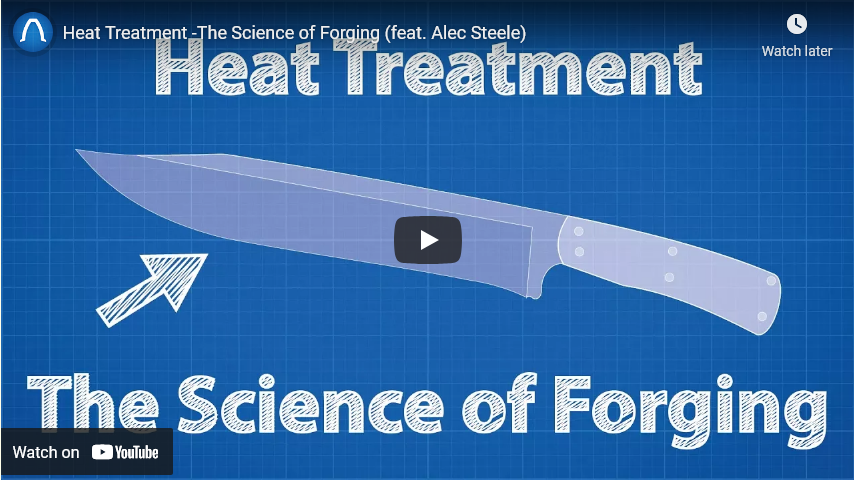
Heat Treatment -The Science of Forging (feat. Alec Steele)
Real Engineering
Published 29 Jan 2018Watch Alec’s 2 part vlog: http://bit.ly/2DVNZrn
Listen to our new podcast at:
Showmakers YouTube channel at: https://goo.gl/Ks1WMpItunes: https://itun.es/us/YGA_ib.c
RSS and Libsyn Audio is available on our site: https://www.showmakers.fm/Get your Real Engineering merch at: https://standard.tv/collections/real-…
Editing Laptop: http://amzn.to/2tipgoI
Camera: http://amzn.to/2ucfWEa
Microphone: http://amzn.to/2uCF8pSPrimary research material: http://digicoll.manoa.hawaii.edu/tech…
Patreon:
https://www.patreon.com/user?u=282505…
Instagram:
https://www.instagram.com/real.engine…
https://www.instagram.com/brianjamesm…
Twitter:
https://twitter.com/Fiosracht
Website:
https://www.RealEngineering.netMy Patreon Expense Report:
https://goo.gl/ZB7kvKThank you to my patreon supporters: Adam Flohr, darth patron, Zoltan Gramantik, Henning Basma, Karl Andersson, Mark Govea, Mershal Alshammari, Hank Green, Tony Kuchta, Jason A. Diegmueller, Chris Plays Games, William Leu, Frejden Jarrett, Vincent Mooney, Ian Dundore, John & Becki Johnston. Nevin Spoljaric
Once again thank you to Maeson for his amazing music. Check out his soundcloud here: https://soundcloud.com/maeson-1/tracks
Comments Off on Heat Treatment -The Science of Forging (feat. Alec Steele)
August 19, 2021
Three Greenwood Tools You Can Make
Rex Krueger
Published 18 Aug 2021Make a froe-club, wooden wedges, a huge mallet and a riving break, all from scrap wood.
More video and exclusive content: http://www.patreon.com/rexkrueger
Get the Mallet & Sawhorse plans!
(more…)
Comments Off on Three Greenwood Tools You Can Make
July 8, 2021
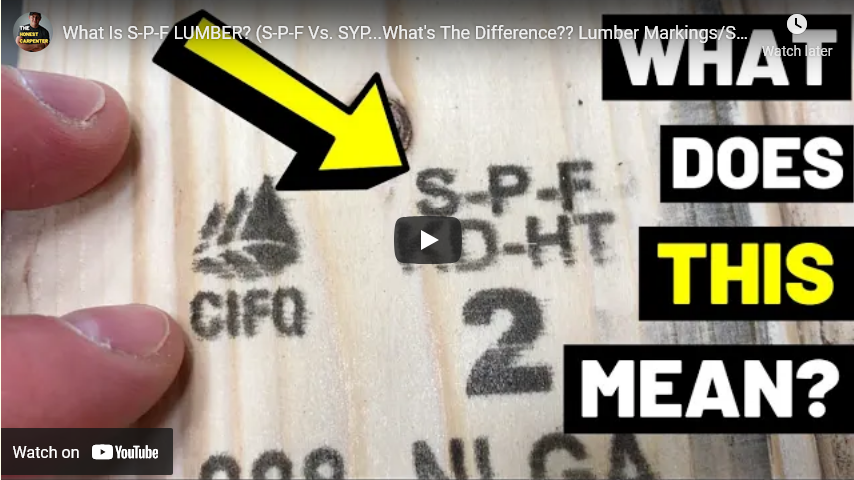
What Is S-P-F LUMBER? (S-P-F Vs. SYP…What’s The Difference?? Lumber Markings/Softwood Varieties)
The Honest Carpenter
Published 21 Mar 2021Much of the lumber you see in stores will be stamped with the letters S-P-F. But what do these letters mean? For that matter, what is SYP and D-FIR? This short video from The Honest Carpenter will explain a few of the most common lumber markings in North America!
S-P-F stands for SPRUCE-PINE-FIR.
These are the three most common softwood lumber varieties in North America. Each wood technically represents a GENUS with several prominent SPECIES below it (like genus Spruce/species White Spruce).
These three lumbers are grouped together in an acronym because they all have very similar qualities, and they are all very good lumber to build homes with!
Also, because spruce, pine and fir are sourced so ubiquitously, and shipped to so many various areas, it’s easier for lumber mills to group them together like this, rather than constantly differentiate them.
S-P-F woods are also commonly called WHITEWOODS, because of their pale color. They tend to have small, regular knot holes, and feel relatively light and airy.
A strong competitor to S-P-F woods is SOUTHERN YELLOW PINE. This yellowish lumber tends to be heavier, and can carry loads across wider spans.
Southern Yellow Pine (or SYP) is also a great wood for making pressure-treated lumber.
Most of our S-P-F lumber comes from Canada (80%).
Douglas Fir (D FIR) is also very popular, and comes out of the Pacific Northwest. It is very strong, resistant to warping, and has a pleasant, almost cedar-like appearance. It is used a lot for timber-framing projects.
Thanks for watching the video! Be sure to visit us at The Honest Carpenter Website:
www.thehonestcarpenter.com
Comments Off on What Is S-P-F LUMBER? (S-P-F Vs. SYP…What’s The Difference?? Lumber Markings/Softwood Varieties)


