
The Canadian government loves handing out money — they hand out a lot of money — so it shouldn’t be surprising to find out that Canadian taxpayers funded the creation of a movie about a Sikh terrorist who assassinated a Canadian official … or that the assassin is the hero of the movie. After all, isn’t that the heart and soul of multiculturalism? Celebrating other cultures and traditions as being superior to those of ordinary Canadians? The feds seem to believe it.
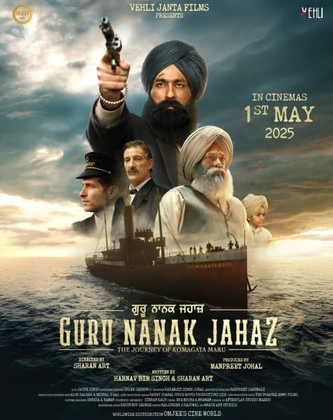
If you can find a way to watch the recently released Khalistani propaganda film Guru Nanak Jahaz, you might as well watch it. You paid for it, after all.
The film, which depicts the assassination of a Canadian civil servant by a Sikh terrorist as a heroic act of justice, has a “Funded by the Government of Canada” credit at the end. It was also supported by the B.C. government and gives special thanks to Conservative MP Tim Uppal and Liberal MP Sukh Dhaliwal. While the Liberals didn’t return a request for comment, a spokesperson for Uppal told me that he was not involved in the film and that the filmmakers did not communicate with him about the credit at any point.
Set in 1914, the plot follows the assassin, who you likely never heard about, and the voyage of the more familiar Komagata Maru, a ship which carried nearly 400 Indian passengers from Hong Kong to Vancouver, only to be denied entry to Canada. It was screened in some Cineplex theatres earlier this year.
The official narrative that you’ll find on government websites explains that this was purely a matter of baseless Canadian racism, and it’s been wholeheartedly adopted by politicians today: as prime minister, Justin Trudeau apologized for the incident in 2016, and the Conservative party releases annual statements commemorating the event, praising the bravery of the passengers and their craving for freedom.
That’s the whitewashed version, however. It leaves out that the Komagata Maru voyage was organized by the Indian Ghadar movement — the word literally means “revolution” — which advocated for violent resistance against the British Empire. (India was a British possession at that time and would continue to be until 1947). Its members were primarily Sikhs who lived in North America. And while they did experience racism, and while changes to Canada’s immigration laws in 1908 indirectly restricted Indian immigration, there were also reasons for the Canadian government to be apprehensive.
Ghadar members dreamed of a return to India, but wanted to rid that land of the British first. They remembered the Indian Mutiny of 1857 with regret — that bloody event saw many British-Indian regiments unsuccessfully take up arms against the Empire; Sikh Punjabis were among the exceptions, largely siding with the British. Decades later, the mostly Sikh Punjabi Ghadarites proposed another 1857-like uprising while applauding anti-British terrorism.
When rumblings of war with Germany began to brew in 1914, the Ghadarites grew excited — now was the time to strike. In August 1914, after the war broke out, the movement’s newspaper advocated, “Go to India and incite the native troops. Preach mutiny openly. Take arms from the troops of the native states and wherever you see the British, kill them. … There is hope that Germany will help you.” Expats in the Orient organized ships to return home and revolt.
The Komagata Maru was part of this movement. Organized by Ghadarites before the breakout of the First World War, it attempted to bring more movement adherents into Vancouver to settle. Canada was right not to let it dock because the entire envoy was a security threat.
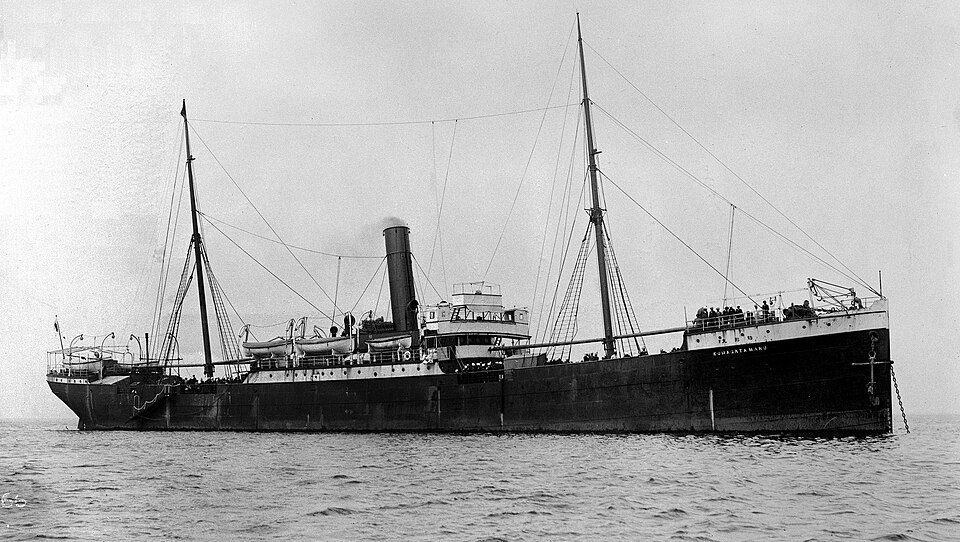
The S.S. Komagata Maru was at the centre of an attempt to bring 400 Sikh revolutionaries into Canada to agitate for the destruction of British rule in India in 1914.


