
Posted a few days ago, but still of interest — Omar Saleh discusses a part of Canada’s defence acquisition process that provides the illusion of military self-reliance while actually allowing foreign companies to control more and more of our domestic defence manufacturing capacity:
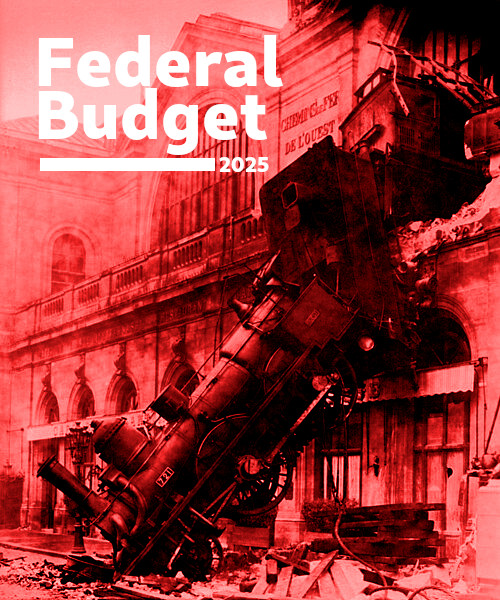
Graphic stolen from Small Dead Animals.
On November 4, the federal government tabled one of the most consequential defence budgets in Canadian history: an $81.8-billion expansion over five years, anchored by a $6.6-billion Defence Industrial Strategy, procurement overhauls, and a vow to claw back sovereignty from decades of polite deferral. It was framed as a national awakening – an overdue recognition that geography is no longer a moat, Russian submarines are testing our Arctic resolve, and allies are no longer willing to pretend Canada is pulling its weight.
But buried underneath all the ambition is a policy that will quietly sabotage it: the Industrial and Technological Benefits (ITB) framework – the mechanism Canada uses to ensure foreign defence contractors reinvest in the Canadian economy and the quiet architecture of our own dependency.
On paper, it’s a sound industrial strategy. So much so that other countries like Saudi Arabia and the UAE – both of which are aggressively seeking to onshore the lion’s share of their own defence spending – have implemented very similar policies as part of their respective Vision 2030 programs.
In practice, however, Canada’s ITB is a compliance machine that has mastered the art of doing nothing loudly. It is a mechanism through which American and European primes deepen their control over Canada’s industrial base while giving Ottawa the comforting illusion of self-reliance. We’re not victims of clever contractors. We’re architects of our own dependency, moralizing away the muscle to build someone else’s blueprint.
The numbers are damning. Since 2011, more than one hundred thousand industrial activities have generated over $64 billion in promised economic activity. And for all of that motion, not a single global defence technology titan has emerged. The work done in Canada – machining, composites, test benches, components – is real, but when the world shifts and architectures evolve, the capability evaporates. It was never ours. The most strategically important capabilities are designed abroad, integrated abroad, and updated abroad. We have activity without ownership – a nation performing sovereignty instead of exercising it.
Call it what it is: Phantom Capacity. The illusion of industrial muscle – until the country is forced to lift something heavy.
The core flaw is structural. ITB rewards dollars spent, not capability created, even as it dangles multipliers of up to 9x for R&D and startup work. A prime receives one-to-one credit for $5 million in routine machining, yet could theoretically earn nine times that for backing a Canadian breakthrough. But the theory collapses in practice. Multipliers accounted for less than one per cent of fulfillment between 2015 and 2019, and auditors still cannot prove they delivered any meaningful innovation. The system does not discriminate between activity and advancement. And when a system does not discriminate, the market follows the path of least resistance.
Predictably, primes funnel work to the safest, most administratively convenient suppliers. It is the industrial equivalent of a potluck where everyone insists on homemade dishes but quietly prefers the store-bought tray. Innovation is welcomed rhetorically and ignored in practice.
This leads to the second, more corrosive consequence: Canadian startups are structurally excluded from shaping Canada’s defence future. They move on six-month innovation cycles. Their technology evolves. Their architectures iterate. But in a system where every offset must be pre-approved, credit-verified, documented, and mapped against a prime’s global program calendar, startups cannot operate on their own terms. They must reshape their roadmaps to fit into architectures designed abroad, updated abroad, and controlled abroad. The result is not partnership but subordination.
A Canadian company can build a breakthrough sensor, a next-generation autonomy stack, or a northern detection layer – but it cannot enter a Canadian program of record unless a foreign prime decides to adopt it. The startup becomes a module inside someone else’s strategy. Sovereignty becomes subcontracting with better branding.


