
Conrad Black discusses just how much the Supreme Court of British Columbia’s decision on First Nations land claims in BC will undermine established property rights across the entire country:
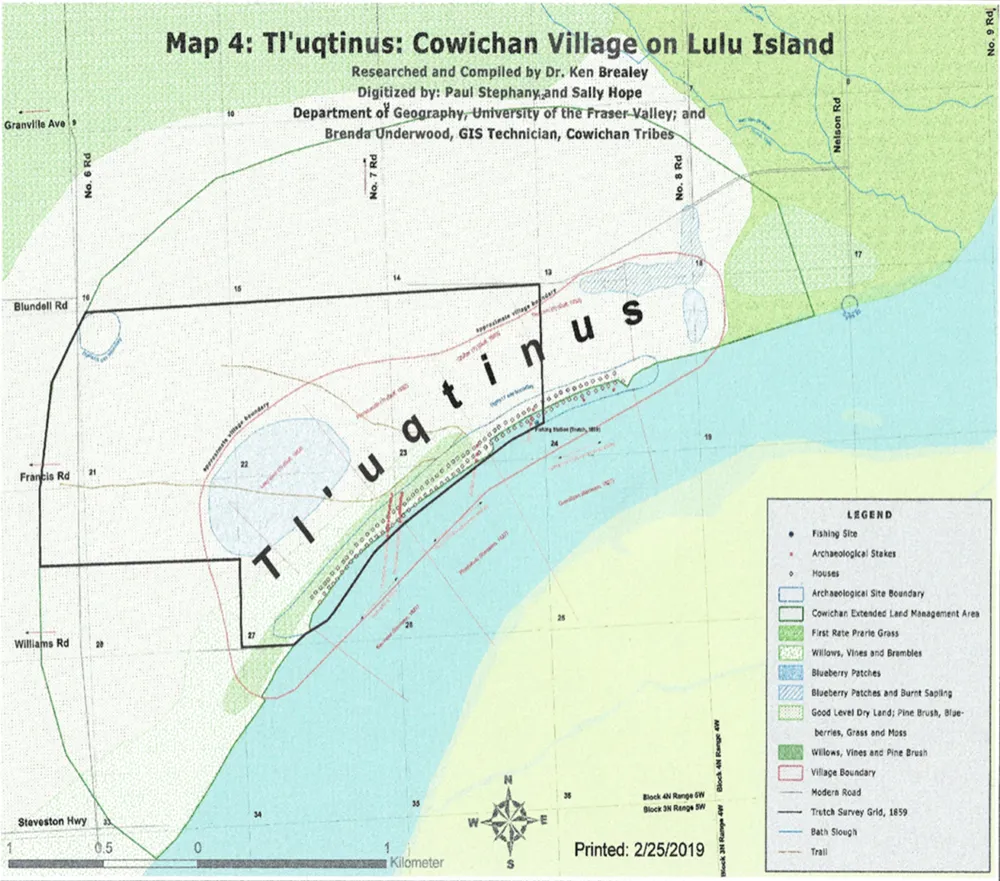
A map shows the Cowichan title lands outlined in black. (B.C. Supreme Court) Photo by B.C. Supreme Court
The decision earlier this month by the Supreme Court of British Columbia that the Cowichan tribes hold title over federal, city, and private land in Richmond B.C. that enjoys a higher legal status than the fee simple ownership of the current proprietors is outrageous but may have some positive consequences. The decades and $7 billion that have been spent or pledged for what is called the “reconciliation” process, has finally hit a stone wall. The almost universal desire to be fair to Indigenous people and where appropriate to compensate them for inequitable treatment, has finally collided with the entrenched economic rights and interests of every owner of real property in Canada, including those of Indigenous ancestry.
Inexplicable latitude has been granted to the thickening population of crusaders for indigenous rights. Even the NDP government of British Columbia, which has been pathologically addicted to prostrating itself at the feet of anyone or anything purporting to champion any definition of the Indigenous interest, was reduced to monosyllabic waffling by the court decision brought down by Justice Barbara Young. Premier David Eby’s office declared an ambition to continue seeking a negotiated resolution of the conflict between Aboriginal rights and common law rights of affected property owners, (including the municipal, provincial, and federal governments-of $100 billion of property in Richmond B.C. that is directly affected by the decision).
This is an understandable ambition, but in the circumstances, his government might have pressed the negotiations over the six years that this case has been litigated. Our judiciary has been addicted to truckling to almost any Indigenous claim, on the restricted occasions when the federal and provincial governments have even had the temerity to conduct a defense against them. Now the taxpayers’ negotiating position has been tanked by this ludicrous decision, which is being appealed.
If courts with authority for the whole country were to come to similar judgments, and we cannot doubt that activists will continue to push on an open door and quite rightly take all they can get, then every property title deed in the country is compromised, including the Houses of Parliament. There were only approximately 200,000 native people in all of what is now Canada when the French and British explorers and settlers came here starting at the end of the 15th century. Yet the implication of this ruling is that they legitimately owned all of Canada and that in the patchwork of numbered treaties and other agreements following absorption of the politically organized parts of Canada into the British Empire at the end of the Seven Years War in 1763, ancient and undocumented Aboriginal rights took precedence over any subsequent real estate law allocations of property rights under the common or civil law systems that gradually spread across Canada.
Given the activist preferences of courts across the country, we can expect to see similar cases pop up everywhere, as First Nations sensibly try to strike while the iron is hot and lay claim to as much of the real estate of Canada as the courts will let them … which might well be the entire land mass plus fishing rights.


