Quotulatiousness

June 30, 2025

“This is not toxic empathy, it’s psychotic empathy”

Filed under: Media, Politics, USA — Tags: , , — Nicholas @ 05:00

Elizabeth Nickson suggests that we’re well past peak political feminism:

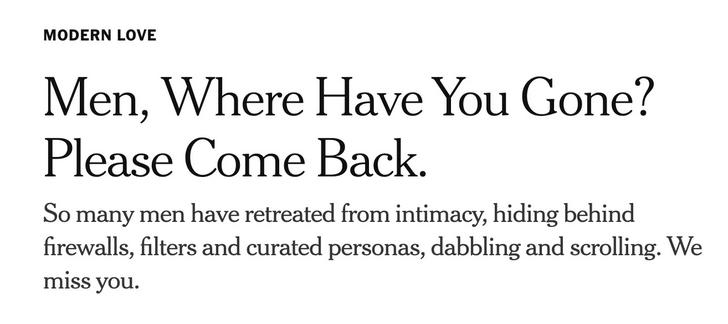
Last week, no month, there have been cries from the heights of official culture begging men to come back. I joked on Facebook that they are all at my house, hiding out with someone who doesn’t hate them, which is sort of true; my immediate family is all male, and Christmases are a bro-fest with me in the kitchen. I exaggerate. No. Yes. I don’t know. Of course they help but I do wish for one daughter/sister in law to keep the chaos down. My father once said, “women civilize men, that’s their job”. I don’t think he meant harangue, demand, prosecute and imprison.

In any case, I started the first feminist theatre in Canada. I know this because a grad student did her master’s thesis on Feminist Theatre in Canada (poor thing) and called to interview me. I was 22, and dumb as a rock. But eager to tell the world its faults (plus ca change). My artistic director Svetlana — who was in the MFA program — and I decided that we would only hire women, do women’s plays, etc.

Problem was there were no plays. Aphra Behn was the only one we could find that wasn’t trivial, and she lived 250 years ago. That was when I discovered I loved writing because we had to write our own. Now, of course, there is a massive, over the top, gold-platinum-diamond-and rubies Renaissance in women’s art, and my silly self was as usual so far ahead of the game I didn’t profit from it. Well, I did, it helped my college expenses no end.

So I got a couple of grants, and we collected box office, and ran “plays” and workshops on how to have difficult feminist conversations, one memorably at the Vancouver Art Gallery, where the wife of a famous poet told us that all this guff was going to be forgotten once the estrus cycle kicked in. Svetlana telegraphed ignorance at me, and I back; no one had any idea what she meant. We 22 year olds argued her down, she clung to her thesis and, guess what, turned out she was right. Everyone “met” someone, got pregnant, built marriages and families, but Svetlana who decided she was gay (at the time we worked together she was married), and died young from alcoholism. Is that my fault? It was my idea.

Feminism marched on. To this:

I repent here and now. What feminism has become is anathema. I am actually scared of women. I am afraid of their anger, and I am afraid of their cruelty, their harshness, and I see it everywhere. Luckily through my work I have met women who think like me and we are friends and I am not afraid of them. But I shrink from all other friendships. Female friendships today are built on one thing: are you on side? Are you for abortion, against the patriarchy, for Hamas and most recently, the Mullahs, celebrate female politician wins as long as they are on side, ally with the LBGTZQ+ community, etc.? I am none of these things, so were I to venture into ‘women’s spaces’ eventually the furies would plot revenge. I would be cast afloat, thrown into the wild to fend for myself, as an uppity woman would have been in clan or tribal times, to which we are reverting.

In business, conform or be ruined. Think like us or we cancel your dates, your performance, your promotion. Even the mega-famous:

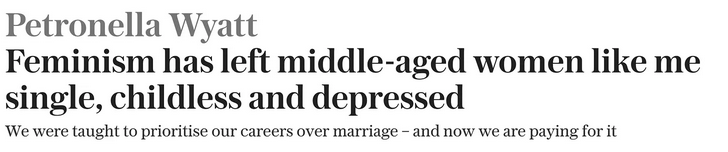
Therefore I now avoid the friendship of women, in which I used to luxuriate. So if I can’t even spend time in their presence, how the hell are men supposed to marry them?

This is how stupid political women have become. This was last weekend in Germany, and, well, everywhere these women breathe, and that means everywhere in the west.

This is not toxic empathy, it’s psychotic empathy.
Day Five – Massive Allied Air Attack – Ten Days in Sedan

Filed under: Britain, France, Germany, History, Military, WW2 — Tags: , , , , — Nicholas @ 04:00

World War Two
Published 28 Jun 2025

May 14 1940. The blitzkrieg continues in today’s episode of Ten Days in Sedan. British and French bombers roar over Sedan, braving curtains of flak and German fighters in a bid to smash Guderian’s hastily built bridges across the Meuse. Further north, French infantry and tanks battle against the German crossings at Houx, Dinant, and Monthermé. German general Erwin Rommel has a narrow escape as the French nearly blow him and his tank to pieces!
(more…)

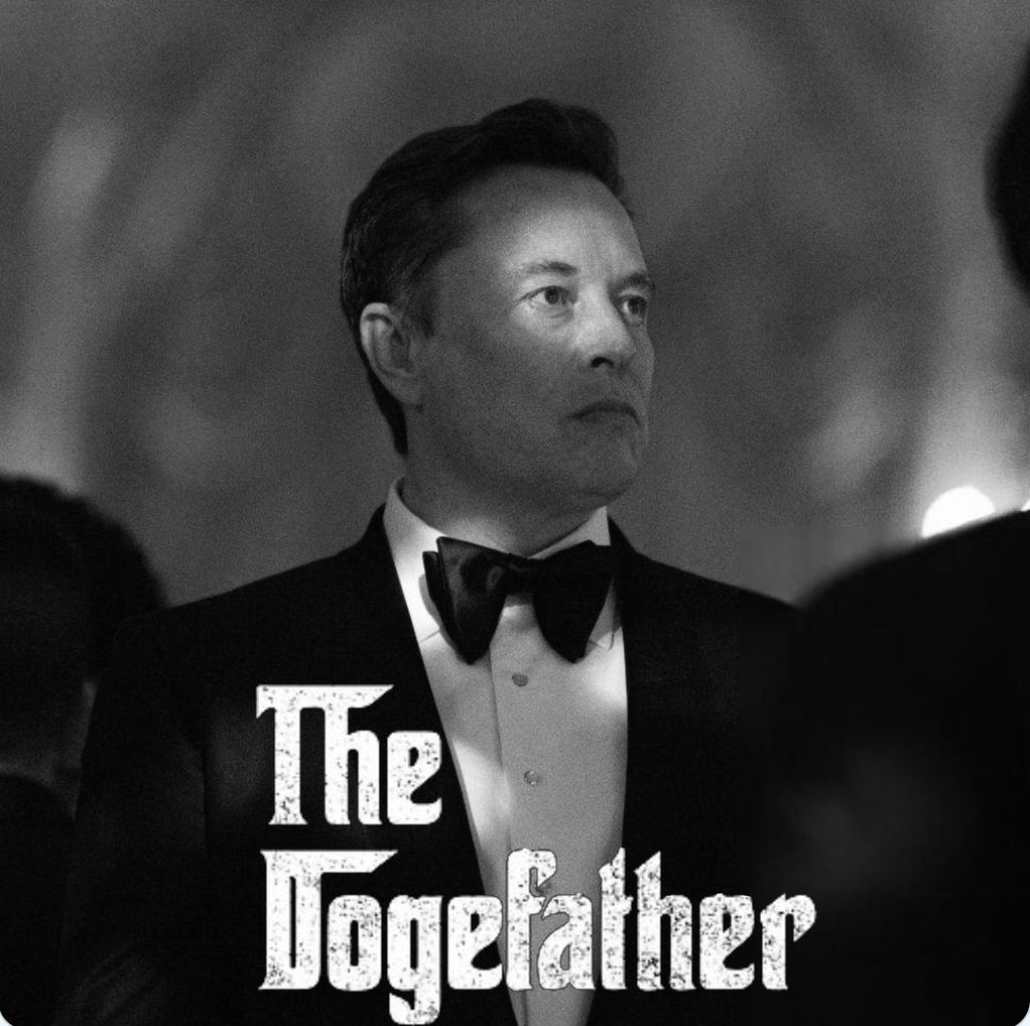
DOGE couldn’t address the structural problems with the US government

At the Foundation for Economic Education, Mohamed Moutii looks at the reasons DOGE was unable to come close to achieving the lofty goals it was launched with:

DOGE’s biggest failure was its inability to deliver its promised sweeping transformation. From the start, its $2 trillion savings target was unrealistic. Cutting nearly 30% from a $7 trillion budget was never feasible, especially with politically untouchable programs like Social Security, Medicare, Medicaid, and Defense off the table.

Musk’s claim that eliminating waste alone could close the gap didn’t hold up. While most budget experts support cutting inefficiencies, they agree that waste isn’t the main driver of the fiscal crisis. Even slashing all discretionary spending would save only $1.7 trillion. The real pressure comes from mandatory programs, which account for nearly two-thirds of the budget, leaving only a quarter of spending truly up for debate.

As reality set in, Musk’s savings claims shrank from $2 trillion to just $150 billion. While DOGE cites $170 billion saved, independent estimates suggest closer to $63 billion, less than 1% of federal spending, with many claims either inflated or unverifiable. Some savings were credited to long-canceled contracts. Though headline-grabbing layoffs and cuts were made, they were often botched, forcing agencies to rehire staff or reverse course. Meanwhile, federal spending rose by $166 billion, erasing any gains. Trump’s fiscal agenda worsens the outlook with the first-ever $1 trillion defense budget, sweeping tax cuts, and protected entitlements — all while annual deficits approach $2 trillion.

Yet DOGE’s failures ran deeper than mere fiscal naiveté. What began as Musk’s role as a “special government employee” quickly expanded into an unchecked exercise of executive power, raising constitutional alarms. His team reportedly accessed classified data, redirected funds, and sidelined entire agencies — actions taken without Senate confirmation, potentially in violation of the Appointments Clause of the Constitution. Legal pushback swiftly followed, with fourteen states suing Trump and Musk over the constitutionality of Musk’s White House-granted authority.

Meanwhile, glaring conflicts of interest became impossible to ignore. Musk’s companies — X, SpaceX, and Tesla — hold $38 billion in federal contracts, loans, tax breaks, and subsidies while facing over 30 federal investigations. His push to dismantle regulatory agencies like the Consumer Financial Protection Bureau (CFPB) — while X launches the “X Money Account“, a mobile payment service subject to CFPB oversight — only deepened concerns. Musk was legally obligated to separate his business dealings from government decisions. One major result has been the impact on Musk’s reputation. Once hailed as a visionary for his promotion of electric cars, he is now viewed unfavorably by many former fans.

Small Arms History of the Falkland Islands Defense Force

Forgotten Weapons
Published 12 Feb 2025

Various militias existed on the Falkland Islands since its earliest settlement, but the Falkland Islands Defense Force of today traces its roots to the 1892 Falkland Islands Volunteer Corps. This force was equipped with Martini Henry rifles. With the outbreak of World War One, the Falklands were a strategically important naval station, and the FIDF grew significantly in size and was fitted out with more modern arms. They expanded again in World War Two, with Lee Enfield rifles, Sten MkV SMGs, and Bren, Lewis’s and Vickers machine guns. Eventually in 1972 the force modernized, acquiring British L1A1 SLR rifles, L2A3 Sterling SMGs, and GPMGs (FALs and FN MAGs) and updating its Bren guns to 7.62mm. These were the standard arms at hand during the Argentine invasion in 1982, although the FIDF was not really an active participant in the resistance to the invasion. In fact, the British Marine party on the island was in the middle of being replaced when the invasion happened and twice the normal number of Marines were present. They armed themselves with most of the FIDF SLRs, leaving the FIDF with mostly just SMLE rifles.

After the war, the FIDF was reconstituted. It kept its SLRs until the early 1990s when they were replaced with 5.56mm rifles. Instead of adopted the British L85A1, the FIDF opted to purchase Steyr AUGs. The intention was to replace the GPMG with the heavy-barreled AUG, but this did not work out in practice. Instead, the GPMGs remained in service and the heavy-barreled AUGs were converted to standard rifles. In the post-war years the FIDF also began to acquire more specialty arms, starting with a Parker-Hale M85, a couple of Steyr HS-50s, and ultimately a batch of LMT 7.62mm rifles. They remain a small but quite well-equipped for today, offering valuable reconnaissance and local knowledge to the British Army garrison should conflict break out again.

Many thanks to the FIDF for giving me access to their armory to dig out these arms to film for you!
(more…)

QotD: Britons and their NHS

Anecdotes, neither positive nor negative, are not the way to assess the performance of the NHS or any other healthcare system. But I suspect that I am not alone in finding it distinctly difficult, intimidating and unpleasant even to get to see a doctor (though I am middle-class and tolerably prosperous).

I have to run a gamut of procedures to do so and face a receptionist who treats me as a fraud trying to get something to which I am not entitled, and I have no practitioner whom I can call my doctor. The NHS has crowded out private competition, and the nearest private doctor is 25 miles away. Suffice it to say that, if I want to see a doctor, it is easier, quicker and more pleasant for me to go to France than to the health centre about 300 yards from my house in England.

I cannot in all honesty say, however, that my health has suffered in any measurable way as a result of this unpleasantness, because my health is good and I am not a doctor-botherer. But it does reveal something about Britain that is not true in France: in our dealings with the NHS, we are a nation of paupers who must accept what we are given by grace and favour of the system. It may be good or it may be bad, but we have to accept it.

Furthermore, under the NHS doctors themselves are becoming ever less members of a liberal profession and ever more executors of orders from on high, with little leeway to consider whether these orders are good or bad in the case of the individual case before them.

This is a problem in all systems in which a third party pays for patients’ treatment, but it is particularly acute in a highly-centralised and dirigiste system such as the NHS, in which uniformity is the goal, even if it be uniformity of error. And increasingly, it creates an atmosphere of technical, managerial and ethical conformity.

Theodore Dalrymple, “Empire of conformists”, The Critic, 2020-04-29.

Powered by WordPress