Ted Gioia yearns for the return of the weirdo, the eccentric, and the non-conformist to spice up our bland, smooth, grey world:
“People are less weird than they used to be,” claims psychologist Adam Mastroianni. He describes this as “an epidemic of the mundane”.
The strangest thing, he believes, is absence of strangeness. Nobody wants to make waves — or even trickles. Conformity is the flavor of the month, and it tastes the same every month.
We live in a “smoothness society”, explains philosopher Byung-Chul Han. He points to the smooth, rounded contours of the iPhone as a symbol of society’s desire to remove friction. Our phone apps demonstrate the exact same thing. We scroll and swipe with such ease, and anything with complexity, nuance, or resistance is eliminated from consideration.
“The smooth is the signature of the present time”, he claims. Everything from the Brazilian wax job applied to human bodies to the wax coating put on fruits and vegetables aims at the same ideal.
Resistance is futile. Everything must be smooth. Paradise now really is that paved parking lot.
In a world without complexity or resistance, nothing ever changes. Most movies, music, books feel like stagnant rehashes of the same formulas. And that’s intentional.
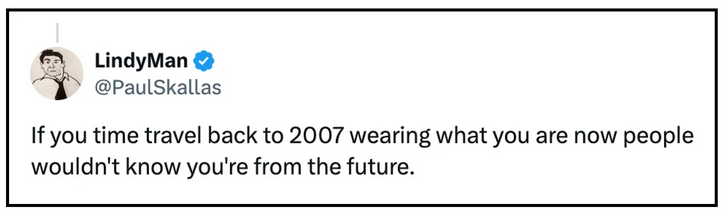
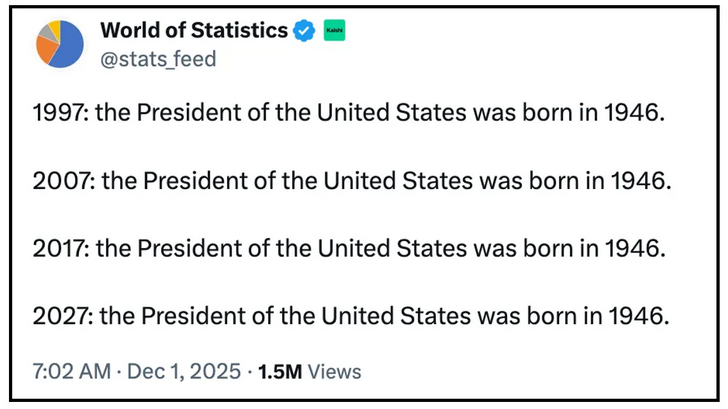
For the first time in history, fashions don’t change. We don’t change.
Others have noticed this avoidance of anything new or different. Things are designed to blend in, not stand out. Jessica Stillman, writing in Inc., complains about a “blandness epidemic“. Brian Klaas calls it the “surefire mediocre“.
Everywhere you look, the system is serving up more of the same.
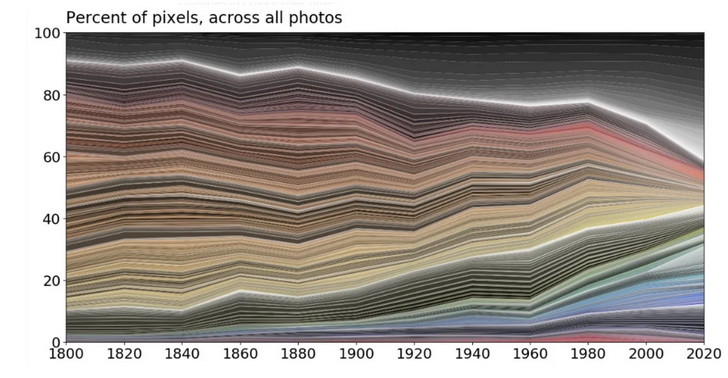
It’s not just in our imagination — the “world really is getting grayer“. A researcher recently studied photos of household items going back two centuries. An analysis of the pixels showed a scary collapse in color.
Even the Victorians — often considered as conformists — lived a more color-filled life. We have almost completely abandoned red and yellow and other bright hues in favor a boring black-and-white spectrum.
But what’s most striking is how this descent into grayness has accelerated during the last few years. The most popular color is now charcoal — and at the current rate it will soon account for half of the marketplace.