
Spaceman Spiff makes the case for the two simple words in the title being the most powerful words in the English language:
The two most powerful words in the English language are, so what? We do not use them enough.
A “so what?” is a rebuff, a rejection of some cherished belief. It confronts the promoter of an idea with the worst form of disagreement, indifference.
In a narcissistic world where attention is often the goal of agitators, genuine disinterest is difficult to manipulate. It disarms anyone intent on destroying established norms.
A “so what?” forces a reconsideration. It has the strongest effect on the issues we care most about.
Nobody enjoys their precious cause being dismissed. That is why we must use it more.
Who cares?
Many of today’s moral crusades are imposed on us against our will. We are told we must attend to issues most of the world ignores.
Here are a few to consider.
Racism and diversity
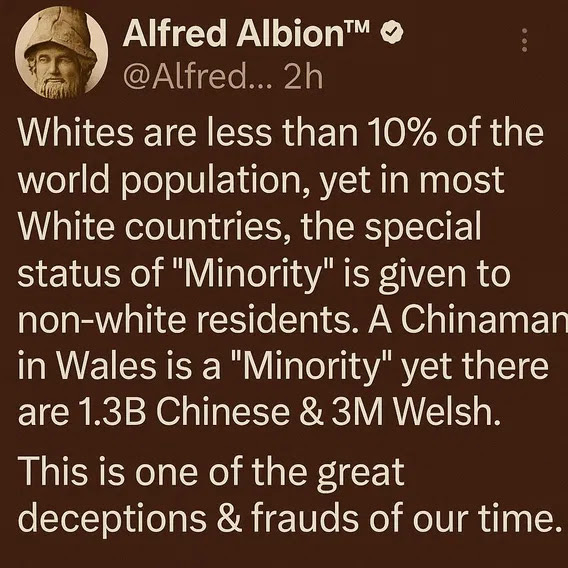
Accusations of racism are now endemic in Western nations. The underlying drive is one of punishment. Natural wariness of alien peoples is recast as a moral failing, the antidote to which is enforced mixing to demonstrate the backwardness of one’s social inferiors. A policy unique to Western countries.
The promotion of diversity quotas rests upon tacit acceptance of the idea that homogeneity is undesirable. This requires our participation to succeed, especially the consequence of this belief, that the mass importation of foreigners is needed to improve society.
The response to accusations of a lack of diversity should be, so what? It needs to be laughed at. Who cares if we are too homogenous? Says who?
No rational group seeks to dilute their numbers. This is a perverse affectation confined to a handful of ethnomasochists who think racism is unique to Western societies.
A robust rejection of this helps recalibrate to the global norm, a useful reminder to anyone steeped in woke catechisms. Much of the world views out-group preference as either treason or mental illness, a perspective easily observed simply by travelling.
Sexism and gender equality
There is a mismatch between the sexes. Men win the prizes, dominate their fields and invent the inventions.
We are told this is a disgrace. Such patriarchal domination will not do.
A key flashpoint is the “gender wage gap” that unwittingly illustrates the insincerity of feminism. There is no wage gap. There is a lifetime earnings gap. This is a consequence of decisions women voluntarily make such as spending more time with family or choosing less risky employment closer to home.
This is firmly established and supported with unimpeachable data, often produced by the very governments pursuing gender pay gap legislation.
Polite counterarguments against feminist talking points like this fail despite their thoroughness because facts are dismissed as they are inconvenient to a lucrative narrative.
Therefore the response to accusations of gender imbalances should be met with a robust so what? If they don’t care about engaging with established facts why should we care about the issue at all? Energetic indifference is the only way to deprive feminism of its momentum.
Much of the “argument” for gender equality is emotional manipulation. It abuses men’s protective instincts in a shameless way.
A firm “so what?” arrests this natural urge in men. It provides a small space for us to escape manipulation and examine the facts.
Who cares if women are underrepresented or have less money? This is a result of decisions women themselves make, so solve the problem yourself. Stop begging men for special favours.
Update, 26 November: Welcome, Instapundit readers! Please do have a look around at some of my other posts you may find of interest. I send out a daily summary of posts here through my Substack – https://substack.com/@nicholasrusson that you can subscribe to if you’d like to be informed of new posts in the future.



[…] YEP: The two most powerful words in the English language are, so what? We do not use them enough. […]
Pingback by Instapundit » Blog Archive » YEP: The two most powerful words in the English language are, so what? We do not use them enough. — November 26, 2025 @ 02:32
The above is true, but one can extrapolate further to the conclusion that the most powerful word in ANY language is the pluripotent Yiddish “Nu”! It means “So what?” AND half a hundred other things. See Leo Rosten,The Joys of Yiddish (Pocket Books, 1968), pp.271-273.
Comment by werewife — November 26, 2025 @ 07:15
I’m also partial to, “Characterize how that makes you feel.“ It refocuses the emphasis onto their hysteria.
Comment by Steve — November 26, 2025 @ 07:30
I’m also partial to, “Characterize how that makes you feel.“ It puts the focus on their hysteria.
Comment by Steve — November 26, 2025 @ 07:33
Where I come from, what we lack in diversity, wokeness, and other DEI ideologies, we more than make up for in clean streets, safe neighborhoods, accessible hospitals, as well as good schools & libraries.
Then again, we all have to learn to live with our local community shortcomings.
Comment by Packard — November 26, 2025 @ 07:49
“The response to accusations of a lack of diversity should be, so what? It needs to be laughed at. Who cares if we are too homogenous? Says who?”
This is an example of too narrow a focus, because your “So what” will quickly run into a legal system set up based on “You will be made to care.”
And there is still quite a lot of DIE out there, just waiting for the opportunity to pounce.
Does that mean you should never say “So what”? No, but it does mean you should evaluate the actual legal system you live under, rather than the one you think is described in the Constitution and other such documents.
Comment by SDN — November 26, 2025 @ 08:58