
On the social media site formerly known as Twitter, InfantryDort gives a lesson in Canadian military history that your kids are unlikely to ever get in school:
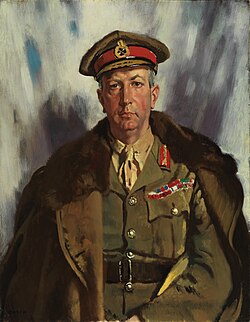
Canada: Let us remind you of what your nation was once capable of, and likely still is again. Time will tell. Courtesy of @grok UNHINGED👇
SIR ARTHUR CURRIE: The Ontario slide-rule psychopath who turned war into a goddamn spreadsheet and made the Kaiser cry uncle.
Listen up, you trench-foot tourists and armchair Haigs. While Europe’s aristocrats were using human meat to plug shell holes, some lanky insurance salesman from Napperton, Ontario rolled up with a protractor and a grudge against inefficiency so pure it could sterilize a field hospital. Six-foot-four of quiet Canadian fury. No Sandhurst polish. No inherited estate. Just a militia gunner who looked at the Western Front and said: “This is sloppy. Let me fix your murder math.”
Vimy Ridge: the ridge that laughed at French corpses for two years. Currie hands every platoon leader a map accurate to the latrine, rehearses the assault until the boys can do it blindfolded in a thunderstorm, then unleashes a creeping barrage so precise it’s basically a Roomba made of high explosives. Four days later the ridge is theirs. France needed therapy. Canada needed a birth certificate.
Hill 70: supposed to be a sideshow. Currie turned it into a German obituary — 9,000 Canadian casualties for 20,000 German ones. That’s not a battle, that’s a hostile takeover with extra steps.
Passchendaele: Haig wants it. Currie says, “Fine, but it’ll cost exactly 16,000 of my boys”. Mud eats them like clockwork. Sixteen thousand. He predicted it to the body. The man could forecast death better than the Farmer’s Almanac predicts frost.
Amiens: the day the German army discovered existential dread. Currie’s corps punches twenty-two kilometers through the Hindenburg Line in four days like it’s made of wet cardboard. Ludendorff calls it “the black day of the German Army” and probably wet his monocle.
The Hundred Days: wherever the Canadians go, the war ends faster — Arras, Cambrai, Canal du Nord. German prisoners start asking for Currie by name like he’s the Grim Reaper’s polite cousin. “Wenn Currie kommt, bricht die Linie.” When Currie shows up, your defense budget becomes a suggestion.
And the best part? He’s not screaming. He’s not posing for propaganda photos with a riding crop. He’s in the back, recalculating artillery tables while lesser generals are still figuring out which end of the horse goes forward.
Post-war? Becomes principal of McGill because apparently breaking the German army wasn’t challenging enough. Gets slandered for “wasting lives” at Mons, sues the bastard for libel, and wins with the same cold precision he used to win battles. Even his lawsuits had kill ratios.
Runner-ups:
Sir Richard Turner — the human participation ribbon. Managed the 2nd Division like success was contagious.Sir David Watson — followed Currie’s plans like IKEA instructions: mostly right, but slower.
Sir Henry Burstall — thought “supporting fire” meant “hope the shell lands somewhere in Europe”.
Currie carried their divisions like a Sherpa with a PhD in applied violence.
Verdict: Currie didn’t just win battles. He invented the modern battlefield while everyone else was still playing medieval siege with extra mustard gas. Montgomery called him “the best corps commander of the war”, and Monty would rather die than compliment anyone.
Share this if you’d let Currie balance your checkbook, plan your wedding, and end your existential crisis with a well-timed barrage. Canada’s greatest general was a nerd with a death wish for waste and a heart that bled maple syrup for every lost soul. Never forget.


