
In The Line, Matt Gurney asks if we can go back to when the internet (and by extension, all the other tech toys and gadgets we see everywhere) was … good?
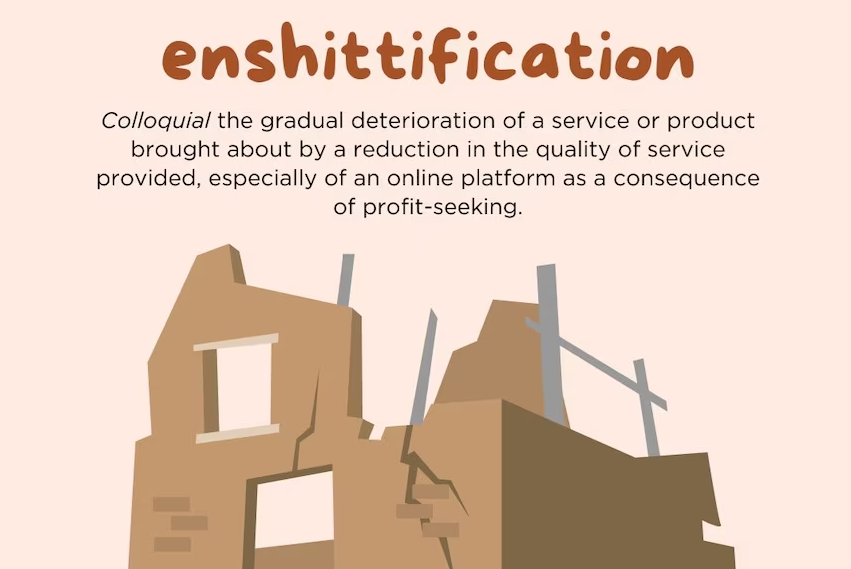
Have you heard about enshittification? It’s not just a potty word. It’s actually a pretty fascinating concept, and you read about it mostly in tech circles. Enshittification is the process by which something becomes worse over time, instead of better, normally as people try to squeeze more efficiency and revenue value out of it. Through that process of squeezing, the thing becomes enshittified.
If you want a proper definition …
Enshittification: The gradual deterioration of a service or product brought about by a reduction in the quality of service provided, especially of an online platform, and as a consequence of profit-seeking.
There are lots of examples. My favourite example? My video doorbell has an annual service fee. Another great example? Cars that now require payments to access certain features, like heated seats. You own the device. But you need to pay a recurring fee to use it. That’s enshittification.
It’s everywhere. And it’s getting worse, especially online. And, perversely, maybe this is a good thing. Maybe it’s going to force us to stop, rethink how we use the digital realm, and, basically, try again. Start over. And get it right this time.
Noah Smith is an American economics writer whose work I enjoy. Smith noted on Twitter recently that we are rapidly getting to the point where we should declare social media a failure. It’s passé to criticize social media on social media, but Smith wasn’t making the usual warmed-over moral argument. He wasn’t saying that it was bad because people are mean there or that they fall down dark rabbit holes and end up believing insane things. Those are problems! But Smith’s concern was the extent to which AI-generated content and bots have simply flooded all the social media channels. Even a responsible user trying to use these platforms for the good is going to find it increasingly difficult to derive any value from them. They’re being rapidly enshittified.
I share his view of the trajectory. I don’t really know anyone who doesn’t. But Smith’s comment led me to ponder what value I actually derive from them — what I would miss if they were gone. I came up with four broad use cases.


