
Spaceman Spiff explains why boundaries matter, in so many different areas of modern life:
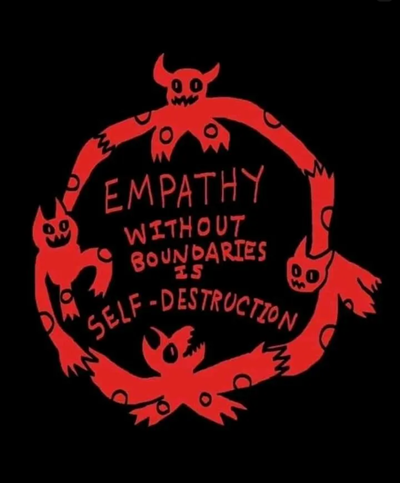
Empathy is a virtue many strive to demonstrate. But few will discuss its downsides. Why it is not universally good or useful. How it can be misdirected.
In some situations it is lethal. It can reflect a suicidal urge we now see in Western nations.
Much empathy in society is in fact sentimentality, which is dangerous. Sentimental ideas about mixing cultures, elevating poor performers through quotas, or tinkering with traditional gender roles have real world effects.
With such an emphasis on empathy, which many think of as niceness, we overlook the need for boundaries to maintain a functioning society.
This is the issue at the heart of much that is damaging us today.
Individual rights
We live in an era that champions individual rights to an almost autistic degree. This is a product of Western liberalism, which now seems to be entering its terminal phase as its effects ultimately destroy what made Western societies strong.
Since an individual’s rights trump everything we cannot easily enforce boundaries our ancestors could take for granted. Try challenging a gay pride parade or transgender material in schools on the grounds of public decency and the least you can expect is to lose your job.
Profound changes have happened just in the last few decades and all in the name of individual rights. The erosion of boundaries on behaviour is one of the most visible aspects of this.
Physical boundaries
The concept of boundaries is almost universal and spans everything from the mundane to the spiritual.
Most countries recognize the right to private property and inherent within this is the notion of boundaries. My car is mine and no one else’s, for example.
This is applied to our homes and gardens. These are ours and defendable from theft. Ultimately this in turn includes a neighbourhood or locale, even a region or state. All these things have visible boundaries that demarcate where they begin and end.
Most famously this applies to national borders, a traditional form of boundary in use for thousands of years. Failing to enforce this barrier is national suicide. The world is not like us and if it comes to us we will look like the world in return. Borders keep the barbarians out.
Everyone instinctively grasps these kinds of boundaries. We close our windows and have locks on our doors because of this understanding.
Using boundaries to exclude others feels natural.
Cultural boundaries
Less explicitly visible are cultural boundaries, often transmitted via tradition and convention. We have spent the last century attacking many of these as old fashioned, with little pause to consider why tradition emerges in the first place.
Marriage between men and women. Complementary gender roles. Sexual mores kept private. The sanctity of childhood, its innocence protected from intrusion.
As we removed constraints in the name of progress we destroyed much of the glue that held our societies together. We are now watching things unravel as people marry less and produce fewer children. We see widespread mental illness and anguish as the few basic certainties of life are destroyed in the name of progress.
People don’t know who or what they are when cultural boundaries are deleted. Women, men, natives, newcomers, the working class. Who are we really without some certainties in life?


