
I must admit that I got hooked on Hunter S. Thompson’s writing very early. I read Fear and Loathing in Las Vegas in my mid-teens and it blew my mind. I couldn’t actually believe everything he wrote, but I couldn’t completely discount it either. I certainly haven’t read everything he wrote … especially his later sports commentary, but I have read most of the best-known books. On his Substack, Ted Gioia is running a three-part series on the writer and his work:
That’s Hunter Thompson. There’s always someone in control behind the wheel — even when he seems most out of control.
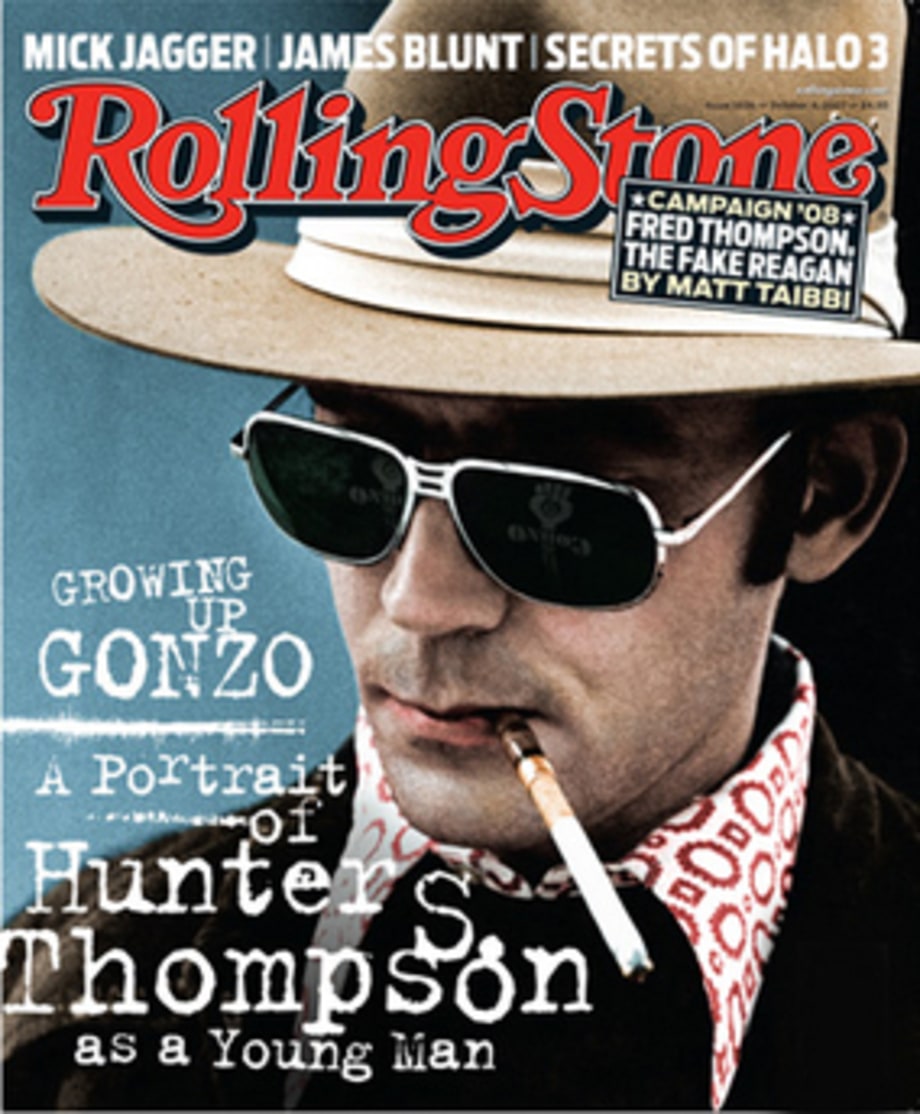
This hidden discipline showed up in other ways. Years later, when he ran for sheriff in Aspen or showed up in Washington, D.C. to cover an election for Rolling Stone, savvy observers soon grasped that Thompson had better instincts and organizational skills than some of the most high-powered political operatives. People rallied around him — he was always the ringleader, even going back to his rowdy childhood. And hidden behind the stoned Gonzo exterior was an ambitious strategist who could play a long term game even as he wagered extravagantly on each spin of the roulette wheel that was his life.
“I don’t think you have any idea who Hunter S. Thompson is when he drops the role of court jester,” he wrote to Kraig Juenger, a 34-year-old married woman with whom he had an affair at age 18. “First, I do not live from orgy to orgy, as I might have made you believe. I drink much less than most people think, and I think much more than most people believe.”
That wasn’t just posturing. It had to be true, merely judging by how well-read and au courant Thompson became long before his rise to fame. “His bedroom was lined with books,” later recalled his friend Ralston Steenrod, who went on to major in English at Princeton. “Where I would go home and go to sleep, Hunter would go home and read.” Another friend who went to Yale admitted that Thompson “was probably better read than any of us”.
Did he really come home from drinking binges, and open up a book? It’s hard to believe, but somehow he gave himself a world class education even while living on the bleeding edge. And in later years, Thompson proved it. When it came to literary matters, he simply knew more than most of his editors, who could boast of illustrious degrees Thompson lacked. And when covering some new subject he didn’t know, he learned fast and without slowing down a beat.
But Thompson had another unusual source of inspiration he used in creating his unique prose style. It came from writing letters, which he did constantly and crazily — sending them to friends, lovers, famous people, and total strangers. Almost from the start, he knew this was the engine room for his career; that’s why he always kept copies, even in the early days when that required messy carbon paper in the typewriter. Here in the epistolary medium he found his true authorial voice, as well as his favorite and only subject: himself.
But putting so much sound and fury into his letters came at a cost. For years, Thompson submitted articles that got rejected by newspapers and magazines — and the unhinged, brutally honest cover letters that accompanied them didn’t help. He would insult the editor, and even himself, pointing out the flaws in his own writing and character as part of his pitch.
What was he thinking? You can’t get writing gigs, or any gigs, with that kind of attitude. Except if those cover letters are so brilliant that the editor can’t put them down. And over time, his articles started resembling those feverish cover letters — a process unique in the history of literature, as far as I can tell.
When Thompson finally got his breakout job as Latin American correspondent for the National Observer (a sister publication to the Wall Street Journal in those days), he would always submit articles to editor Clifford Ridley along with a profane and unexpurgated cover letter that was often more entertaining than the story. In an extraordinary move, the newspaper actually published extracts from these cover letters as a newspaper feature.
If you’re looking for a turning point, this is it. Thompson now had the recipe, and it involved three conceptual breakthroughs:
- The story behind the story is the real story.
- The writer is now the hero of each episode.
- All this gets written in the style of a personal communication to the reader of the real, dirty inside stuff — straight, with no holds barred.
Why can’t you write journalism like this? In fact, a whole generation learned to do just that, mostly by imitating Hunter S. Thompson …


