
At Spiked, Jo Bartosch reviews Fiona McAnena’s TERF Island: How the UK Resisted Trans Ideology:
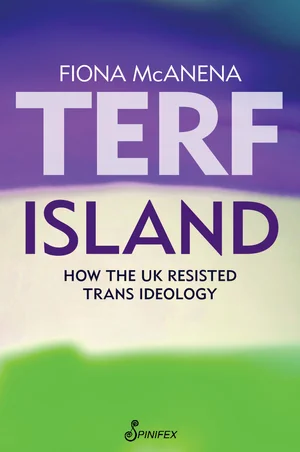
The truth is, before they are revered, history-makers are almost always reviled. From universal suffrage to the abolition of the slave trade, the freedoms we take for granted today began as the unpopular obsessions of the awkward and bloody-minded. Fiona McAnena’s TERF Island: How the UK Resisted Trans Ideology charts how just such a small group of determined women – mocked, maligned and misrepresented – dragged sex-based rights back from the brink, often at huge personal cost. It’s the story of how they were hated before they became feted.
Part battle manual and part whodunnit, TERF Island is an insider’s chronicle of how a scrappy, unfunded grassroots movement of mostly middle-aged women outmanoeuvred a lobby bankrolled by billionaires and cheered on by multinational corporations and well-intentioned human-resources departments.
I have been involved in the TERF wars for a decade, and I know McAnena herself is no bystander. Formerly a volunteer at Fair Play for Women and now director of campaigns at Sex Matters, she has done her time in the trenches, too. Each chapter is a vivid, accurate and compelling profile of a key figure in the movement, including Transgender Trend’s Stephanie Davies-Arai, Fair Play for Women’s Nicola Williams, Let Women Speak founder Kellie-Jay Keen and Maya Forstater, whose case against her employer established gender-critical beliefs as protected in UK law – all women I’m proud to know.
It’s almost hard to remember how recently it was considered heresy to say, to use the words popularised by Keen, that “a woman is an adult human female”. In April, the Supreme Court confirmed this truth in law. The BBC may still choke on it, but the legal precedent stands. Yet only a few years ago, saying this out loud could land you in a police station, on the dole queue or even in hospital.
McAnena captures the febrile atmosphere of those early days, when stating a biological fact was enough to have you smeared as a fascist. She takes us inside the campaigns that exposed the lunacy of housing violent male offenders in women’s prisons, the cruelty of sterilising confused children and the institutional capture of sporting organisations. Now, a decade after Davies-Arai launched Transgender Trend, barely a week passes without a professional body or council quietly reversing a discriminatory “trans inclusive” policy. That didn’t happen by accident.
What makes TERF Island so readable is that it doesn’t just document the headline moments. McAnena records the unglamorous grind: women lobbying MPs, poring over policy documents and calmly dismantling pseudoscience from stalls in the high streets of British towns. As McAnena puts it, the campaign against gender self-identification, which galvanised the resistance, brought “hundreds of women on to the streets and thousands more online to defend their sex-based rights”. “It was the catalyst for greater awareness, resistance and campaigning for the rights of women and children in the face of the demands of transgender ideology.”


