
John Carter recounts how his views and opinions on racism changed while living for an extended period in Japan:
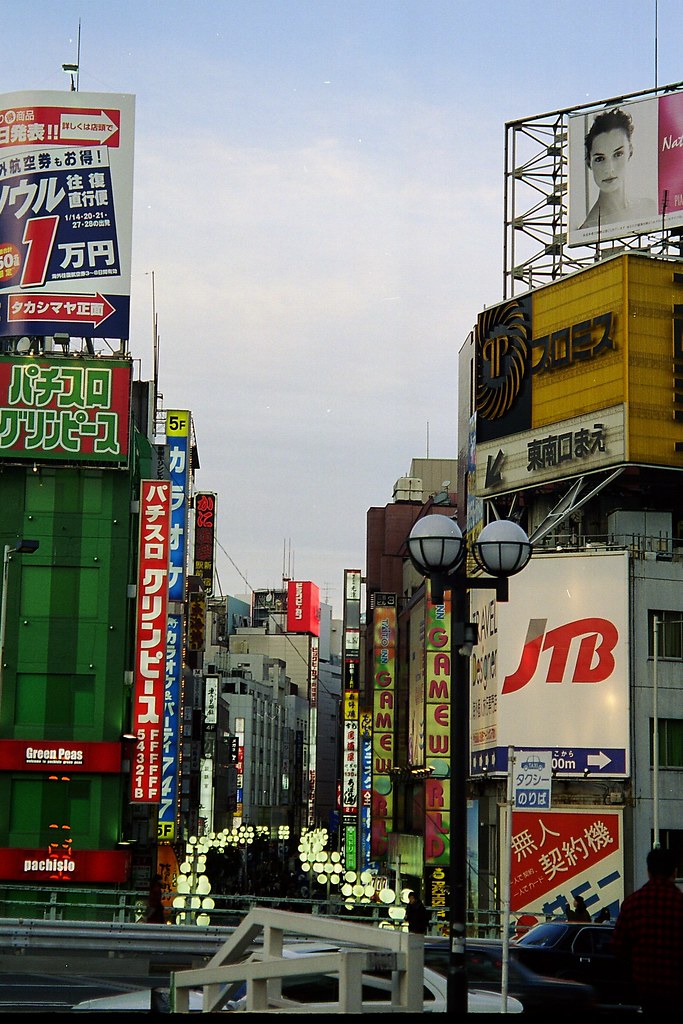


We started the conversation talking about the Shiloh Hendrix affair, but ultimately got onto the subject of the Land of the Rising Sun. As it turns out, Alexandru and I have both spent quite some time living in Japan, an experience which contributed to both of us becoming incorrigible racists. This is a very common occurrence: almost anyone who spends a significant amount of time living in a very different country will start to draw conclusions about the differences between human groups. Your levels of epistemic closure need to be extraordinarily high to avoid this.
When I first moved to Japan I was, in most ways, an unreconstructed liberal. I took the axiomatic precept of the Boomer Truth Regime – that stereotypes are both incorrect and evil, because all people are basically the same – more or less for granted. This was very easy for me to do: I’d grown up in a remote, homogeneously Anglo part of rural Canada, and while I’d had some degree of exposure to different ethne at university, this was during a period in which Canada was making a real effort to filter immigrants for quality, and most of the non-white, second-generation immigrants I interacted with were heavily westernized. I wasn’t unaware of cultural differences, but I generally assumed that it went no deeper than that, and that inside every human being there was a liberal Anglo struggling to break free.
Japan of course is a completely alien culture. Among the many profound differences with the contemporary West is that the Japanese are, famously, intensely and unashamedly racist, or “xenophobic” as it is usually framed. I was initially taken aback by how frank the Japanese could be about this, for instance by asking questions about me that were clearly in rooted in their stereotypical understanding of what young North American white boys were generally like. But there were two things about this experience that quickly made me stop and think. First, these questions were almost never hostile, but rather came from a place of genuine curiosity: they were simply trying to get to know me, which they would do by starting with a default mental picture and then testing to see if and how I conformed or departed from that picture so that they could update their model accordingly. Yet I had been assured my entire life, by every TV show, movie, and teacher, that stereotypes were always hateful! Second, a great many of their stereotypical assumptions about me were uncomfortably accurate. Yet I had been assured my entire life, by every TV show, movie, and teacher, that stereotypes were always wrong!
It didn’t take me long to get over this cognitive dissonance, which I resolved by the simple expedient of concluding that I’d been lied to by my culture, which is something that even then I’d realized happens a lot. This then gave me internal permission to observe the Japanese themselves, to notice the myriad differences in character and behaviour as compared to my own people, and to connect these individual level differences to their emergent societal consequences.
Learning racism in Japan is a humbling experience for a Westerner. I’ve travelled to a lot of different countries, and everywhere else I’ve either felt like my own people were basically on the same civilizational level (Europe), or at a noticeably higher level (South America). Japan is the only place I’ve ever been where I felt like an unlettered, uncouth, savage, stinky barbarian primitive one step removed from the cave – where it was obvious that my own people could learn quite a bit about how to comport themselves in a civilized fashion. Then again, at the same time, this taught me to value that very barbarism: it’s quite possible, as the Greek understood when regarding the Mede, to be overcivilized.
I could go on about this subject for hours, but I’ve got things I need to do today – like go to the gym and get some work done on other projects I’ve been engrossed in – and I wanted to get this out fast. In any case, I did go on about this subject for hours, with Alexandru and Phisto, so if you’d like to hear more about Japan you’ll just have to click through and listen.


