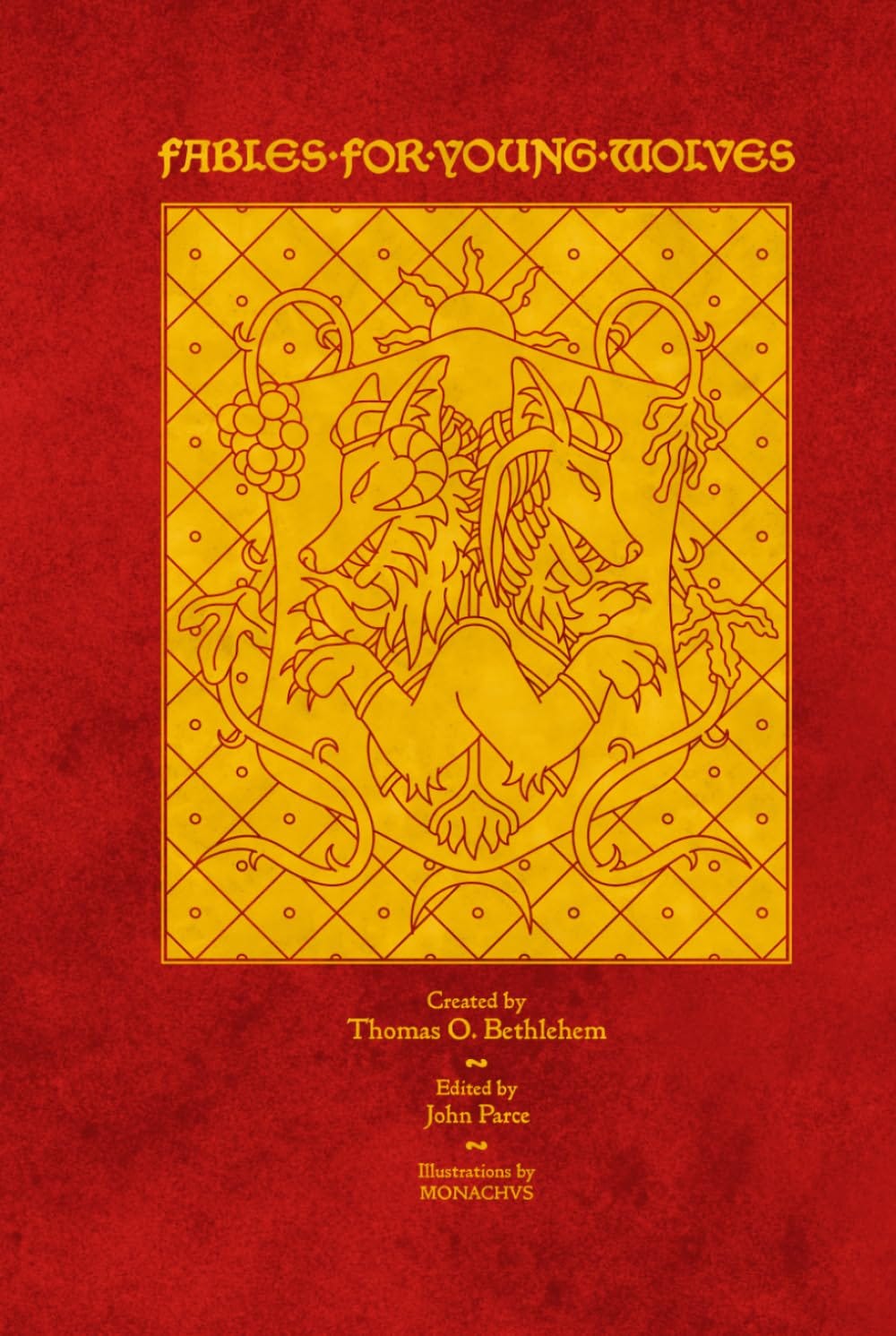
Recommendations for good books intended for young readers is pretty far from my usual bailiwick, so I’ll let John Carter step in with his suggestion that Fables for Young Wolves is worth your attention:
“You should move to a small town, somewhere the rule of law still exists. You will not survive here. You are not a wolf, and this is a land of wolves now.” – Sicario (2015)
Children’s literature has gotten soft. Disney turned every woodland creature into a cute little forest friend, and tacked a happy ending onto every dark fairy tale. The bloodstains were scrubbed out, death was swept under the rug, and the moral lessons became saccharine platitudes about being kind and sharing … a helpful aid to management of kindergarten classrooms, perhaps, but worse than useless for the moral instruction of the young, who will one day need to navigate a world where the shadows of the human soul conceal sharpened knives, and the truth is not always what well-meaning young women with associates degrees in early childhood education might wish. Children go along with it, but deep down they know that they’re being lied to, that the adult are keeping something from them when they pretend that every story has a happy ending, that everyone can be friends and get along if they’re just sufficiently nice to one another.
Contemporary children’s literature has gotten even worse under the pressure of politics, with bookshelves filling with stories about antiracist babies who grow up to become boys who become girls, and girls who save themselves from dragons and therefore don’t need help from the boys who foolishly refused to become girls. This is less moral instruction than moral inversion, literature meant to turn children against their own natures, stories that deliberately deceive developing minds in order to neuter them, soften them, make them malleable and unthreatening for a managerial culture in which the socially acceptable lie is always preferable to the uncomfortable truth.
Fables For Young Wolves is not that sort of book.
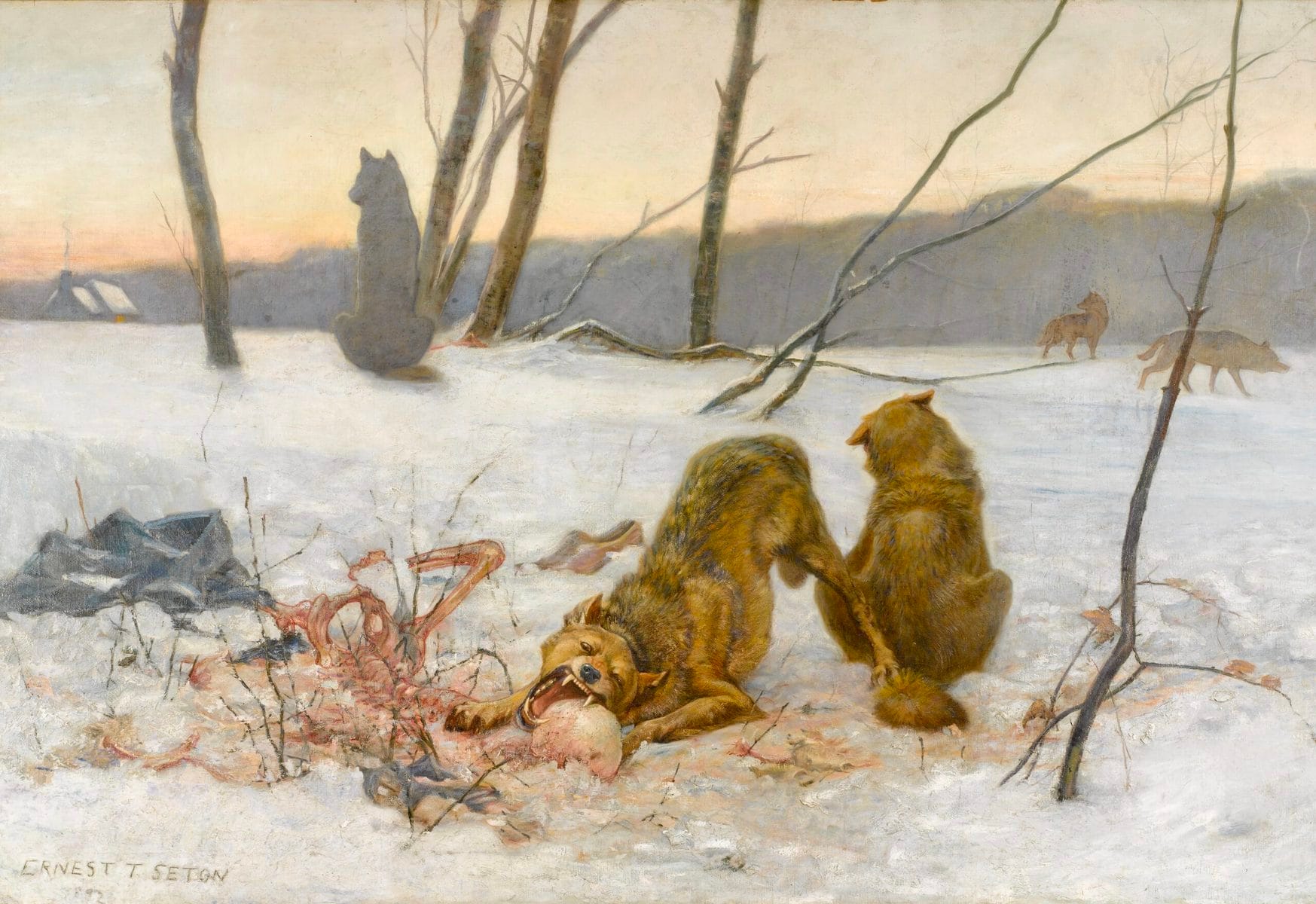
Triumph of the Wolves by Ernest Thompson Seton (1892)
The stories in Fables For Young Wolves are true fables in the Aesopian tradition: tales in which animals are used as symbols for particular facets of human character, or for particular kinds of humans. Foxes are wily, crows are wise but conniving, pigs are greedy and vulgar, asses are stupid, sheep are conformist and dull, dogs are loyal but credulous.
For after being brought up from childhood with these stories, and after being as it were nursed by them from babyhood, we acquire certain opinions of the several animals and think of some of them as royal animals, of others as silly, of others as witty, and others as innocent. – Apollonius, on Aesop (quoted in the foreword).
The titular wolves around whom the fables revolve are true wolves: noble, cruel, cunning, vicious enemies to their foes but faithful to a fault to their friends, playing roles of villain, victim, and hero as each tale requires. As the most psychologically complex of the animals, they stand for everything that is highest in the human soul, and so are also suited to plumb the depths. These are not Disneyfied vegan wolves that make friends with rabbits: these wolves are hunters and killers, and unashamed of it.
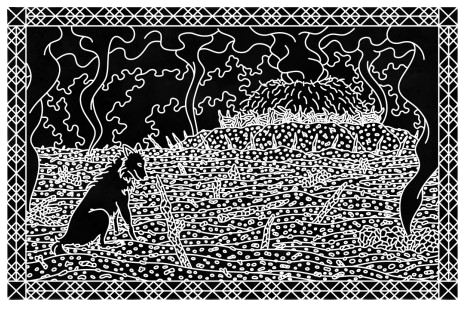
Illustration by Monachvs.
Thomas O. Bethlehem‘s fables are intended, as all fables should be, to impart lessons about human nature and about the world, not as we might wish it to be but as it is, with the intent that the young reader will be guided away from bad decisions and towards the good. Many of the stories are anecdotes of a couple of pages, which communicate simple ideas about controlling your base impulses, having your friend’s back, knowing who your real friends are, the consequences of helping those who cannot be helped, and so on. Interspersed between these are longer and more psychologically complex tales which build upon well-known folk-tales such as “The Boy Who Cried Wolf”, “The Three Little Pigs”, “The Wolf in Sheep’s Clothing”, and “Little Red Riding Hood”.