
A guest post at Woke Watch Canada by C.C. Harvey lays out the evidence that our culture — and most of the western world — is struggling with a spiritual sickness and that arbitrary cancellations and formal censorship of dissenting views are symptoms of that ailment:
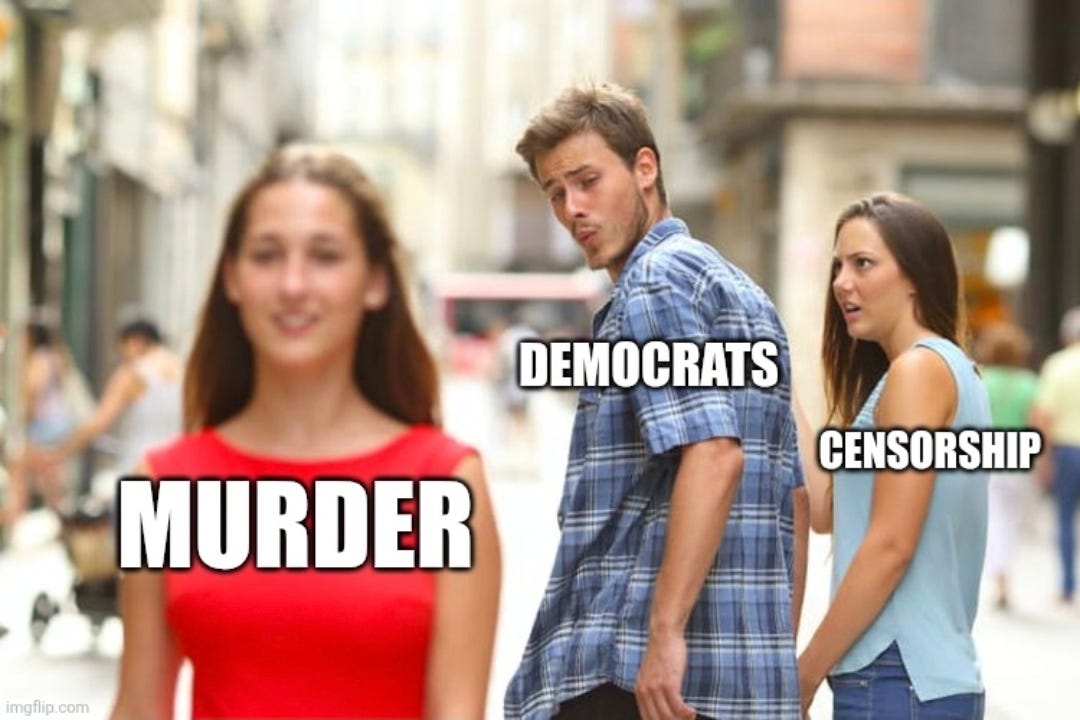
When a society begins to suppress intellectual and spiritual searching and dreaming — by punishing speech, regulating thought, discouraging questions, denying the existence of spiritual reality — it is not only a political decline, but a sign of deep unwellness.
Where populations lose respect for liberty of conscience, inquiry, and discourse, society becomes nasty and brutish. Truth-seeking, spiritual health, and peace are inexorably linked. Across formerly open, stable, safe western societies, censorship and repression have been rising as safety, cohesion, and quality of civic life decline.
We must resist cancel culture and speech codes for the following reasons:
- Suppressing Truth-Seeking Violates a Fundamental Human Impulse
Across religious and knowledge traditions, truth-seeking is expressed as a moral duty. When authorities obstruct honest questioning, they interfere with something built into the human spirit.
- Fear Becomes the Organizing Principle
Where dissent is forbidden, fear takes the place of reason. Fear diminishes moral clarity, discourages integrity, and pushes people toward silence rather than responsibility. A fearful society cannot become a virtuous society.
- Conscience Is Treated as a Threat Instead of a Gift
In every major tradition — religious or philosophical — conscience is seen as a source of moral insight. When institutions punish people for following their conscience, they reveal a belief that the individual soul has no intrinsic worth, only value as a compliant unit.
- Dialogue Is Replaced With Dogma
Healthy societies debate, persuade, and refine ideas through open conversation. Unhealthy ones replace discussion with mandatory narratives and speech codes. Leaders who fear questions fear the truth those questions might uncover. Dogma can be secular or religious. It is ideologically rigid, generally not truth-seeking.
- Collective Identity Replaces Individual Worth
Authoritarian systems elevate the group above the person: the party, the ideology, the movement, the “community”. When people are valued only as members of a group rather than as individuals, conscience becomes irrelevant and conformity becomes the main civic expectation. This is materialism, and denial of spiritual reality.
- Repentance and Correction Become Impossible
A culture that silences criticism cannot correct its own errors. Without the freedom to point out problems, there can be no course correction, no growth, and no accountability. Mistakes multiply because they are protected by enforced silence.
- The Vulnerable Are Punished First
Censorship and ideological enforcement nearly always fall hardest on those with the least power — dissidents, researchers, students, teachers, and ordinary citizens. When moral pressure is used to intimidate rather than uplift, society reveals a deeply inverted understanding of justice.
- Curiosity and Creativity Decline
When questions become dangerous, people stop asking. When our human body, spirit, and intellect work in tandem without fear, we are capable of incredible scientific, artistic, and intellectual discovery and achievement. A society that punishes inquiry slowly starves itself of spirit in the form of innovation and insight.
- Tribal Narratives Replace Shared Reality
When open debate disappears, competing ideological factions manufacture their own “truths”. Without a shared standard for evidence or meaning, society fragments into groups that can no longer communicate across boundaries. This is a recipe for distrust, polarization, and alienation … in dogmatically religious societies: a recipe for holy war and violent oppression.
- A Culture That Punishes Dissent Is Living by Avoidance, Not Truth
Suppressing dissent is always a sign that an ideology cannot withstand scrutiny. Societies that silence critics pretend confidence but are insecure. The greater the fear of open conversation, diverse thought, and public debate, the greater the underlying instability and spiritual decay.
- Each Soul’s Journey Is Sacred — And Faith Must Be Chosen, Not Forced
Across traditions, genuine belief is understood as something voluntary:
- Love and faith cannot be coerced.
- Insight cannot be mandated.
- Moral understanding cannot be imposed through fear.
A society that tries to control belief tries to destroy the inner space where thought, reflection, and integrity develop. Coerced belief is not belief; it is compliance. An individual’s free relationship with God is sacred. No human rightfully owns another’s body, mind, or soul.
Update, 7 December: Welcome, Instapundit readers! Please do have a look around at some of my other posts you may find of interest. I send out a daily summary of posts here through my Substack – https://substack.com/@nicholasrusson that you can subscribe to if you’d like to be informed of new posts in the future.



[…] YES: Censorship and “cancel culture” are symptoms of a cultural sickness. […]
Pingback by Instapundit » Blog Archive » YES: Censorship and “cancel culture” are symptoms of a cultural sickness. — December 7, 2025 @ 03:00