
As we’ve seen far too many times in Canadian courts, when judges become politically active, they can produce far worse situations than the politicians who cynics might say are specialists in that discipline. British judges, however, are still well ahead of their Canadian counterparts:
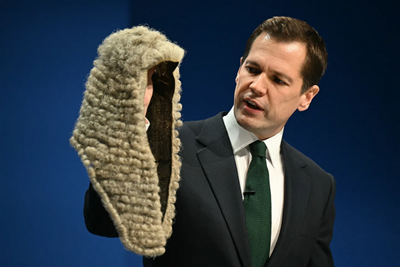
Until judges are replaced by robots, we will have to accept the reality of activist judges. Even the most august patriarch of the bench cannot wholly escape his innate human biases. And so perhaps there was something in Robert Jenrick’s speech at this week’s Conservative Party Conference, in which he announced that, if elected, the Tories would empower the Lord Chancellor to appoint judges and more carefully scrutinise their political activities.
Those who have supported the ideological capture of our major institutions were understandably furious. The New Statesman claimed that Jenrick had “declared war on the judiciary”. But then, the New Statesman is an activist publication which can make no serious claim to impartiality or sound journalistic standards. (Those in any doubt about its mendacity should take the time to read about its shameful treatment of Roger Scruton.)
The problem of an activist judiciary is currently preoccupying the White House, given that a number of federal judges have attempted to block executive policies or have issued nationwide injunctions. Trump himself was convicted on thirty-four felony counts by a judge who had made small political donations to Democratic-aligned causes. It seems clear that given these circumstances he ought to have recused himself. The entire case, of course, was an example of the law being twisted for politically partisan ends. (The best overview is by the senior legal analyst for CNN, Elie Honig, which can be read here.) Little wonder that Trump now appears to be seeking revenge through the courts.
In the UK, there have been a number of revelations of judges tied to political causes whose claim to impartiality seems shaky at best. During his speech, Jenrick spoke of those judges who have been associated with pro-immigration campaign groups and have “spent their whole careers fighting to keep illegal migrants in this country”. Many commentators have observed a generalised bias toward asylum applications, sometimes to an absurd extent. Who could possibly forget the Albanian criminal whose deportation was halted by an immigration tribunal on the grounds that his ten-year-old son did not like foreign chicken nuggets?
Leaving such outliers aside, most of us will have noticed patently ideological remarks occasionally uttered by judges during sentencing. In the Lucy Connolly case, the judge explicitly expressed his support for the creed of DEI before sentencing her to 31 months in prison for an offensive and hastily deleted post on social media. “It is a strength of our society that it is both diverse and inclusive”, he said. It couldn’t be much clearer than that.
That lawfare has become a major weapon in the settling of political disputes should trouble us all. Judges are not accountable to the electorate, and so any suggestion that they are exercising power for their own political ends is bound to be interpreted as a threat to democracy. Inevitably, Jenrick’s criticism of activist judges, and his call for them to be removed, has led to some commentators assuming that he would prefer judges who simply acted according to the government’s bidding. That way lies tyranny.


