
In his post “A Pagan Confession“, Fortissax provides an explanation of Roman Hellenism, the most widespread religious system in Europe before Christianity:
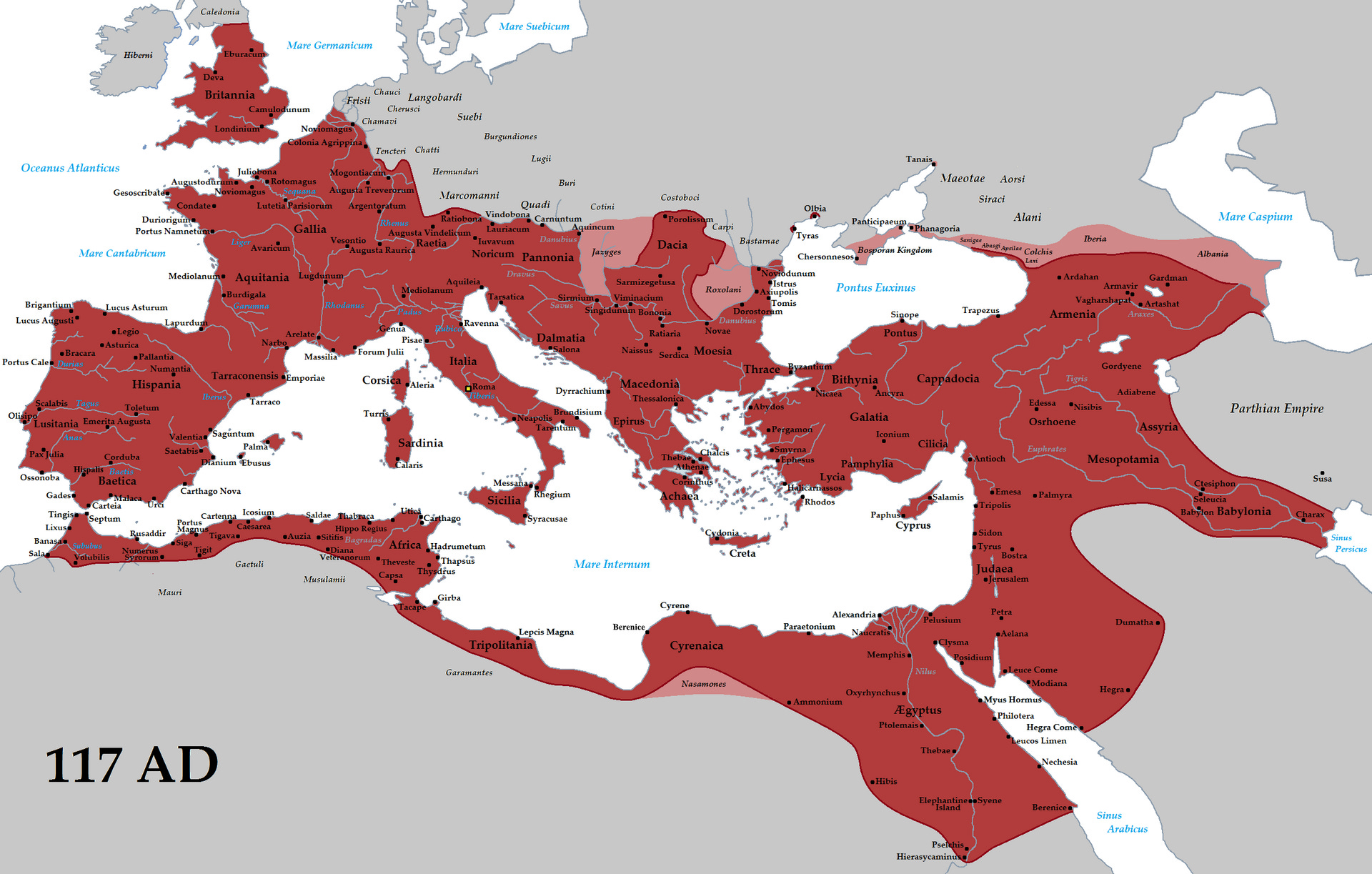
The Roman Empire at its maximum extent
The closest term that would describe me is “Roman Hellenist”.
Roman Hellenism was the largest religion in the Western world prior to the rise of Christianity. It was followed from Britain to Greece, from Spain to Romania, and was the first civilization-wide faith for Europeans.
At its height under the Roman Empire, Hellenism was a vast and adaptable religious tradition that united Greek mythology, Roman state religion and cults, household rites, and philosophical schools into a coherent spiritual world. As the organized state religion, the Dii Consentes were worshipped in every corner of the empire under both Latin and Greek names. Jupiter, Mars, Venus, Apollo, Minerva, and others were honoured through public festivals, imperial temples, military devotions, and local folk religion. This civic devotion was shaped by writers such as Cicero, Livy, and Plutarch, who emphasized the importance of piety, order, and divine ancestry.
Hellenism offered more than just myth or folklore. It provided a structured understanding of the cosmos, where the gods represented natural and moral forces, and where religion was interwoven with daily life, civic duty, and personal virtue. Mystery cults such as those of Dionysus and the Eleusinian rites offered deeper initiatory experiences, described by authors like Herodotus and Euripides. Philosophers such as Plato, Plotinus, Porphyry, Iamblichus, Proclus, Damascius, and Hierocles were considered divinely inspired and were often trained by the augurs, or in the College of Pontiffs, established in 400 B.C., and the inspiration for the College of Cardinals. These were priests within the state religion.
They built the theology of the faith. These philosophers were not monotheists or atheists, but pagans, and their theology came from Hellenism. Ordinary people prayed, sacrificed, and kept sacred fires at home. This marks the distinction between the folk religion of the everyman and the theological work of the priestly and philosophical elite, though they formed a whole, similar to Christian folk religion compared to the sophistication of the clergy. Hellenism in the Roman world was participation in a divine order that shaped identity, politics, culture, and destiny.
It had a core, but it was a dynamic tapestry. It often accommodated or incorporated local and regional gods of subject peoples throughout the empire, including other Europeans. It was normal to find shrines or temples dedicated to syncretic deities where Roman and provincial traditions were blended. This reflected a deeper truth shared by many Indo-European peoples. Across vast distances, from the Celts and Germans to the Greeks and Romans, there was a common spiritual grammar. Their gods often held similar roles, attributes, and origins. Rather than destroy or suppress local belief, Roman Hellenism often absorbed and integrated it within a universal metaphysical framework, though one without too strict of a dogma, which allowed spiritual continuity across cultures.
The Romans referred to this process as interpretatio graeca, the identification of foreign gods with Greek ones, and interpretatio romana, the application of Roman names and attributes. In Gaul and Germania, local deities such as Lugh or Wodan were equated with Hermes or Mercury. Camulos and Tyr equated with Mars, Taranis with Jupiter through interpretatio gallica and interpretatio germanica.
These interpretive traditions allowed theological bridges across linguistic and ethnic boundaries, fostering religious continuity and civic unity. Writers like Varro, Tacitus, and Strabo observed this continuity, noting that while names and symbols differed, the gods themselves were one in essence. This interpretive unity was ritualized practically in temple, altar, hymn, and law.
This faith, was shaped by the Iliad and the Aeneid, the rituals of Rome and the hymns of Orpheus, the Chaldean Oracles, the laws of the Twelve Tables and the meditations of Aurelius. It spoke through the Sibyl and the Stoic, the philosopher and the priest, the hearth and the polis. It is the soul of the West in its first religious form, a religion of cosmic order, virtue, memory, and return. Its path leads from the One to the many, and back again through sacrifice, contemplation, and union.
To be a Hellenist, in this fuller sense, is to honour the gods as real beings and divine intelligences who participate in the life of the soul and the order of the cosmos. It is to seek harmony with this order through philosophy, ritual, moral striving, and ancestral memory. It is a way of life, rooted in reason and reverence.


