Many, many people have called attention to the incongruity — if not total absurdity — of progressives agitating and protesting for what appear to be thoroughly anti-progressive causes. And all of those people have discovered that most progressives are in accord with Emerson’s opinion that “a foolish consistency is the hobgoblin of little minds”. As Lorenzo Warby explains, “the issue is never the issue; the issue is the revolution”:
There is a common “culture war” sport where more conservatively-minded folk, and various liberal ones, point out how inconsistent it is for various ideological/identity groups to make a thing of supporting organisations and regimes which are very much against — even murderously against — the ideals those ideological/identity groups allegedly stand for.
Queers for Palestine, and feminists for Hamas/Hezbollah/Iran, are particularly blatant examples of this. Hamas in Gaza and the Islamic regime in Iran literally kill homosexuals and violently repress women’s rights: they are religiously committed to women having less rights than men and being subordinate to them.
The inconsistency between who Hamas and the Islamic regime are, what they do, and the alleged ideals of Queers for Palestine and the feminists supporting Hamas/Hezbollah/Iran is obvious. Pointing out such inconsistency has, however, no purchase on Queers for Palestine, feminists for Hamas/Hezbollah/Iran, or similar groups.
On the contrary, pointing out the inconsistency brands one as not merely an outsider, but an enemy. It is precisely the embracing of such inconsistency that shows your commitment to the cause; to the shared political goals; to the shared politicised moralised status games. Doing all the required not-noticing, the required rationalisations, is a signal of commitment.
If they can make people ignore — or, even better, embrace — such inconsistency, that manifests their social and political dominance. The propensity of academics to be “risk averse“, and be conformist in various ways, has enabled motivated zealots to create the Critical Theory magisterium that has come to dominate more and more of Anglo-American academe.
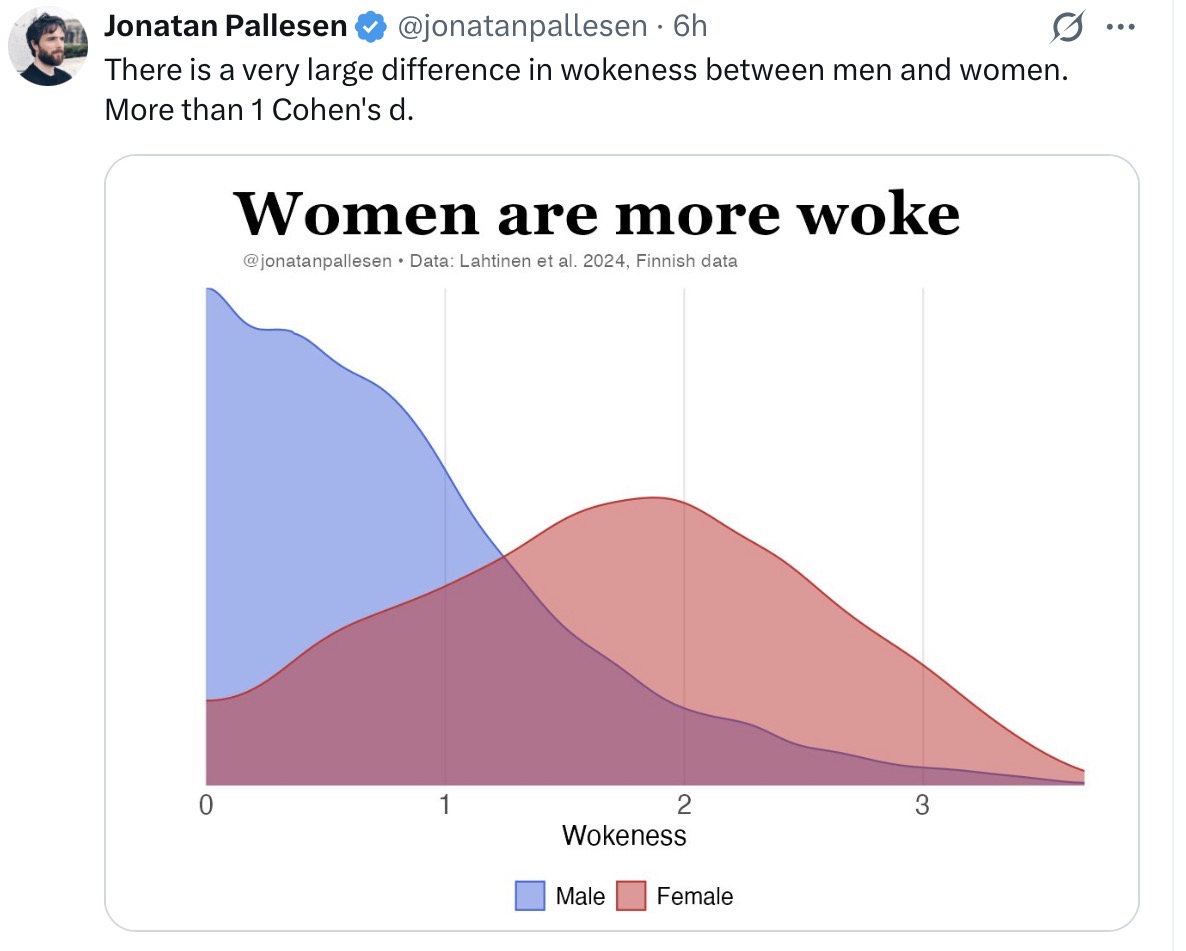
As women are more risk averse and conformist than men, this has gathered steam as academe has feminised. This effect is all the stronger when they generate an accompanying elite status strategy based on “good people believe X”, turning beliefs into moralised cognitive assets. Assets to be defended — and defended together — as shared assets in a shared status game.
By attacking such inconsistency, one is simultaneously signalling one’s outsider status and attacking the signal they are using the show commitment to the cause; to the moral in-group.
As part of such signalling commitment, believers produce commentary shorn of all inconvenient context. We saw plenty of that in commentary blaming NATO and the US for the Russian attack on Ukraine. We are seeing plenty of the same on Iran.
Even more important than this—at least among the core believers — is that, at the foundational belief level, it is not inconsistent at all. The question is not what Hamas or Hezbollah or the Islamic Regime actually stands for: the question is, who they are enemies of.