Quotulatiousness

August 27, 2011

Fulford: NDP offers “alternative to reality” to supporters

Filed under: Cancon, Economics, Politics — Tags: , , — Nicholas @ 13:11

Robert Fulford will win no friends on the left with this article:

Jack Layton led the NDP more successfully than anyone else but what he led was as much a fantasy as a political party. Over five decades, under half a dozen different leaders, the NDP has evolved into a dream, a means of escape from ordinary life for those who feel the need of it. Layton’s successor will be required to embrace an elaborate and much-loved fiction.

The way it’s worked out, the central function of the NDP is to help members and supporters pretend that they are not living in a society built on capitalism. Democratic socialism is a fairy tale that they tell themselves as consolation for having to exist in a distressingly grubby, money-driven world. New Democrats don’t like business, even if they happen to work for corporations. They know and have always known that the profit motive is not a good thing. Many of them are prosperous, many take pride in their expensive houses, exotic vacations and pensions administered on Bay Street. Some have inherited large sums of money. Even so, they don’t care to be reminded that corporations make the comfort and convenience of their lives possible. They love their electronic devices but they don’t wish to dwell on the fact that computers and iPads exist (and reach us at low prices) because of the burning desire to maximize profit. The Co-operative Commonwealth Federation (CCF), out of which the NDP grew in 1961, stated its principles as the Regina Manifesto of 1933. It advocated many ideas still dear to Canadians but made one point absolutely explicit: “No CCF Government will rest content until it has eradicated capitalism.”

August 23, 2011

Blatchford comes not to praise Jack, but to bury him

Filed under: Cancon, Media, Politics — Tags: , , — Nicholas @ 13:16

Christie Blatchford displays great courage in saying publicly in her column what others may only be thinking in the privacy of their own minds:

Yes, his death at 61 was sad and too soon; yes, he made an enormous contribution to his party and a significant one to Canada (though I would quibble with NDP MP Libby Davies’ characterization that “He gave his life for this country”); yes, he fought a brave battle against cancer, as, mind you, does just about anyone who has it; and yes, he was a likeable, agreeable, smiley man.

Yet what was truly singular about him was how consumed by politics he was and how publicly, yet comfortably, he lived.

How fitting that his death should have been turned into such a thoroughly public spectacle, where from early morn Monday, television anchors donned their most funereal faces, producers dug out the heavy organ music, reporters who would never dream of addressing any other politician by first name only were proudly calling him “Jack” and even serious journalists like Evan Solomon of the CBC repeatedly spoke of the difficulty “as we all try to cope” with the news of Mr. Layton’s death.

By mid-day, after Prime Minister Stephen Harper had offered a few warm words about Mr. Layton’s death and rued that their oft-talked-about jam session had never happened, Mr. Solomon even expressed sniping surprise that “Jack Layton wasn’t the sole focus” of the Prime Minister’s remarks.

Mr. Harper, who clearly had not spent the day watching the national broadcaster and thus was unaware that the NDP Leader’s death was the only story of note, had gone on to mention the families of the 12 people (including six-year-old Cheyenne Eckalook; now there’s someone who died far too young) who perished in the Arctic plane crash on Saturday and the tumultuous events in Libya.

She also addresses the mawkish over-sentimentality of people who probably never met Mr. Layton leaving bunches of flowers, notes, and the like (at least in this case, we’re being spared the teddy bears) as public marks of grieving:

Held out as evidence of Canadians’ great love for Mr. Layton were the makeshift memorials of flowers, notes that appeared at his Toronto constituency office and on Parliament Hill, and in condolences in social media.

In truth, none of that is remotely unusual, or spontaneous, but rather the norm in the modern world, and it has been thus since Princess Diana died, the phenomenon now fed if not led online. People the planet over routinely weep for those they have never met and in some instances likely never much thought about before; what once would have been deemed mawkish is now considered perfectly appropriate.

Certainly, Canadians liked Mr. Layton, but the public over-the-top nature of such events — by fans for lost celebrities they never met, by television personalities for those they interviewed once for 10 minutes, by the sad and lost for the dead — make it if not impossible then difficult to separate the mourning wheat from the mourning chaff. His loss — his specific loss and his specific accomplishments — are thus diminished.

August 22, 2011

Jack Layton, RIP

Filed under: Cancon, Politics — Tags: , , — Nicholas @ 08:24

I’m sad to hear of the death of federal NDP leader Jack Layton today. Here’s the official notification:

We deeply regret to inform you that The Honourable Jack Layton, leader of the New Democratic Party of Canada, passed away at 4:45 am today, Monday August 22. He passed away peacefully at his home surrounded by family and loved ones. Details of Mr. Layton’s funeral arrangements will be forthcoming.

Layton’s party achieved a breakthrough in the most recent federal election, winning enough seats to qualify as the Official Opposition for the very first time. Jack Layton had a lot to do with that impressive performance, and it’s not clear if his party will be able to retain their popularity without his leadership.

Update: The National Post has a full obituary.

Jack Layton has lost his battle with cancer, dying Monday morning at his home, surrounded by those closest to him.

The charismatic, 61-year-old politician had recently stepped down as federal NDP leader, but had expressed hope that he would return when Parliament resumed next month.

“I was deeply saddened to learn this morning of the death of Jack Layton,” Prime Minister Stephen Harper said in a statement.

Harper offered his condolences to Layton’s wife, MP Olivia Chow, and family.

“When I last spoke with Jack following his announcement in July, I wished him well and he told me he’d be seeing me in the House of Commons in the Fall.

“This, sadly, will no longer come to pass.

“On behalf of all Canadians, I salute Jack’s contribution to public life, a contribution that will be sorely missed.

“I know one thing: Jack gave his fight against cancer everything he had. Indeed, Jack never backed down from any fight.”

May 28, 2011

Jack Layton: “I’m proud to call myself a socialist … But I don’t go around shouting it out.”

Filed under: Cancon, Politics — Tags: , — Nicholas @ 12:29

Chris Selley takes a longer look at Jack Layton, the man who would be king prime minister:

Ask a socialist with revolutionary tendencies if Mr. Layton is a socialist, however, and the answer will probably be a resounding “no.” Mr. Layton, writer Stan Hister complained on Rabble.ca in 2004, “is a political doughnut. All sugar icing on the outside (or make that maple glaze) and a big hole in the middle.” The doughnut hole ought to be filled with “an alternative to capitalism,” he argued. “But it’s been a very long time since the NDP even pretended this was on its agenda.”

He’s right about that. And good heavens, just look at where it’s gotten them. Nobody inside or outside the New Democrats saw 103 seats coming on May 2, of course — 44 of them purloined from the Bloc Québécois, 17 from the Liberals and seven from the Conservatives. But if you ask those who have followed Mr. Layton’s political career since his days as a left-wing standard-bearer in Toronto municipal politics, be they friend or foe, you’ll find they don’t put much past Mr. Layton’s political abilities.

“There’s no question that Jack became leader of the NDP not because he wanted to forever lead a band in the wilderness. He took on the leadership of the NDP because he optimistically believed the NDP could be a major, if not the major force in government,” says Myer Siemiatycki, a professor of politics at Ryerson University and long-time friend of Mr. Layton.

Circumstances had to conspire in Mr. Layton’s favour, of course. Even he won’t admit to doing anything much differently on the campaign trail this time around. (Was his smile bigger, perhaps? “My mouth is the same size,” he laughs.) Reasonably centrist people had to be fed up enough to vote for a party that had once been to the left as Reform was to the right, and that had never governed federally. And it was nice of the Liberals to release a platform calculated to woo NDP-leaning voters, inadvertently making Mr. Layton’s party seem even more anodyne.

May 6, 2011

Chris Selley on those new “orange posts”

Filed under: Cancon, Government, Politics — Tags: , , , — Nicholas @ 12:13

The new NDP youth wing gets lots of fun poked at it (some of it here), but Chris Selley has hopes that they may force the House of Commons to revisit the worst aspects of parliamentary behaviour:

Look. It’s easy, and frankly appropriate, to laugh at the gaggle of orange poteaux — “posts,” as Quebecers call cipher candidates — soon heading to Ottawa to take their seats as New Democrat MPs (and to move into their very first apartments!). But whatever their shortcomings, it’s safe to assume they’re full to bursting with idealism and self-esteem. Many of them aren’t long out of high school. Try to bully them and by God, they’ll probably call the police.

There’s 57 new NDP MPs from Quebec — almost 20% of the House of Commons. They have a real opportunity to make a difference in the way Parliament conducts its business. Jack Layton himself has said he intends to officially oppose the government in a more dignified manner. And it’s hard to think of anyone in a better position to hold him to his word than, say, a 21-year-old student with $600,000 or so coming to him over the next four years, representing a riding he’s barely visited (if at all) and constituents who didn’t (and don’t, and may never) really give a damn who he is.

The complaints of ex-MPs detailed in the Samara report go far beyond Question Period. One ex-parliamentarian said he profoundly regretted toeing the party line on an emotional issue — almost certainly same-sex marriage, although it’s not specified — and recalled colleagues weeping as they voted against their consciences. Another tells of being tasked, very early in his career, with delivering a speech on the mountain pine beetle infestation in British Columbia, which he knew absolutely nothing about, on 20 minutes’ notice.

One of the weaknesses of our system is that there are not stronger supports for MPs voting freely rather than following the direction of the party whips. The constituents are not being represented if their MP is not allowed to vote in line with their preferences but instead has to subordinate their concerns to that of the party. SSM and the long gun registry are recent examples where the outcome was dictated by party leaders refusing to allow their MPs to vote freely.

It’s good that MPs recognize, at least in hindsight, that partisanship fries their brains and makes them act like monkeys. But hindsight isn’t good enough. Unless MPs grow some … uh, courage, when it actually matters — refusing orders to act foolishly or speechify on subjects they know nothing about, or to waste hours filling chairs on “house duty” when they could be out doing something useful, or to vote against their own or their constituents’ beliefs — this is never going to change.

May 4, 2011

He comes not to praise Ignatieff

Filed under: Cancon, Politics — Tags: , , — Nicholas @ 10:31

Colby Cosh, that is. He has a column up at Maclean’s which he admits “was prepared in a factory that manufactures gloating. Some traces may appear.”

When I argued that Ignatieff’s long absence from the country was a problem — very, very carefully distinguishing my own argument from the content of Conservative attack ads — I was greeted with a chorus of “How dare you?” I was told I had no standing to criticize a man of Ignatieff’s intellectual attainments; by that standard, none of those who have been living Canadian politics for the last quarter-century had any right to speak — so how’d that argument work out? I was told that I was engaging in a “personal attack”; how’d the argument that personalities have nothing to do with election success work out? I was told that love for Canada is all that matters, and you can love it just as much from a distance as you do from the inside; how’d the lovefest turn out? This is not just idle gloating — and even if it is, maybe it is about time for Liberals to stop obsessing over the psychological motives of commentators and start listening. This is about whether the Liberal Party is capable of making use of criticism, even unfriendly or biased criticism, as advice. This is the question, fundamentally the only question, that will determine whether it has a future, if it wants one.

But the point he’s trying to make, other than a quite understandable bit of back-patting for his prescience back at the beginning of Ignatieff’s short run as Liberal leader, is that the back-room handlers set this up:

… this election could have been avoided if Ignatieff hadn’t been allowed to commit to a “Not another second of Conservative government” position on the 2011 budget. I don’t know what story Paul Wells will tell in his sprawling Making Of The Prime Minister 2011 feature, and if he disagrees with me I would strongly encourage you to take his word over mine. My information is that the Liberal high command was playing a calculated gambit by leaving the go/no-go choice on Jack Layton’s desk. They thought that a spring 2011 election was better for them than an autumn one or a 2012 one. And they thought that Layton, in any event, would probably be too ravaged by illness not to support the budget — in which case they were prepared to go out and blame him for every jot and tittle in that document. This makes sympathy for the Liberal braintrust very, very difficult.

May 3, 2011

Conservatives win majority, NDP break through to official opposition

Filed under: Cancon, Politics — Tags: , , , , , — Nicholas @ 00:26

A political earthquake in Canada, as the Liberal party vote collapses across the country and the separatist Bloc Quebecois vote collapses even further in Quebec. The result of division on the left is a majority for Stephen Harper’s Conservative party.

As I’m writing this post, the current numbers are:

  • Conservatives — 167 seats
  • New Democratic Party — 103 seats (historic high)
  • Liberals — 34 seats (with leader Michael Ignatieff losing his own seat)
  • Bloc Quebecois — 3 seats (below “official party status”, with leader Gilles Duceppe losing his own seat)
  • Greens — 1 seat (historic high, as party leader Elizabeth May wins the first Green seat in parliament)

As I posted in a Twitter update a few hours back, this is the same situation that allowed Liberal leader Jean Chretien to win three straight majorities: a divided opposition. This time, instead of the Progressive Conservatives fighting the Reform Party on the right, it’s the Liberal Party fighting the NDP on the left.

The test facing Jack Layton is how to manage his hugely inflated caucus in the new parliament (with new Quebec MP’s in the majority) and perhaps finding ways to keep the rump of the Liberal party willing to work with his new official opposition.

It must be a great day to be an NDP supporter, with historic gains for the party and new respect for leader Jack Layton.

April 30, 2011

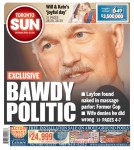
The Toronto Sun goes full gonzo on Jack Layton

Filed under: Cancon, Media, Politics — Tags: , , — Nicholas @ 11:52

In an earlier post, I was wondering if the mainstream media was going to give Jack Layton and the NDP the same kind of coverage that they had been devoting to the Liberal and Conservative campaigns. Instead of doing the same thing, one of Toronto’s newspapers decided to channel their British tabloid counterparts:

Jack Layton was found laying naked on a bed by Toronto Police at a suspected Chinatown bawdy house in 1996, a retired Toronto police officer told the Toronto Sun.

The stunning revelation about the current leader of the New Democratic Party comes days before the federal election at a time when his popularity is soaring.

When the policeman and his partner walked into a second-floor room at the Toronto massage parlour, they saw an attractive 5-foot-10 Asian woman who was in her mid-20s and the married, then-Metro councillor, lying on his back in bed.

Layton was cautioned by police and released without being charged.

So no crime was committed, no charges were laid, and it happened in 1996. Perfect time to pull it out at the very end of an election campaign.

April 29, 2011

Stephen Gordon: Layton needs to avoid disruptive monetary policies

Filed under: Cancon, Economics, Politics — Tags: , , , — Nicholas @ 13:20

It’s almost as if nobody bothered to read what the NDP had in their platform until last week . . . and paying even less attention to what Jack Layton said on the campaign trail. They’re paying attention now:

In my recent post on the prospects of a possible NDP government, I came to the conclusion that not very much would change; their platform had none of the transformational elements that had been a feature of so many NDP campaigns in the past.

But if recent reports are correct, and if Jack Layton seriously thinks that it would be a good idea for a Prime Minister to instruct the Bank of Canada to keep interest rates low, then this benign assessment no longer holds. Such an intervention would be a serious mistake that would seriously endanger the recovery, and could generate another spiral of higher inflation and higher interest rates.

The first thing that would happen after such an order is that Governor Mark Carney would have no choice but to resign. This would be a serious shock to the financial system, and unless his successor could extract a promise that no further orders would be forthcoming, the Bank of Canada’s credibility would simply disappear.

You remember all those smug, self-congratulatory pieces about how well Canada had weathered the recession and how well positioned the country was to take advantage of economic growth? Perhaps this is the imp of the perverse coming back for a revision of all that hearty back-patting.

NDP surge extremely taxing for . . . NDP candidates?

Filed under: Cancon, Media, Politics — Tags: , , , , , , — Nicholas @ 11:35

I’ve worked on political campaigns for minor party candidates (provincial and federal Libertarians) who had to keep their campaigning to the weekend and after-work slots because they still had to earn a living during the election. I find it hard to believe that so many candidates for a “major” party are running part-time candidacies:

There’s a standard-bearer in Quebec who went on a Las Vegas vacation for a week because she didn’t want to lose her deposit. She also reportedly spoke French so poorly that a local radio station had to scotch an interview rather than air the exchange. Another candidate went to the Caribbean and one travelled to France. There’s a Toronto candidate who has not campaigned at all, can’t be reached, and, judging by a Toronto Star report, quite possibly is an apparition. There are all kinds of students who, presumably, did not have the pesky constraints of full-time work that weighed down Mr. Larkin.

None of these things are unusual — third-place parties usually have a fair bit of cannon fodder — but it is unusual for anyone to be asking about them. And that’s what’s happening to the NDP. People are asking about them, and about the party and its platform, far more than they were last month, or even early last week.

It’s what naturally happens when an also-ran finds itself suddenly very much in the running. The key question for the NDP is: Can it manage four days of impromptu scrutiny?

That will depend on how the traditionally Liberal media handles this unexpected surge from the left: they know how to find awkward quotes and disreputable connections for candidates on the right, but generally have treated leftists with a faint air of “isn’t that cute?” rather than as serious campaigners. Can they apply the same standards in a mirror image?

It’s possible that they will give Jack Layton a much rougher ride than they have so far:

Jack Layton himself is also now facing a different sort of question about his own policies from reporters travelling with him. He was asked on Thursday about how his platform, which calls for a price on carbon, would affect gasoline prices. One analysis says the NDP plan would add 10¢ a litre at the pumps. Mr. Layton insisted that an ombudsman would be able to keep oil companies from raising prices for consumers, but he disagreed that he was proposing to regulate gasoline prices. Reporters described the exchange, which included questions about the AWOL candidates, as “testy” and “heated,” which has been rare for the NDP leader thus far. And testy exchanges lead to stories about how a leader is “on the defensive” or “responding to critics.” Eventually they can become “embattled.” (In the case of Mr. Ignatieff, a report on Thursday referred to him as “beleaguered.”)

“Tone matters,” explains Prof. Matthews. “People do respond to the media. Not everyone, of course, not the partisans and not the people who aren’t paying any attention, but there are people who take their cues from the coverage.”

Update: Publius points out that the situation could be at least as good as last season’s CBC offerings:

Everyone has been stunned by the NDP surge. The newly minted Sun News has started calling it an “Orange Crush,” which is a gross insult to a fine fizzy beverage. No one has been more surprised than the NDP. For years the party has run non-entity place holders in most ridings, as they did this time around. One of them is a Quebec barmaid who took a vacation mid-campaign, which says everything you need to know about the NDPs organization in Quebec. Now some of those ridings are competitive. We could have MPs in the next Parliament that were “accidentally” elected. There’s a sitcom in there somewhere.

April 26, 2011

CBC headline: “Layton open to constitutional talks with Quebec”

Filed under: Cancon, Government, Politics — Tags: , , , , — Nicholas @ 13:32

Oh, crikey. Because that’s exactly what we need to do to continue our recovery from the recession — re-open the constitutional debate all over again:

NDP Leader Jack Layton is willing to reopen talks on the Canadian Constitution in an effort to get Quebec to sign the document once there was a “reasonable chance of success.”

Layton was asked about the issue of constitutional talks on Tuesday in Montreal, where he is trying to capitalize on an apparent sharp increase in support for the NDP in recent public opinion polls.

The NDP leader, however, said he does not think the federal government should enter into constitutional negotiations with the provinces until “there is some reasonable chance of success.”

“It’s not a question of appeasing anybody. We have an historic problem. We have a quarter of our population who have never signed the Constitution. That can’t go on forever,” Layton said.

April 24, 2011

Duceppe throws down the gauntlet: “This election is a battle between… Canada and Quebec”

Filed under: Cancon, Media, Politics — Tags: , , , , , — Nicholas @ 13:20

The rise of the NDP in Quebec is forcing Bloc Québécois leader Gilles Duceppe to take a much stronger line against Jack Layton:

The NDP’s newfound status proved jarring enough for Duceppe to make a strident, emotional appeal to his base Saturday:

“This election is a battle between… Canada and Quebec,” said a message Saturday from the Bloc leader’s Twitter account.

He later erased that note and replaced it with a toned-down appeal for all sovereigntists to back his party. The message is a clear departure from previous campaigns that saw Duceppe work to broaden his appeal beyond sovereigntist voters.

“This election is not a left-right battle, but a battle between federalists and sovereigntists,” said the later message from Duceppe’s account. “Between the parties of the Canadian majority and Quebec.”

There are even anti-NDP attack ads, including a new one from the Liberals featuring a yellow traffic light and the message, “Not so fast, Jack.”

The Liberals have been forced to pay more attention to the NDP than they had planned, especially with the parties in a statistical tie in the latest polls. Liberal Leader Michael Ignatieff was even booed loudly at at hockey game last night, which has only been lightly mentioned in the media. His low personal popularity is starting to be seen as a big reason for the Liberals’ plight in the polls — although it can’t be the only reason.

The NDP’s financial promises are one area the Liberals can safely attack:

The Liberals are pointing out a series of alleged exaggerations in the NDP platform, saying the promises are based on invented revenues like a supposed $3.6 billion that would come in the first year of a climate cap-and-trade system. The Liberals call it, “fantasy money.”

The Liberals also heaped ridicule on the NDP promise to hire 1,200 new doctors and 6,000 nurses for the bargain-basement rate of $25 million.

They said the NDP promise to save $2 billion by slashing subsidies to the oil sands overstates the possible savings by four times, and that the math is similarly wonky on the NDP’s pledge to crack down on foreign tax havens.

“It’s time to take a close look at what Jack Layton’s saying to the Canadian people. The numbers add up and up and up,” Ignatieff said.

“Mr. Layton has got a platform that when you look at it closely has . . . $30 billion of spending, which we think is not going to be good for the economy and he derives it from sources we just don’t think are credible.

“He’s got a cap-and-trade system that’s going to deliver $3.5 billion in the first year. We don’t even have a cap and trade system. It’s science fiction.”

April 21, 2011

News topic for today: the rise in NDP support in Quebec

Filed under: Cancon, Politics — Tags: , , , , , — Nicholas @ 08:04

It may be just another blip in the polling, or it could really be the NDP benefitting from weaker BQ numbers. Lots of trees will be consumed in this debate, and many electrons will be inconvenienced. The national numbers don’t show the pattern all that well, but the NDP may finally be close to that popularity breakthrough they’ve been hoping for since the brief taste of power they got in the Trudeau years. Instead of asking the Liberal leader how many NDP cabinet seats he’d need to give to Jack Layton, we might be asking Jack how many Liberal cabinet ministers he’d have in his coalition.

Jack Layton’s New Democratic Party has surged past Gilles Duceppe’s faltering Bloc Quebecois and is now in first place in Quebec, according to an Ekos public opinion poll released exclusively to iPolitics.

The poll, conducted earlier this week, found the New Democrats have jumped 10 percentage points since the eve of the leaders debate to 31.1% while the Bloc has dropped like a rock by 7.4 percentage points to 23.7%.

The Liberals are steady at 20.6% while the Conservatives have dropped slightly to 16.9%.

While the margin of error is higher at the city level, in Montreal the NDP is at 32.9% while the Bloc is at 29.7%.

Nationally, the NDP is now in a statistical tie with the Liberals at 24.9% to 25.8%. Both lag well behind the Conservatives who were preferred by 34.5% of respondents.

Update: Jane Taber has more on the regional breakdown:

Atlantic Canada now is shaping up to be a three-way race, with the NDP gaining every day for the past seven days. The Tories are at 36.3 per cent followed by the Liberals with 33.1 per cent and the NDP at 28.3 per cent. (There is a margin of error of plus or minus 9.7 percentage points, 19 times out of 20 in the regional sample.)

In British Columbia, the Liberals have dropped significantly — Mr. Ignatieff has seen his support decrease from 33.5 per cent Monday to 22.7 per cent Wednesday night. The Conservatives have 43.5 per cent support and the NDP are at 29.6 per cent, up from 24.7 per cent the night before. (The margin of error in that province is plus or minus 7.9 percentage points, 19 times out of 20.)

In Quebec, Mr. Layton remains strong although the Bloc is still in first place with 32 per cent support compared to 23.4 per cent for the NDP, 20.8 per cent for the Liberals and 17.5 per cent for the Conservatives. “At 32 per cent it would be the worst ever showing for the BQ in a federal election,” Mr. Nanos said, noting that their previous worst showing was in 1997 where they won 37.9 per cent of the vote.‬

If all of this isn’t just a blip, it’s terrible news for Michael Ignatieff. That grinding noise you hear is the knife-sharpening back at Liberal HQ.

Update, the second: If the initial news was promising for Jack Layton, the poll done for La Presse must have been like a big shot of adrenalin:

A new poll by CROP for La Presse suggests that the enthusiasm for Mr. Layton is such that the NDP has now overtaken the Bloc Québécois in voting intentions for the first time in Canadian history. The online poll suggested that the NDP is now first choice for 36% of Quebecers, compared to 31% for the Bloc, 17% for the Conservatives and a mere 13% for the once mighty Liberal Party.

Having heard the NDP boast about “historic breakthroughs” over the years, I’m loath to get too carried away until these numbers are confimed by other pollsters. In 2008, Mr. Layton was in a statistical tie with Stéphane Dion two weeks before election day but ended up trailing by eight points and 40 MPs.

Yet there are signs this time might be different. In Quebec in particular, the Liberal brand is damaged goods and the Bloc is looking like a tired, one-trick pony. There is nowhere else to go for left-of-centre voters.

Update, the third: Forum Research says that the NDP is already in second place nationally:

“The Tories are ahead everywhere except Quebec, it’s all going to come down to what happens in Quebec,” says Mr. Bozinoff, noting the tradition of Quebec voters to move en masse when they have sharply changed preferences in past elections.

The survey of 2,727 voting-age Canadians was conducted Wednesday evening. It was an interactive voice response survey with a margin of error of plus or minus 2.2 per cent 19 times out of 20. The margin of error for regional and provincial breakdowns is slightly higher, but in such a large survey, with 348 citizens reached in the GTA alone, it is a reliable indicator of election trend lines.

Nationally, the survey gave the Conservative Party support from 36 per cent of decided and leaning voters, 25 per cent for the NDP, 23 per cent for the Liberal party, and six per cent each for the Green Party and the Bloc Québécois. A separate Forum Research analysis, based partly on ridings won and lost in the 2008 election, suggest the survey results would give the Conservatives 149 of the 308 Commons seats if an election were held today, with 71 seats for the NDP, 64 for the Liberals and the Bloc Québécois would have 24 seats.

My occasionally updated percentage tracker, now (thanks to commenter request) with a graph to match:


April 13, 2011

Leaders’ debate provides no significant changes

Filed under: Cancon, Media, Politics — Tags: , , , , , — Nicholas @ 07:26

I didn’t bother watching the first debate on TV last night, as I didn’t think there would be any purpose in doing so. Lots of people seem to have felt the same way, as polling immediately after the debate showed little change in support:

It was Stephen Harper’s debate to lose — and he did not.

It was Michael Ignatieff’s debate to win — and he did not.

A poll done exclusively for QMI Agency immediately after Tuesday night’s English-language debate shows that English-speaking Canada was, by and large, unmoved by the two-hour duel among the four party leaders.

Asked who won the debate, 37% of those surveyed by Leger Marketing said Harper was the victor. About 21% said Ignatieff won.

Those numbers roughly mirror voter support in polls Leger has done before and during the election campaign.

March 23, 2011

Harper government teeters on the edge

Tasha Kheiriddin thinks this has been a deliberate trap laid by the Tories and that the opposition have tumbled right into it:

The Foyer of the House of Commons turned into a beehive on speed. Within the next hour came reports that the NDP and Liberals were moving staff into their war room. Mr. Layton, gaunt but with a glint of steel in his eyes, strode stiffly by the CBC booth, leaning on his cane, turned to a group of journalists and smiled: “Looks like an election”. Liberal leader Michael Ignatieff tweeted the first slogan of the coming campaign “An out-of-touch budget from an out-of control government.”

But Mr. Ignatieff is dead wrong — on both counts. This is very much an in-control government, which played its cards brilliantly in the face of not one, but two confidence motions this week. By falling on the budget instead of the contempt of Parliament motion, the Tories escape the stigma of being the only government to ever have been found in contempt by the House. This gives the Opposition less mud to throw their way, which is helpful in light of the brewing Carson scandal, and puts the focus back on the economy, the Tories’ campaign issue of choice.

It is also a very in-touch budget — in all the ways that benefit the Conservatives. The Tories have reached out and touched most of their key voter groups: homeowners, families, seniors, the military, and rural Canadians. They ignored less promising sectors of the electorates, including Quebec, though it is likely they are saving a Quebec HST announcement for the campaign. Had they included it in the budget itself, the Bloc would have been force to support it, which would have meant no election — yet another sign that the Tories were more interested in going to the polls than getting a deal.

Lots of pundits have (correctly) called the budget a “boutique”: small but attractive lures for many of the key constituencies, so that the Tories will have lots of opportunities on the campaign trail to characterize the Liberals as “taking away” promised benefits. It may never have been intended to be implemented: it works far too well as a campaign paper.

To the despair of small-c conservatives, the budget does not address the things that matter to that market. As Kelly McParland points out, it’s really a Liberal budget in a blue wrapper:

[The Toronto Star] is a big [Liberal party] supporter. It would like nothing more than to help orchestrate a return of Liberal hegemony to Ottawa. Yet it’s having trouble finding bad things to say about the budget over which the Liberal leader is determined to force an election.

Here are Wednesday’s headlines from The Star:
Page 1: “2011 Federal Budget Highlights: A Sprinkling of Cash for Almost Everyone”
Page 6: “Budget Promises $300 Tax Credit for Family Caregiver”
Page 8: “Tories Blueprint Looks a Shade of Liberal Red”
Page 9: “Low-income Elderly to Get Supplement Boost”
Page 9: “Tories Revive Retrofit Funding”
Page 9: “Job Creation Still Key Priority in Federal Budget”

Yes, the Star managed to editorialize against the budget, arguing it “fails [the] nation’s needs,” but Finance Minister Jim Flaherty could happily stand at the Toronto GO station handing this newspaper to commuters and seeking their support.

Older Posts »
« « US government financial plight: more reasons to worry| Naming conventions, military style » »

Powered by WordPress