
World War Two
Published 27 Feb 2024Hitler hopes that the V-2 rocket will turn the tide of the war. It’s cutting edge technology and impossible to intercept. Right now, the first long-range ballistic missile is raining death on London and Antwerp. But is it too little, too late? Find out the backstory to this powerful weapon.
(more…)
February 28, 2024
V-2: Hitler’s Wunderwaffe
Comments Off on V-2: Hitler’s Wunderwaffe
September 30, 2023
The Man Who Stole the Atomic Bomb
World War Two
Published 29 Sep 2023In the New Mexico desert, a secret team of scientists is working flat out to develop atomic bombs. It’s the most important American military project in history. But one of those scientists lives a double life. Klaus Fuchs has decided to betray his country and share America’s most secret technology with the Soviet Union. But is he the only person who has turned traitor?
(more…)
Comments Off on The Man Who Stole the Atomic Bomb
September 22, 2023
Is the Slovak Uprising Doomed to Fail? – War Against Humanity 115
World War Two
Published 21 Sep 2023Even as they battle an uprising in Slovakia, the Nazis see the opportunity to continue their racial realignment of Europe. The latest victims of this genocidal legacy are Anne Frank and her family, who arrive at Auschwitz. In Britain, the V-1 menace is defeated. But as London breathes a sigh of relief, the Nazis and their allies reduce Warsaw to rubble in a rampage of burning, looting, rape, and murder.
(more…)
Comments Off on Is the Slovak Uprising Doomed to Fail? – War Against Humanity 115
September 21, 2023
A new paper on the cancellation of the Avro Arrow in 1959
The National Post republished a Canadian Press article about a new research paper by Alan Barnes in the Canadian Military History journal:
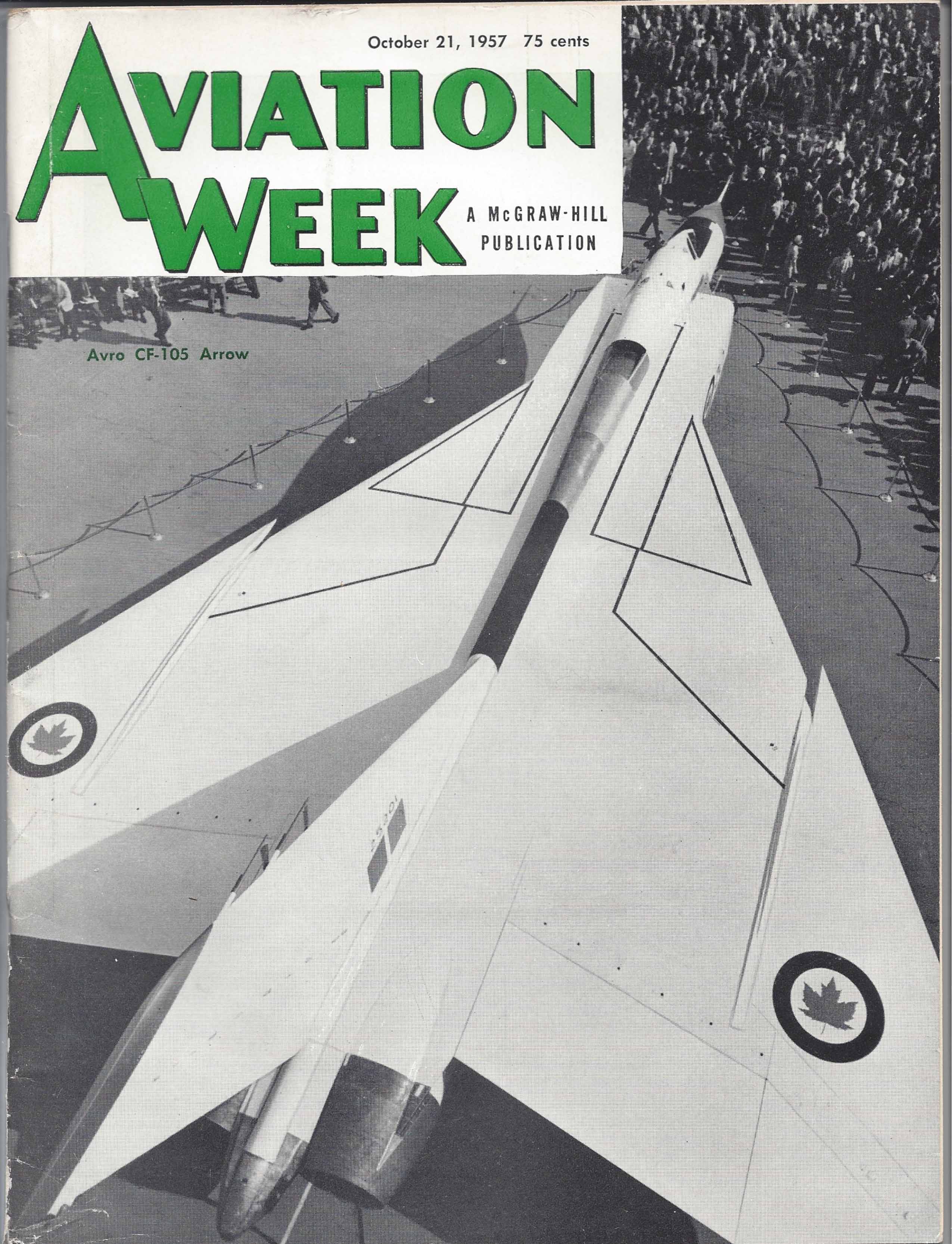
In the years after the Second World War, Canada developed its ability to prepare strategic intelligence assessments on defence and foreign policy, the paper notes. It would no longer have to rely entirely on assessments from the United States and Britain.
The analytic capability allowed Canada to fully participate in preparing the assessments on the Soviet threat to North America that would underpin joint Canada-U.S. planning for continental defence, Barnes notes.
“The CF-100 Canuck, a jet interceptor developed and manufactured in Canada, was just entering service, but there were already concerns that it might soon be outclassed by newer Soviet bombers operating at higher altitudes and faster speeds.”
In November 1952, the Royal Canadian Air Force called for an aircraft with a speed of Mach 2 and the ability to fly at 50,000 feet. “These demanding specifications contributed to the escalating costs and frequent delays in the CF-105 program.”
The Soviets would soon display a new long-range jet bomber, the Bison, at the 1954 May Day parade in Moscow. At an airshow the following year, a fly-past of 28 Bison seemed to indicate that the bomber had entered serial production, two years earlier than predicted, the paper says. In fact, only 18 prototype aircraft participated in the airshow, flying past several times to give the impression of larger numbers.
Even so, this display, along with the appearance of a new Soviet long-range turboprop bomber, the Tu-95 (dubbed the Bear), raised fears that the Soviet Union would soon outnumber the United States in intercontinental bombers, sparking a “Bomber Gap” controversy that figured prominently in American politics, the paper says.
[…]
A January 1958 assessment, “The Threat to North America, 1958-1967”, by Canada’s Joint Intelligence Committee, a co-ordinating body, ultimately had the greatest impact on decisions related to the Arrow, the paper says.
The assessment laid out clear judgments concerning the imminent transition from crewed bombers to ballistic missiles and described the limited size and capabilities of the Soviet bomber force, Barnes notes.
It observed that the Soviet ballistic missiles which were on the verge of being developed were likely to be markedly superior to the foreseeable defences, and concluded that missiles would progressively replace aircraft as the main threat to North America.
The assessment said this meant there would be little justification for the Soviet Union to increase the number of bombers, or to introduce new ones, after 1960.
“The (Joint Intelligence Committee)’s January 1958 assessment was correct in foreseeing Moscow’s shift from bombers to missiles over the subsequent decade,” Barnes writes.
He points out that following the Sputnik launch, Soviet leader Nikita Khrushchev came to see missiles as a panacea for a range of defence problems and as a cheaper alternative to conventional weapons. “With the Soviet bomber force now looking irrelevant and obsolete, it was relegated to a secondary position in Soviet military thinking.”
Comments Off on A new paper on the cancellation of the Avro Arrow in 1959
August 25, 2023
Fortress Britain with Alice Roberts S01E03
Fortress Britain with Alice Roberts
Published 16 Apr 2023
Comments Off on Fortress Britain with Alice Roberts S01E03
August 5, 2023
Tempting Armageddon: Soviet vs. NATO Nuclear Strategy
Real Time History
Published 4 Aug 2023Since the inception of the nuclear bomb, military strategists have tried to figure out how to use them best. During the Cold War, this led to two very different doctrines but on both sides of the Iron Curtain the military wasn’t sure if you could actually win Nuclear War.
(more…)
Comments Off on Tempting Armageddon: Soviet vs. NATO Nuclear Strategy
June 24, 2023
The Most Reliable and Versatile Sub-orbital Rockets Ever Made; the Black Brant Sounding Rockets
Polyus
Published 31 Aug 2018The Black Brant series of sounding rockets was a great success and a proud contribution to the global race for space. While not as glamorous as an orbital rocket, the Black Brants helped scientists from around the globe research and better understand the Aurora and the Earth’s ionosphere.
(more…)
Comments Off on The Most Reliable and Versatile Sub-orbital Rockets Ever Made; the Black Brant Sounding Rockets
August 23, 2022
Greece Burns Under Nazi Occupation – WAH 074 – August 21, 1943
World War Two
Published 21 Aug 2022The aerial bombing of Germany takes a new turn but continues to fail to bring long-term results. In occupied Greece and Poland, over a thousand children are murdered by the Nazis.
(more…)
Comments Off on Greece Burns Under Nazi Occupation – WAH 074 – August 21, 1943
August 21, 2022
Sicily Liberated; Italy in the Firing Line – WW2 – 208 – August 20, 1943
World War Two
Published 20 Aug 2022The British and Americans race for Messina to complete the conquest of Sicily — who will reach it first? On New Guinea, the Allies destroy a substantial Japanese air force; there are several major Allied air raids over Europe, the fighting in the USSR around Kharkov is brutal and costly for both sides, and a secret Allied leadership conference in Quebec begins to determine the course of the war. Busy week.
(more…)
Comments Off on Sicily Liberated; Italy in the Firing Line – WW2 – 208 – August 20, 1943
August 13, 2022
The Great Escape from a Death Factory – WAH – August 7, 1943
World War Two
Published 12 Aug 2022While enslavement, and mass murder continues unabated in August 1943, at the Treblinka Death Factory the forced laborers decide that enough is enough, and bring battle to the SS in a daring escape attempt.
Huge thanks to Purple Purple, Steven Yarnell, Pieter Kleij and Ruben Alikhanyan for their support during the episode premiere.
(more…)
Comments Off on The Great Escape from a Death Factory – WAH – August 7, 1943
July 12, 2022
Killing the Resistance, and Rockets of Death – War Against Humanity 068 – July 10, 1943
World War Two
Published 10 Jul 2022The Polish and French resistance find themselves weakened by the lots of their leaders. Hitler decided to give Werner von Braun hundreds of thousands of slaves to launch the German rocket program.
(more…)
Comments Off on Killing the Resistance, and Rockets of Death – War Against Humanity 068 – July 10, 1943
May 29, 2022
Black May, Nazi Subs Defeated – WW2 – 196 – May 28, 1943
World War Two
Published 28 May 2021German Grand Admiral Karl Dönitz orders the U-Boats to leave the Atlantic this week; the losses lately have just been too great for their patrols to continue there. There is active fighting in China, the Aleutians, and the Kuban, and there are special weapons tests in the skies over Germany.
(more…)
Comments Off on Black May, Nazi Subs Defeated – WW2 – 196 – May 28, 1943
April 15, 2022
Look at Life – Thunder in Waiting (1960)
PauliosVids
Published 20 Nov 2018The deadly cargo of the Vulcan Bomber is a crucial part of Britain’s deterrent force.

Comments Off on Look at Life – Thunder in Waiting (1960)
August 12, 2020
CGP Grey was WRONG
CGP Grey
Published 11 Aug 2020‣ What Was TEKOI? (original version): https://www.youtube.com/watch?v=PCeMC…
‣ What Was TEKOI? (corrected version): https://www.youtube.com/watch?v=PCeMCwxayp0
‣ TEKOI Commentary: https://www.youtube.com/watch?v=ufsYK…
## CrowdfundersBob Kunz, John Buchan, Nevin Spoljaric, Donal Botkin, BN-12, Chris Chapin, Richard Jenkins, Phil Gardner, Martin, Steven Grimm, سليمان العقل, David F Watson, Colin Millions, Saki Comandao, Ben Schwab, Jason Lewandowski, Marco Arment, Shantanu Raj, rictic, emptymachine, George Lin, Henry Ng, Thunda Plum, Awoo, David Tyler, Fuesu, iulus, Jordan Earls, Joshua Jamison, Nick Fish, Nick Gibson, Tyler Bryant, Zach Whittle, Oliver Steele, Kermit Norlund, Kevin Costello, Derek Bonner, Derek Jackson, Mikko , Orbit_Junkie, Ron Bowes, Tómas Árni Jónasson, Bryan McLemore, Alex Simonides, Felix Weis, Melvin Sowah, Christopher Mutchler, Giulio Bontadini, Paul Alom, Ryan Tripicchio, Scot Melville, Bear, chrysilis, David Palomares, Emil, Erik Parasiuk, Esteban Santana Santana, Freddi Hørlyck, John Rogers, Leon, Peter Lomax, Rhys Parry, ShiroiYami, Tristan Watts-Willis, Veronica Peshterianu, Dag Viggo Lokøen, John Lee, Maxime Zielony, Julien Dubois, Elizabeth Keathley, Nicholas Welna
## Music
David Rees: http://www.davidreesmusic.com

Comments Off on CGP Grey was WRONG
July 29, 2020
What was TEKOI?
CGP Grey
Published 28 Jul 2020## Related Videos
Exploring Tekoi: https://www.youtube.com/watch?v=ABMV4…
Defeated by Tumbleweeds: https://www.youtube.com/watch?v=7FeXP…
## Special Thanks
Gregory Waltz
## Crowdfunders
Steven Snow, Bob Kunz, John Buchan, Nevin Spoljaric, Donal Botkin, BN-12 , Chris Chapin, Richard Jenkins, Phil Gardner, Martin, Steven Grimm, سليمان العقل, Elliot Lepley, Colin Millions, David F Watson, Saki Comandao, Ben Schwab, Jason Lewandowski, Bobby, rictic, Marco Arment, Shallon Brown, Shantanu Raj, emptymachine, George Lin, Jeffrey Podis, Ben Delo, Henry Ng, Thunda Plum, Awoo, David Tyler, Fuesu, iulus, Jordan Earls, Joshua Jamison, Nick Fish, Nick Gibson, Tyler Bryant, Zach Whittle, Oliver Steele, Kermit Norlund, Derek Bonner, Derek Jackson, Mikko, Orbit_Junkie, Ron Bowes, Tómas Árni Jónasson, Andrew Bereza, Rebecca Wortham, Bryan McLemore, Bear, chrysilis, David Palomares, Emil, Erik Parasiuk, Esteban Santana Santana, Freddi Hørlyck, John Rogers, ken mcfarlane, Leon, Maarten van der Blij, Peter Lomax, Rhys Parry, ShiroiYami, Tristan Watts-Willis, Veronica Peshterianu, Dag Viggo Lokøen, Essa omar, Ryan Richards, Alex Simonides, Felix Weis, John Lee, Maxime Zielony, Melvin Sowah, Elizabeth Keathley, Christopher Mutchler, Giulio Bontadini, Paul Alom, Ryan Tripicchio, Scot Melville, Kyle Wayman, Julien Dubois
## Music
David Rees: http://www.davidreesmusic.com

Update: CGP Grey posted a corrected version of this video here – https://www.youtube.com/watch?v=PCeMCwxayp0
He also posted the Director’s Commentary video (originally intended only for his Patrons) here – https://www.youtube.com/watch?v=ufsYK3Eecw4
There is also a video explaining how the whole process worked and how the error was missed, if you’re interested.
Comments Off on What was TEKOI?


