May 10, 2012
May 7, 2012
“Small-c” conservatives reach stage five in the grieving process
You’ve probably heard of the Kübler-Ross model of grieving, where sufferers pass through five stages in coping with their loss (denial, anger, bargaining, depression, and acceptance). Gerry Nicholls is apparently approaching stage five over the state of conservatism in Canada:
You know how in the The Wizard of Oz, the Wicked Witch of the East gets squished by Dorothy’s falling house? Well, today the hopes and dreams of Canada’s conservative movement are in pretty much the same flattened condition as that unfortunate witch. Basically all that remains now is for a Munchkin coroner to examine what’s left of conservative aspirations and proclaim, “they’re not only merely dead, they’re really most sincerely dead.”
Time of death: April 23, when Alberta’s conservative-leaning Wildrose Party, after being swept up high on the winds of the polls, came crashing down to Earth with a disappointing thud. What made this event the equivalent of an ideological house crushing is not so much the result of the vote, but rather how that result is being interpreted. Experts are blaming the Wildrose loss on its conservative agenda. They say Wildrose was just too radical to win.
[. . .]
Of course, such theorizing is now academic. In politics, perception is reality and right now the perception is that conservatism won’t sell in Canada. That means other provincial conservative parties in places such as Ontario will move to the “centre” so as to avoid Wildrose’s fate.
The perception will also severely undermine efforts by small “c” conservative MPs in the Conservative party caucus to push the federal Tory government to the right. And so the Harper government will continue to offer Canadians more big spending, more big government and little in the way of ideological or fiscal conservatism.
May 6, 2012
Gary Johnson wins the Libertarian nomination
Former New Mexico governor Gary Johnson won the Libertarian Party’s nomination for their presidential candidate. Yesterday, before the vote, Dave Weigel posted this profile of Johnson:
Gary Johnson is late. He’s pretty happy about the reason: too many interviews on the schedule today. That was never a problem when he was running for the Republican Party’s presidential nomination. Now that he’s the front-runner for the less-exclusive Libertarian Party nod, people want to talk to him.
“We started out at Grover Norquist’s meeting,” says Johnson, putting down his iPad to join me at a Dupont circle coffee shop. Norquist’s meeting of conservatives is off the record, but attendees can confirm that they crossed the threshold. “I thought it was a really good reception. Part of being out there, campaigning, talking to people, is being able to read body language. And it was all good. Nobody was dozing off. Nobody was shaking their heads. They were actually shaking their head this way.” He nods vigorously.
We’re talking on the day that Newt Gingrich announced the end of his profound presidential bid, when the Republican Party, supposedly, was learning to love Mitt Romney. It’s a few days before Johnson will claim the Libertarian Party’s nomination, potentially becoming a spoiler for Romney. The heads really nodded this way? No heads shaking that way?
“No, none, zero,” says Johnson. “I really believe I’m gonna take it from Obama rather than Romney. I joke, you know — maybe all those pot-smoking, marriage equality, get out of Afghanistan voters for Romney are going to switch to me. Then, boy, he’ll be in trouble!”
The UN keeps its priorities clear
As if we needed any reminder that the UN is a political entity, this story by Hillel Neuer should provide a useful refresher:
According to the World Food Program, half a million people don’t have enough to eat in Syria. Fears are growing that the regime is using hunger as a weapon.
This is the kind of emergency which should attract the attention of the UN Human Rights Council’s hunger monitor, who has the ability to spotlight situations and place them on the world agenda. Yet Olivier de Schutter of Belgium, the “Special Rapporteur on the right to food,” is not going to Syria.
Instead, the UN’s food monitor is coming to investigate Canada.
That’s right. Despite dire food emergencies around the globe, De Schutter will be devoting the scarce time and resources of the international community on an 11-day tour of Canada — a country that ranks at the bottom of global hunger concerns.
A key co-ordinator and promoter of De Schutter’s mission is Food Secure Canada, a lobby group whose website accuses the Harper government of “failing Canadians…and [failing to] fulfill the right to food for all.” The group calls instead for a “People’s Food Policy.”
[. . .]
Before Canadians can take De Schutter seriously, they ought to ask him some serious questions about whether his mission is about human rights or a political agenda.
First, consider the origins of the UN’s “right to food” mandate. In voluminous background information provided by De Schutter and his local promoters, there’s no mention that their sponsor was Cuba, a country where some women resort to prostitution for food. De Schutter does not want you to know that Havana’s Communist government created his post, nor that the co-sponsors included China, North Korea, Iran and Zimbabwe.
These and other repressive regimes are seeking a political weapon to attack the West. That is why the first person they chose to fill the post, when it started in 2000, was Jean Ziegler. The former Swiss Socialist politician was a man they could trust: In 1989, he announced to the world the creation of the Muammar Gaddafi Human Rights Prize.
H/T to Nicholas Packwood (Ghost of a Flea).
May 5, 2012
The “Fauxcahontas” affair
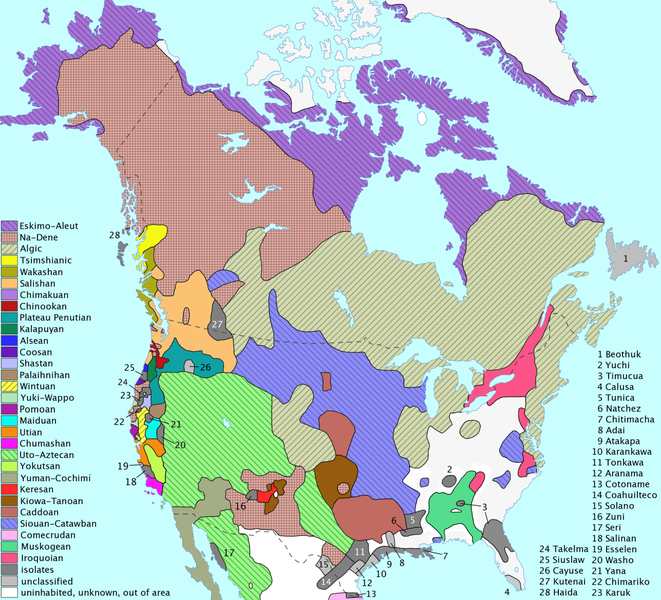
Mark Steyn on the controversy swirling around Massachusetts senatorial candidate Elizabeth Warren over her on-again-off-again claim to having First Nations ancestry:
How does she know she’s a Cherokee maiden? Well, she cites her grandfather’s “high cheekbones,” and says the Indian stuff is part of her family “lore.” Which was evidently good enough for Harvard Lore School when they were looking to rack up a few affirmative-action credits. The former Obama Special Advisor to the Consumer Financial Protection Bureau and former Chairperson of the Congressional Oversight Panel now says that “I listed myself in the directory in the hopes that it might mean that I would be invited to a luncheon, a group, something that might happen with people who are like I am,” and certainly not for personal career advancement or anything like that. Like everyone else, she was shocked, shocked to discover that, as The Boston Herald reported, “Harvard Law School officials listed Warren as Native American in the ’90s, when the school was under fierce fire for their faculty’s lack of diversity.”
So did the University of Texas, and the University of Pennsylvania. With the impertinent jackanapes of the press querying the bona fides of Harvard Lore School’s first Native American female professor, the Warren campaign got to work and eventually turned up a great-great-great-grandmother designated as Cherokee in the online transcription of a marriage application of 1894.
Hallelujah! In the old racist America, we had quadroons and octoroons. But in the new post-racial America, we have – hang on, let me get out my calculator – duoettrigintaroons! Martin Luther King dreamed of a day when men would be judged not on the color of their skin but on the content of their great-great-great-grandmother’s wedding license application. And now it’s here! You can read all about it in Elizabeth Warren’s memoir of her struggles to come to terms with her racial identity, Dreams From My Great-Great-Great-Grandmother.
Alas, the actual original marriage license does not list Great-Great-Great-Gran’ma as Cherokee, but let’s cut Elizabeth Fauxcahontas Crockagawea Warren some slack here. She couldn’t be black. She would if she could, but she couldn’t. But she could be 1/32nd Cherokee, and maybe get invited to a luncheon with others of her kind – “people who are like I am,” 31/32nds white – and they can all sit around celebrating their diversity together. She is a testament to America’s melting pot, composite pot, composting pot, whatever.
Just in case you’re having difficulty keeping up with all these Composite-Americans, George Zimmerman, the son of a Peruvian mestiza, is the embodiment of endemic white racism and the reincarnation of Bull Connor, but Elizabeth Warren, the great-great-great-granddaughter of someone who might possibly have been listed as Cherokee on an application for a marriage license, is a heartwarming testimony to how minorities are shattering the glass ceiling in Harvard Yard. George Zimmerman, redneck; Elizabeth Warren, redskin. Under the Third Reich’s Nuremberg Laws, Ms. Warren would have been classified as Aryan and Mr. Zimmerman as non-Aryan. Now it’s the other way round. Progress!
May 4, 2012
A skeptical review of Get Real
Tim Black reviews the new book Get Real: How to Tell it Like it is in a World of Illusions by Eliane Glaser, calling it “enjoyably hyperactive”, but also pointing out some quite glaring flaws:
Politicians marshalling an army of PR consultants to appear authentic. Multinational companies selling products with folksy, homespun brands. Public inquiries that have nothing to do with the public. The paradoxes proliferate in journalist and academic Eliane Glaser’s enjoyably hyperactive new book, Get Real: How to Tell it Like it is in a World of Illusions. Her ambition is overarching: she wants to show us the way to the truth of the matter. She wants to cut through the crap. She wants us to follow the royal road of social critique. In short, she wants us to see things for what they are. (A bit rubbish, as it turns out.)
[. . .]
Glaser is even better when it comes to ‘scientism’. Awe-struck deference is everywhere, she argues, from Brian Cox’s television series Wonders of the Universe to the World of Wonders science museum in California. ‘Scientific wonder carries with it a sense of humility, which is ostensibly about meekness in the face of extraordinary facts’, she writes. ‘But it blurs into deference towards scientists, with their privileged access to those facts.’ Indeed, anything that Stephen Hawking says, be it about the existence of God or the plight of the planet, is treated as if it comes straight from the oracle’s mouth. ‘In modern culture, scientism is the new religion. God knows what happened to scepticism.’
This conflation of fact with value, this belief that science, having seemingly supplanted moral and political reasoning, can tell us what to do, is highly damaging, Glaser argues. Political decisions, necessitated by science, become a fait accompli. So when, in 2009, US President Barack Obama lifted the ban on federal funding for stem-cell research, he felt no need to make a moral, political case for the decision: ‘The promise that stem cells hold does not come from any particular ideology; it is the judgement of science.’ This is not to say that stem-cell research is a bad thing; rather, it is to say that a politician needs to make the case for it being a good thing.
Yet while there is plenty of critique in Get Real, there is plenty that is unquestioned, too. So no sooner has Glaser put scientism on the rack than, a few pages on, she’s espousing its most prominent manifestation: environmentalism. The chapter even begins with some all-too-persuasive facts from the mouths of Those To Whom We Must Defer: ‘Climate scientists generally agree that the safe limit for the concentration of carbon dioxide in the atmosphere is 350 parts per million (ppm). As I write this, we’re already at 390ppm.’ She soon proceeds to read off a number of Malthus-heavy assertions passed off as fact: ‘Global warming, population explosion, peak oil, biodiversity in freefall: Planet Earth is facing unprecedented and multiple crises. It is little wonder, therefore, that as the situation becomes more desperate, self-deception becomes more attractive. If the world is turning into a desert, it’s tempting to put your head in the sand.’
It’s a bizarre reversal. Having eviscerated the deference towards science in one section, in another she proceeds to lambast those who resist the science for their ‘denialism’. It does not seem to occur to Glaser that a principal reason for opposing the environmental orthodoxy is that it attempts to pass off a moral and political argument about how we should live our lives — low-consumption, little procreation and an acceptance of economic stagnation — as a scientific necessity. Could there be a more flagrant form of the scientism that Glaser so eloquently takes to task elsewhere?
May 3, 2012
Identifying activists
Kelly McParland explains some of the ways people come to identify themselves as “activists”:
You come across activists all the time. They are often quoted by legitimate news organizations, offering opinions on issues of the day. Generally their qualifications appear to be limited to an interest in the subject matter. So anyone involved in organizing a Root Vegetable Consumers Against Frozen French Fries (RVCAFFF) protest march can legitimately identify themselves as an “activist”.
No expertise is required, nor any specific experience, though activists often appear to have plenty of background in activism itself, i.e. they’ve been complaining about the same thing for a long time. There was a time when environmentalists needed nothing more than a desire to live in a remote hut without electricity or access to commercial television to consider themselves fully qualified to assess an energy plan that might impact millions of people. Since then, however, universities have discovered they can fill entire buildings with students eager to memorize environmental slogans and other arcania, and “environmentalism” has become a recognized discipline. But you can still be an “activist” by just registering to show up at a review hearing to condemn Big Oil, knowing little more than the price at the pump.
I was reminded of this when I saw the list of activist groups that are supporting the agenda of May Days of Action for Immigrant and Worker Rights and Economic, Social and Environmental Justice. (It’s a peculiarity of activist organizations that they require long titles. This is generally because slotting anyone into a particular identity goes against the activist code of conduct — as does having a code of conduct — so naming the group itself constitutes a balancing act that touches on the full range of obsessions held by its members. It’s a bit like forming a federal cabinet).
May 2, 2012
We must make internet freedom the new “third rail” of politics
L. Neil Smith on the most recent attempt by the US government to get formal control over the internet:
After many previous attempts on the part of different groups for a variety of reasons, the United States House of Representatives has passed a bill that could result in the destruction of freedom on the Internet.
And the erasure of the First Amendment.
I won’t bother you with this week’s misleading acronym for such an atrocity. This specimen is likely to fail in the Senate — because it doesn’t go nearly as far in muzzling each of us as that “parliament of whores” wants it to. The Faux President declares he will veto it, but we’ve heard that before from a criminal imposter who couldn’t move his mouth to speak the truth if his life depended on it — because he couldn’t recognize the truth if it came up to him and pissed in his ear.
What I will tell you is what a lifetime of fending off similar assaults on the Second Amendment — and the unalienable individual, civil, Constitutional, and human right of every man, woman, and responsible child to obtain, own, and carry weapons — has taught me. I know what has to be done now, and what will happen if we don’t do it.
First, don’t be relieved or satisfied if this particular bill doesn’t pass this time. Others will be introduced, one after another, until they wear down our resistance, unless we make every attempt cost them something they can’t afford to lose. We must make our freedom to communicate a political “third rail” and aim for nothing less than total eradication of the very notion of censoring the Internet in any way.
May 1, 2012
Quebec’s student protest concentrated in certain departments
In the Winnipeg Free Press, Stefani Forster looks more closely at the composition of the Quebec college and university protest movement:
They are the 66 per cent. And they have been mostly invisible in the torrent of stories about Quebec’s student unrest.
Roughly two-thirds of Quebec students are not on a declared strike from their classrooms, are not necessarily participating in daily marches against tuition hikes, and not getting the attention of the national and international media.
What are they doing? They’re completing their semester on time.
At McGill University, classes and exams have been largely unaffected by the student unrest. Only three departments — Gender, Sexuality and Women’s studies; Graduate Art History; and French Literature — are on strike.
April 30, 2012
Twitter’s “Red Guard” of flag-spam abusers
Some nasty tricks being played by some Twitter users, abusing the report feature that is supposed to help cut down on spam posts to attempt to shut down opinions they find offensive:
Shortly after their video “If I Wanted America to Fail” went viral, Free Market America found themselves kicked off Twitter, a popular social media resource that allows users to post very short messages. After a few hours of confusion, their account was reinstated.
This past Sunday, the Twitter account of Chris Loesch, husband of conservative pundit Dana Loesch, was abruptly shut down. After a massive outcry, and the creation of a Twitter topic called “#FreeChrisLoesch” that swiftly became one of the hottest “hash tags” on the network, Chris’ account was reactivated… for a couple of hours. By Monday morning, he was gone again, after his account was restored and removed several more times.
What did Free Market America and Chris Loesch do to warrant suspension? After all, people like Spike Lee and Roseanne Barr flagrantly, openly, defiantly violated Twitter’s terms of service, and put human lives in jeopardy, by distributing personal information about George Zimmerman, the shooter in the Trayvon Martin case. Their accounts have not been suspended. What violation of Loesch’s compares to using Twitter to target someone for assault by an angry mob — and, for that matter, sending the mob to the wrong address?
These suspensions were apparently the work of “flag spammers,” digital brown shirt gangs that make coordinated attacks to silence conservative voices by abusing Twitter’s spam flagging feature. Al Gore coined the term “digital brown shirts” to describe the online squadrons supposedly unleashed to “harass and hector any journalist who is critical of the President.” Of course, he was talking about President Bush, and there weren’t any actual “digital brown shirts” at the time, but this is precisely the sort of behavior he was describing.
April 27, 2012
Colby Cosh on the Alberta election results versus the pollsters
Most of the national press live and work in either Ottawa or Toronto. Neither location is a good vantage point for figuring out what is happening in the rest of the country:
One point three. Twelve. Fourteen. Seventeen. Eight, seven, seven, six, eight, seven, ten, nine, nine . . . two.
That’s a word picture of the polls taken in the run-up to April 23’s Alberta election, starting with a Leger survey for which interviews took place April 5-8. The numbers represent the Wildrose party’s estimated province-wide lead over the incumbent Progressive Conservatives. No public poll taken by a respectable firm during the campaign had the Wildrose behind the PCs. All pollsters agreed that at least a narrow Wildrose majority government was likely. Reporters in Eastern Canada dutifully filed “Wildrose wins” copy for the April 24 morning papers, believing that the outcome was certain.
And then came the shocking result of the election itself, arriving at the end of the mathematical sequence like some indecipherable symbol from a lost language:
Minus nine point six.
April 26, 2012
The public choice analysis of the “Jeremy Hunt affair”
On the Adam Smith Institute blog, “Whig” explains why the Jeremy Hunt affair should be no surprise to anyone, regardless of their party affiliation:
First of all, it is salutary to remember that this is not a party political issue. As evidence to the Leveson Enquiry itself shows, politicians are drawn to newspaper proprietors and editors like flies to the proverbial. The two have a symbiotic relationship with each other, and always have done. Clearly this relationship is the result of a classic public choice style problem — politicians have power but need votes and newspaper editors can deliver votes in exchange for a chance to influence how that power is directed. Of course, this is a very reductive description of the relationship but that is what it boils down to.
Such a relationship is evidently corrupting and open to the exploitation of special interests at the expense of general ones. How should we prevent this? Whilst party politics calls for the minister to fall on his sword, such an action will hardly prevent future occurrences. The general tone of public discourse suggests the introduction of rules, guidelines and procedures on ministers with greater bureaucratic control and less personal control by the minister. In many ways this represents the general trend of constitutional developments over the past 100 years or so. Powers should be vested in ‘disinterested’ civil servants or, better yet, in ‘independent’ Quangos like OFCOM or the Competition Commission, rather than politicians.
The bureaucratic solution, however, is no more acceptable — as any fan of Yes Minister will confirm. Aside from the issues of democratic accountability such developments raise, we should remember that civil servants and bureaucrats are human beings and have a series of vested personal and ideological interests of their own. Bureaucratic rule-making is just as susceptible to corruption as ministerial rule-making. This is especially true in the case of newspapers, which are extremely well-placed to use their influence in order to promote their own interests. Again, the Leveson Enquiry shows us exactly this situation: journalists allegedly entering into corrupt relationships with police officers.
Rupert Murdoch: the secret ruler of Britain
At least, it’s quite clear that most of the chattering classes consider Murdoch to be the arch-manipulator/secret ruler of British life. Brendan O’Neill disagrees:
So there he was, the secret ruler of modern Britain, the dark, rotting heart of the British state, the man who has wielded his ‘extraordinary power’ in order to ‘manipulate officialdom’ and extend his influence over ‘politics, the media and the police’. I hope you weren’t fooled by Rupert Murdoch’s diminutive stature or his octogenarian demeanour as he appeared before the Leveson Inquiry yesterday, or his denials about using his ‘political power to get favourable treatment’. Because this small, old newspaper owner is, in fact, the mastermind of a ‘shadowy influence-mart’ who has exercised a ‘malign influence on our politics for the past 30 years’. And now, thanks to Lord Leveson, we finally have an opportunity to ‘banish’ this ‘tyrant’ from our shores and a ‘glorious opportunity for meaningful reform’.
At least, that’s what the Leveson cheerleading squad, the media and celebrity groupies of this inquiry into press ethics, would have us believe. These people are rapidly taking leave of their senses. Their depiction of Rupert Murdoch as the dastardly puppeteer of the British political sphere has crossed the line from rational commentary into David Icke territory, sounding increasingly like a conspiracy theory about secret rulers of the world. And their claim that Murdoch singlehandedly ruined British politics — that he is, in the words of one commentator, the architect of modern Britain’s ‘heartlessness, coarseness and spite’ — speaks to their inability to get to grips with the true causes of political crisis today. Yesterday’s shenanigans made it pretty clear that Murdoch-bashing has become a cheap substitute for grown-up debate.
It is of course true that Murdoch is very influential, as you would expect of a man who, in Britain alone, owns both the newspaper of record (The Times) and the bestselling tabloid (the Sun). But not only do the Murdoch-maulers overestimate how influential he is; more importantly they misunderstand the origins and nature of his influence in modern Britain. It is not that Murdoch set out to create a ‘shadow state’ that could ‘intimidate parliament’, as madly claimed by Labour MP Tom Watson. Rather, it was the increasing alienation of parliament and politicians from the public which boosted Murdoch’s political fortunes, making him the go-to man for ministers and MPs desperate to make a connection with us. In other words, Murdoch didn’t destroy British politics in his scrabble for greater influence — it was the already existing death of British politics, its loss of meaning and purchase, which, by default, made Murdoch influential.