
I’d just finished dinner at a restaurant within a short walk of my hotel, and I thought it’d be nice to have another beer when I got back to the hotel (in Pennsylvania, you buy less-than-case amounts of beer from licensed bars). I went up to the bar, and ordered six Sam Adams. The server looked at me a bit oddly, then went back to pick up my order.
When she came back, she said, “You know this is going to be very expensive, don’t you?”
“Uh, just how expensive are we talking here?
“Well, six bottles at $4 per bottle expensive. You could probably buy a case for that at [name of nearby beer warehouse].”
Two gents at the bar chime in that I’m crazy to pay that kind of money for just six beers, but they’d happily take any extras from the case I should buy at [nearby beer warehouse].
The three of them then gave me carefully simple instructions on how to find my way to [nearby beer warehouse], where I picked up this:
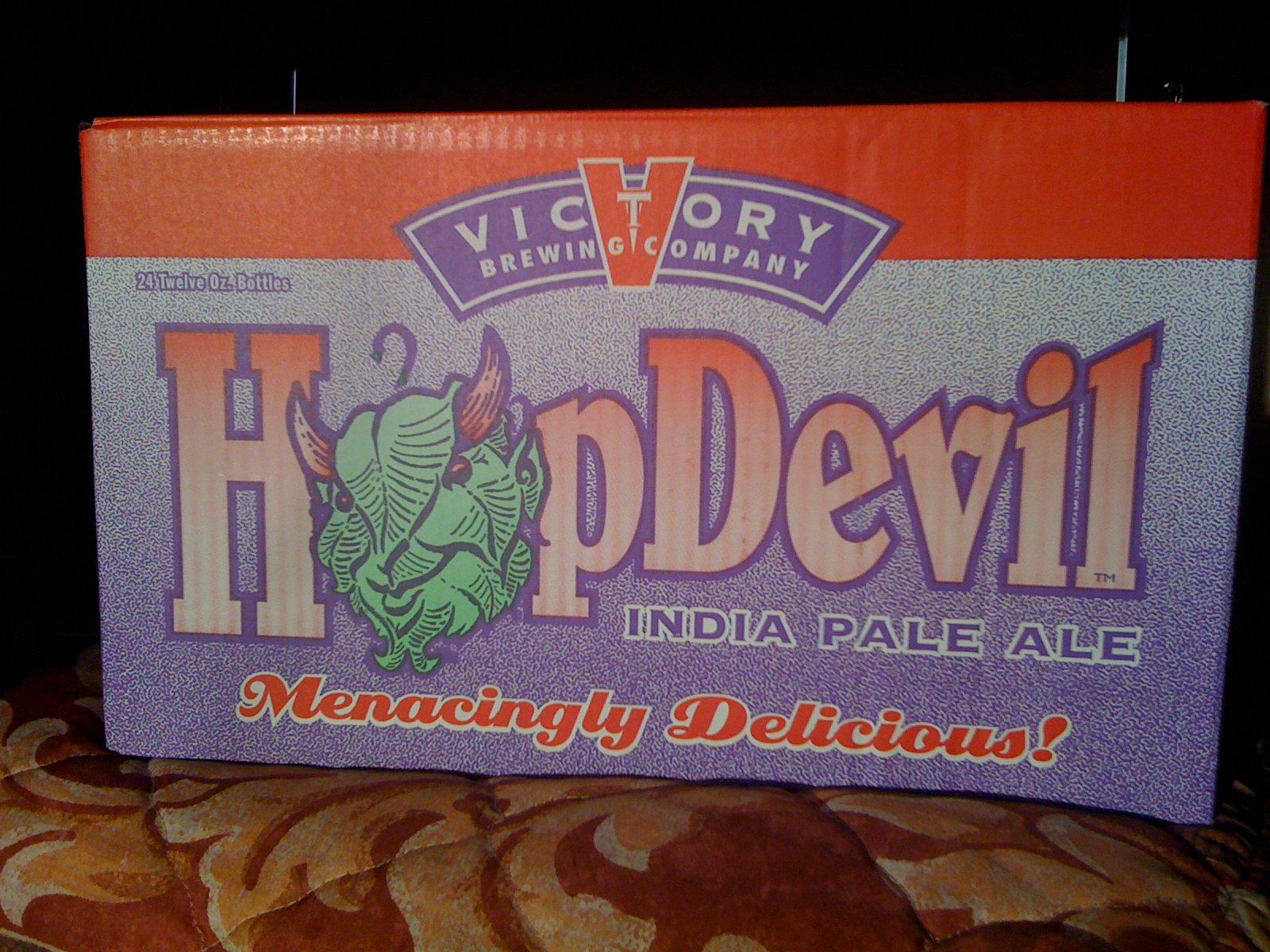
One of the most hoppy IPA brews I’ve ever tasted . . . for slightly more than what I would have had to pay for six at the bar.

Radley Balko links to this interesting article by Steven Pinker, which shows something that on the surface appears to fly in the face of the facts: we’re not becoming more violent, we’re becoming more peaceful:
Our seemingly troubled times are routinely contrasted with idyllic images of hunter-gatherer societies, which allegedly lived in a state of harmony with nature and each other. The doctrine of the noble savage — the idea that humans are peaceable by nature and corrupted by modern institutions — pops up frequently in the writing of public intellectuals like, for example, Spanish philosopher José Ortega y Gasset, who argued that “war is not an instinct but an invention.”
But now that social scientists have started to count bodies in different historical periods, they have discovered that the romantic theory gets it backward: Far from causing us to become more violent, something in modernity and its cultural institutions has made us nobler. In fact, our ancestors were far more violent than we are today. Indeed, violence has been in decline over long stretches of history, and today we are probably living in the most peaceful moment of our species’ time on earth.
Comments Off
Steve Chapman looks at one of the bigger question marks in the debate over health care in the United States: why such a high infant mortality rate?
The American medical system has the latest technology, the greatest variety of new drugs, and unparalleled resources. But anyone who thinks we’re getting something great for our dollars inevitably encounters a two-word rebuke: infant mortality.
The United States is the richest nation on Earth, but it comes in 29th in the world in survival rates among babies. This mediocre ranking is supposed to make an irrefutable case for health care reform. If we cared enough to insure everyone, we are told, we would soon rise to the health standards of other modern nations. It’s just a matter of getting over our weird resistance to a bigger government role in medical care.
[. . .]
No one denies the problem. Our infant mortality rate is double that of Japan or Sweden. But we live different lives, on average, than people in those places. We suffer more obesity (about 10 times as much as the Japanese), and we have more births to teenagers (seven times more than the Swedes). Nearly 40 percent of American babies are born to unwed mothers.
Factors like these are linked to low birth weight in babies, which is a dangerous thing. In a 2007 study for the National Bureau of Economic Research, economists June O’Neill and Dave O’Neill noted that “a multitude of behaviors unrelated to the health care system such as substance abuse, smoking and obesity” are connected “to the low birth weight and preterm births that underlie the infant death syndrome.”
Comments Off

